
How much does wind damage roof repair cost? Minor wind repairs (replacing a few blown-off shingles) typically run $300 to $1,500. Moderate damage covering a significant section costs $2,000 to $6,000. Full roof replacement after extensive wind damage is $8,000 to $20,000+ depending on size, pitch, and material. After major storms, expect prices 20–40% higher due to demand.
The morning after a windstorm is the morning you find out exactly how attached your shingles were to the rest of your house. (Asphalt's commitment, it turns out, is conditional. Like a teenager's interest in family Sunday dinner.) Some shingles are in the yard. Some are in the neighbour's yard. Some have made a longer journey and are no longer on this map. And the question becomes: how much is this going to cost, and what is my insurance actually going to pay for?
This is the cost guide. Real 2026 numbers, the deductibles that catch homeowners out, the difference between replacement-cost and actual-cash-value coverage, and the small persistent population of "free roof" door-knockers who follow storms from one zip code to the next. By the end you'll know what a fair estimate looks like and what to do when the first three estimates disagree by $11,000.
Minor repair (a few shingles): $300 – $1,500
Moderate repair (significant section): $2,000 – $6,000
Full roof replacement: $8,000 – $20,000+
Emergency tarping (temporary): $400 – $1,500
What Actually Drives the Cost
How much of the roof is affected (measured in "squares")
Roofers and adjusters measure roof damage in squares, where one square equals 100 square feet of roof surface. A typical 1,800 square foot single-storey home has roughly 18–22 squares of roof, depending on pitch and overhang. Damage to two squares costs dramatically less than damage requiring full replacement, and adjusters and contractors will both quote you in squares — not in shingles, not in feet, not in metres. Learn the unit; it's how the conversation works.
Roof pitch and complexity
Steep roofs cost more per square because the work is slower, the safety setup is heavier, and physically getting materials to the work area is harder. A simple low-pitch ranch roof with two planes is significantly cheaper to repair than a two-storey home with multiple gables, dormers, valleys, and a steep pitch. The complexity premium can be 30–60% above the baseline rate. (This is also why "the cheap one will do" is poor advice on a complex roof — you want a crew with the right harnesses and the right experience.)
The roofing material
This is the variable that swings cost the most. Asphalt shingles are the cheapest to repair and replace; tile and metal roofs are several times more expensive per square. The 2026 market rates:
| Material | Repair Cost / Square | Replacement Cost / Square |
|---|---|---|
| Asphalt shingles (3-tab) | $150 – $300 | $350 – $550 |
| Asphalt shingles (architectural / dimensional) | $200 – $400 | $450 – $700 |
| Metal roofing (standing seam) | $400 – $800 | $900 – $1,600 |
| Wood shake | $350 – $600 | $600 – $1,200 |
| Tile (concrete or clay) | $300 – $600 per affected area | $1,200 – $2,500 |
| Slate | $400 – $1,500 | $1,500 – $3,500+ |
Where you live (and when the storm hit)
Roofing labour rates in coastal Florida, the Gulf Coast, or central Texas are different from the labour rates in Iowa or Oregon. After a major storm event, contractors are in extremely high demand — sometimes booking out for months — and prices push 20–40% above normal. The contractor who'd quote you $9,000 in a quiet month will quote $13,000 the week after a hurricane, because someone else will pay $13,000 if you don't. (This isn't price gouging in the legal sense; it's supply and demand. The legal definition of gouging requires emergency declaration thresholds, which is a different and longer article.)
Age and condition of the existing roof
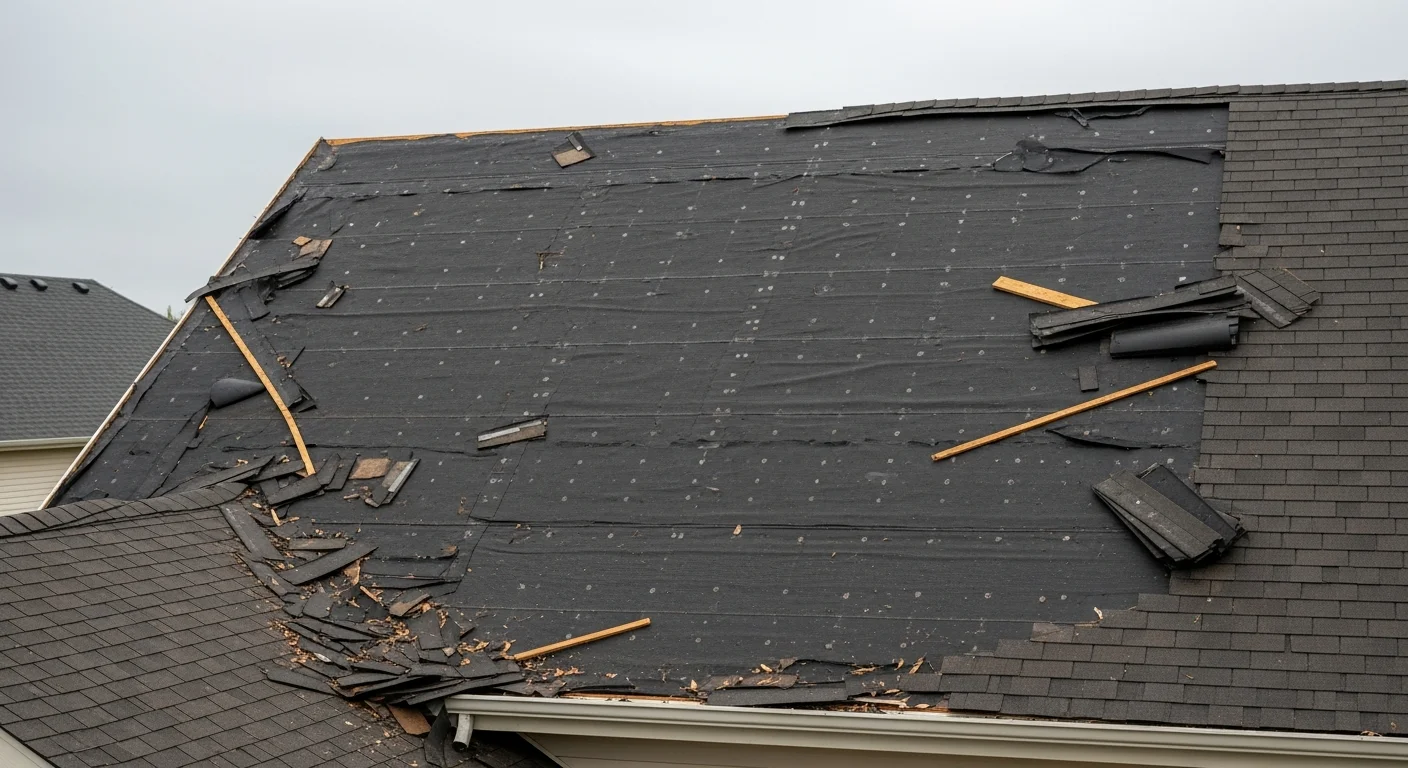
Matching new shingles to a 15-year-old roof is hard. Colour and texture variations between old and new shingles are visible from the street and can affect your home's resale value. If your roof is past 70% of its expected lifespan, your contractor — or your insurance adjuster — may recommend full replacement even when only a section is visibly damaged. Whether the insurance company *pays for* that full replacement is a separate negotiation, often dependent on whether you have RCV or ACV coverage (more on that below).
The Insurance Reality (Where the Real Cost Hides)
The contractor's estimate is one number. What you actually pay out of pocket is a different number, and the gap between them is where most homeowner surprises live. Three things drive that gap.
Your wind deductible (the number you didn't know you had)
Most homeowners policies in wind-prone states have a separate wind or windstorm deductible — usually 1–2% of your dwelling coverage amount, sometimes higher in coastal counties. On a $400,000 dwelling coverage limit, a 2% wind deductible is $8,000 out of pocket before insurance pays anything. Some policies even have a separate hurricane deductible that's higher again. Read your declarations page — it lists all of these — before you file.
The wind deductible can be the entire repair cost on a moderate-damage claim. A $4,000 repair against an $8,000 wind deductible means you're paying for everything and the claim hasn't actually triggered. (This is by design. The premium is lower because the deductible is higher. The math evens out — but only if you're aware of it before the storm, not after.)
Replacement Cost Value vs. Actual Cash Value
RCV pays what it costs to replace the damaged roof at current 2026 prices. ACV deducts depreciation based on the roof's age relative to its expected lifespan. The math:
- A 12-year-old shingle roof with a 20-year expected life is 60% depreciated.
- Under ACV, the insurer pays 40% of replacement cost.
- Under RCV, the insurer pays full replacement cost (typically in two checks — see below).
For a $14,000 full replacement, that's the difference between a $5,600 ACV settlement and a $14,000 RCV settlement. Six figures of difference becomes a $8,400 difference on this single roof claim. Knowing which type of coverage you have — and whether your wind/hurricane deductible is paid against the gross or the net — is genuinely the most consequential thing you can know about your homeowners policy.
The "two-check" process under RCV
If you have RCV coverage, the insurer typically pays in two checks. The first check is the ACV (depreciated) amount and arrives shortly after the claim is approved. The second check is the depreciation recovery — paid only after you've completed the repairs and submitted documentation showing what you actually spent. This is meant to ensure the money is used to actually fix the roof rather than being absorbed into general life expenses. It also means the homeowner needs upfront cash flow to bridge the gap between the first check and the depreciation recovery, which catches a lot of people out.
The "cosmetic damage" defence
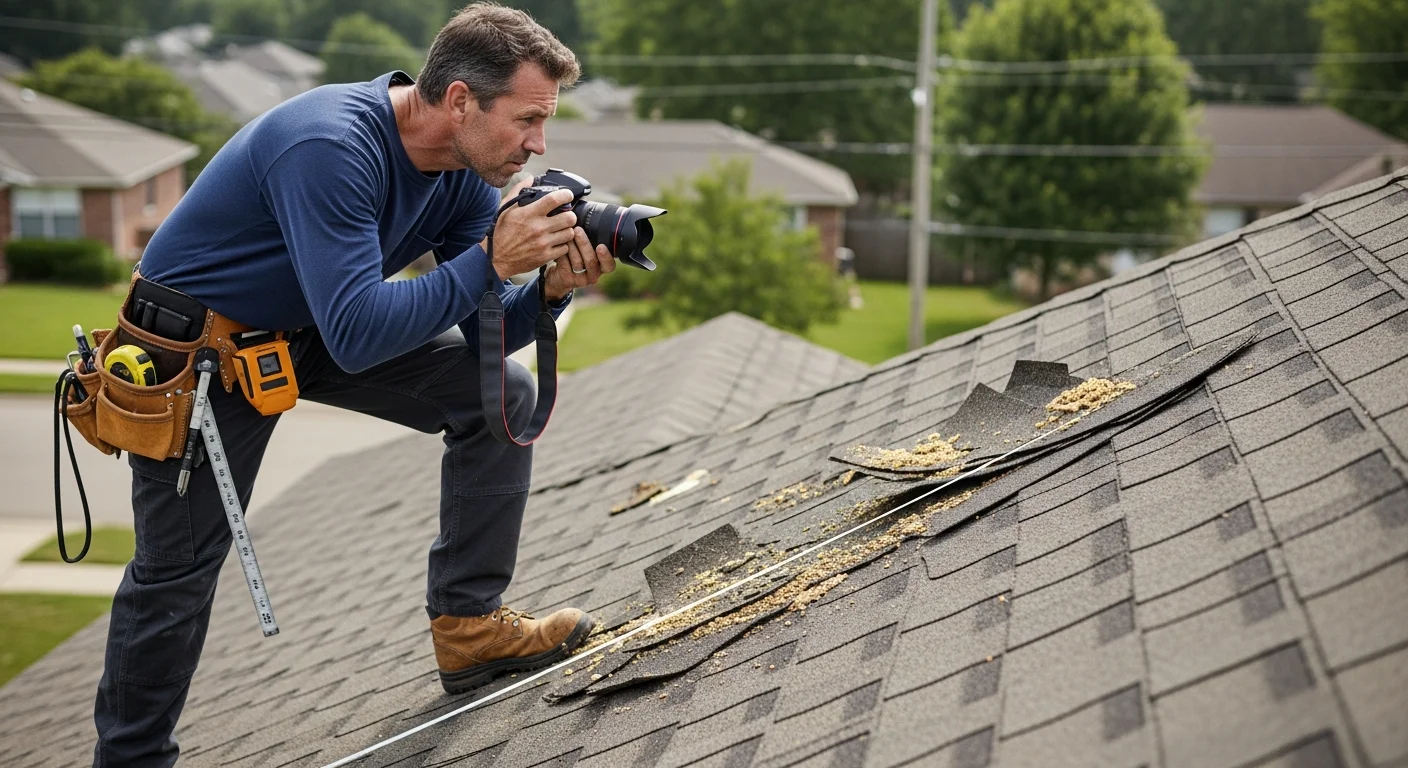
Some insurers attempt to limit claims by classifying wind damage as "cosmetic" — affecting appearance but not the functional integrity of the roof. If your shingles have lost granules, lifted at the tabs, show bruising from debris impact, or have hairline tears — these are functional damage, not cosmetic, and a roofing professional or a public adjuster can document the case. Don't accept "it's just cosmetic" as a final answer without an independent assessment. The insurer's adjuster's job description includes minimizing payouts; that's not malicious, it's the role.
The Storm-Chaser Hustle
The day after a major wind event, your front door will receive visitors. Some of them will be your insurance adjuster, your neighbour with a casserole, and possibly a member of the local government checking on residents. Others will be roofing contractors who arrived from three states away the morning the storm cleared, because they follow storm tracks the way other businesses follow trade shows.
Some storm-chaser contractors are legitimate companies expanding capacity into a damaged region. Others are not. The patterns to watch for:
- "Free roof" or "no out-of-pocket cost" pitches. Sometimes legitimate (the deductible falls within the claim and the contractor handles the paperwork). Sometimes a vehicle for filing inflated claims, signing over your insurance rights, and disappearing when the work is half done.
- Assignment of Benefits (AOB) requests. The contractor asks you to sign over your insurance rights to them. They then bill the insurer directly, dispute everything, and you become a spectator at your own claim. AOB is legal in most states; it's also rarely in your interest.
- Door-to-door pitches with a free inspection. The "free inspection" sometimes results in conveniently-discovered damage. Use your own roofer or your insurance company's inspector — not the door-knocker — to determine whether you have a claim.
- Demands for a deposit before any work starts. Reasonable: a deposit on materials. Not reasonable: half the contract price before the truck has left the parking lot.
- Out-of-state license plates and PO box addresses. Verify the contractor's licence in your state through your state's contractor licensing board before signing anything. Storm chasers often don't bother with state licensing because they don't intend to be there long.
The single best protective rule: get at least two estimates from local, licensed contractors with verifiable physical offices and several years of trading history. The local contractor will still be in business when something goes wrong; the storm chaser will be in Oklahoma working someone else's roof.
Getting Solid Contractor Estimates
The estimate-comparison process is straightforward but worth doing properly:
- Get two to three written estimates from independent local contractors. Don't accept verbal estimates — for any reason. The estimate is the document the insurance adjuster will engage with.
- Verify state licensing through your state contractor licensing board. Florida, Texas, and most coastal states have searchable online databases. Should take ten minutes per contractor.
- Confirm insurance and bonding. Workers' comp, general liability, and ideally umbrella coverage. Ask for the certificate of insurance and verify it directly with the insurer's named contact (or check the carrier's verification portal). Forged COIs exist.
- Read the warranty terms. Manufacturer warranty (typically 25–50 years for shingles, longer for metal) plus contractor workmanship warranty (typically 5–10 years). Lifetime warranties are marketing — read the fine print.
- Get the line items. Each estimate should specify materials (brand, type, square footage), labour, removal/disposal of old roofing, permit costs, and any structural repair. A one-line $14,000 quote is not an estimate — it's a number with hopes attached.
How Long Does Wind Damage Roof Repair Take?
The work itself is fast. The waiting is slow. A realistic timeline:
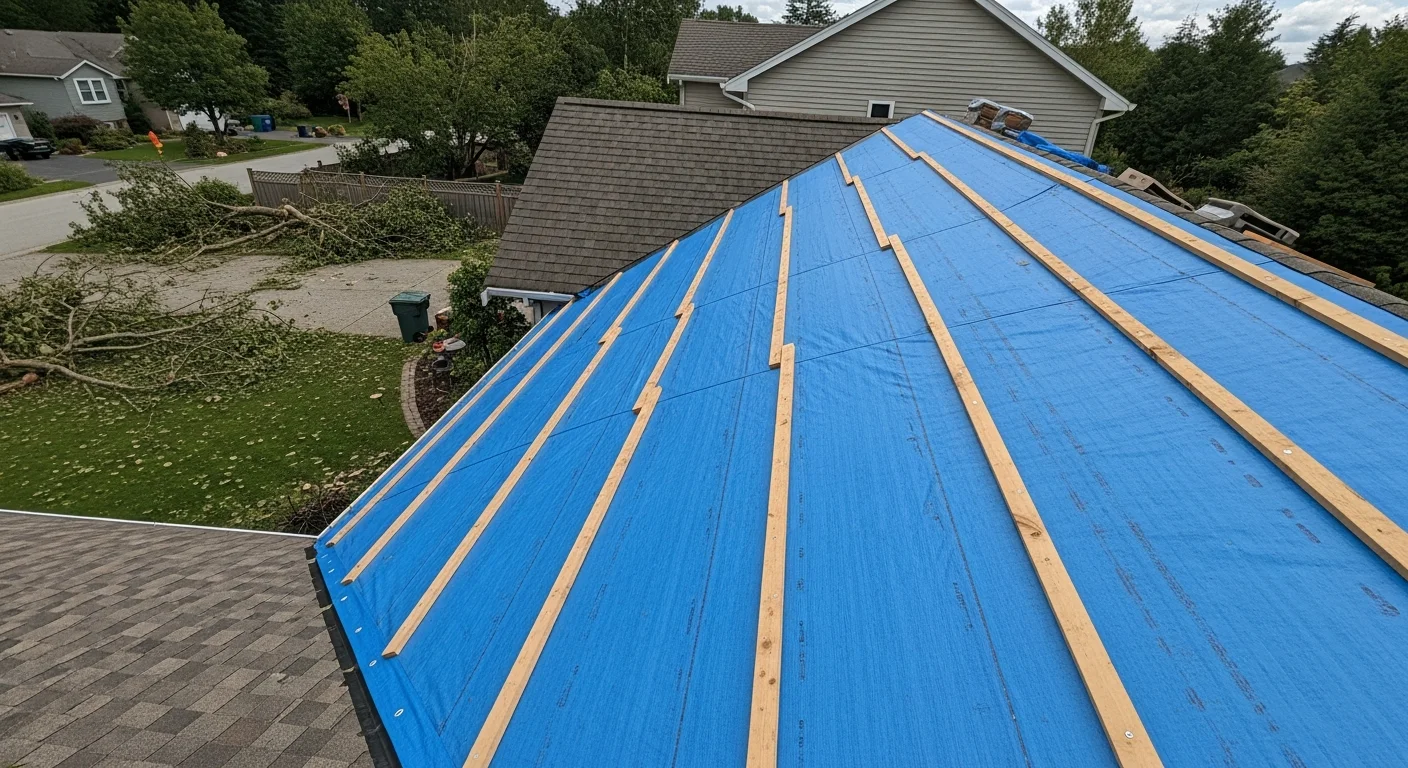
- Emergency tarping: 24–48 hours after the storm, sometimes longer if the contractor pool is overloaded.
- Insurance inspection: 1–4 weeks after filing, depending on adjuster availability.
- Estimate review and approval: 1–3 weeks. Disputes can extend this significantly.
- Material delivery (especially after big storms): 2–6 weeks. Manufacturer backlogs after major events are real.
- Roofing work itself: 1–2 days for a minor repair, 2–5 days for a typical full replacement, longer for complex roofs or weather-delayed jobs.
- Final inspection and depreciation recovery (RCV policies): 2–4 weeks after work completes.
End-to-end, expect 6 weeks to 4 months from storm to depreciation recovery, with most of that time spent waiting on the insurer or the materials. (Patience is the second-most-valuable thing you bring to a wind claim. The first is documentation.)
Frequently Asked Questions
How much does it cost to repair wind damage to a roof?
Minor wind damage repairs — replacing a few blown-off shingles — typically cost $300 to $1,500. Moderate damage to a significant section costs $2,000 to $6,000. Full replacement after extensive wind damage runs $8,000 to $20,000+ depending on roof size, pitch, and material. Coastal markets and high-demand periods after major storms add 20–40% to baseline pricing, sometimes more.
Does homeowners insurance cover wind damage to the roof?
Yes — wind damage is a covered peril under standard homeowners insurance. However, most policies in wind-prone states have a separate wind or windstorm deductible (often 1–2% of dwelling coverage), and Actual Cash Value policies depreciate older roofs significantly. Read your declarations page for the specific deductible and coverage type before filing. Replacement Cost Value coverage pays current replacement prices; ACV pays depreciated value.
How long does wind damage roof repair take?
Minor repairs typically take 1–2 days of actual work. Full roof replacements take 2–5 days for an average-sized home. End-to-end (filing the claim through depreciation recovery), expect 6 weeks to 4 months — most of that time is waiting on insurance approval and material delivery, not the roofing itself. Major storm events extend material lead times significantly.
What is a wind deductible, and how is it different from my regular deductible?
A wind deductible is a separate, usually higher deductible specifically for wind-related claims. It's typically calculated as a percentage of your dwelling coverage (1–2%, sometimes higher in coastal counties) rather than a flat dollar amount. On a $400,000 dwelling, a 2% wind deductible is $8,000. Many homeowners are surprised by this on their first wind claim. The deductible is on your declarations page, listed separately from the standard deductible.
Should I sign an Assignment of Benefits form with my contractor?
Generally, no. AOB transfers your insurance rights to the contractor, who then bills the insurer directly and disputes any disagreements without you in the room. AOB is legal in most states but rarely benefits the homeowner — you lose visibility into the negotiation, and disputes can complicate or delay your settlement. Only sign an AOB after consulting with a public adjuster or insurance attorney, and only with a contractor whose reputation is well-established locally.
Should I use a roofing contractor or a general restoration contractor for wind damage?
For roofing work alone, a licensed roofing contractor is appropriate. If wind also caused water intrusion into the home — common when shingles lift and rain follows — you'll need both a roofer and a water damage restoration company. Some full-service restoration companies handle both, which simplifies coordination and insurance documentation. The single-vendor approach is often easier; the dual-vendor approach is sometimes cheaper.
Wind damage roof repair is one of the more common claims in any homeowner's life — and one of the most heavily targeted by both legitimate operators and the storm-following alternative. Get two local estimates, read your declarations page (especially the wind deductible), and don't sign anything in the first 48 hours that you'll regret in the next 48 weeks. (Marco's roof has been replaced twice. He has strong opinions about underlayment and a slightly stronger one about door-knockers.)