
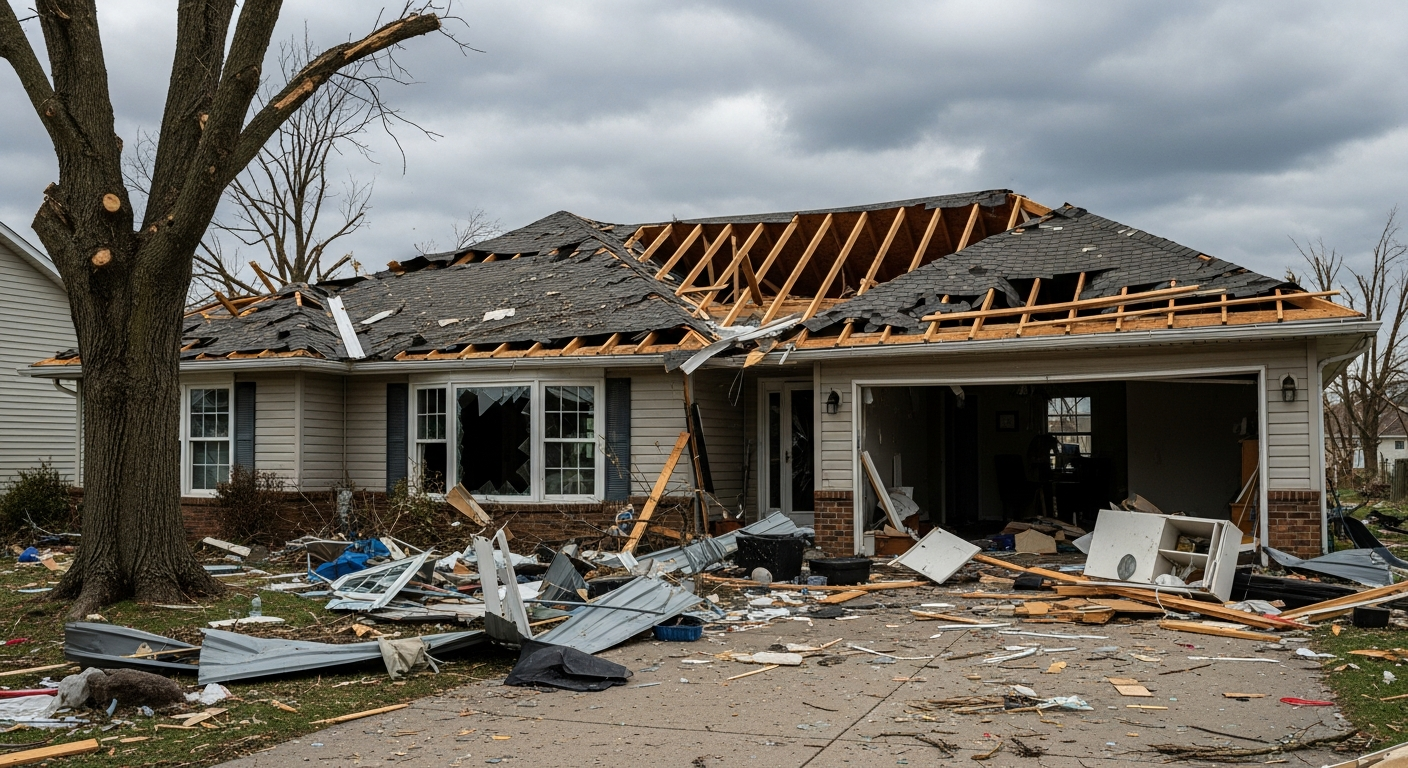
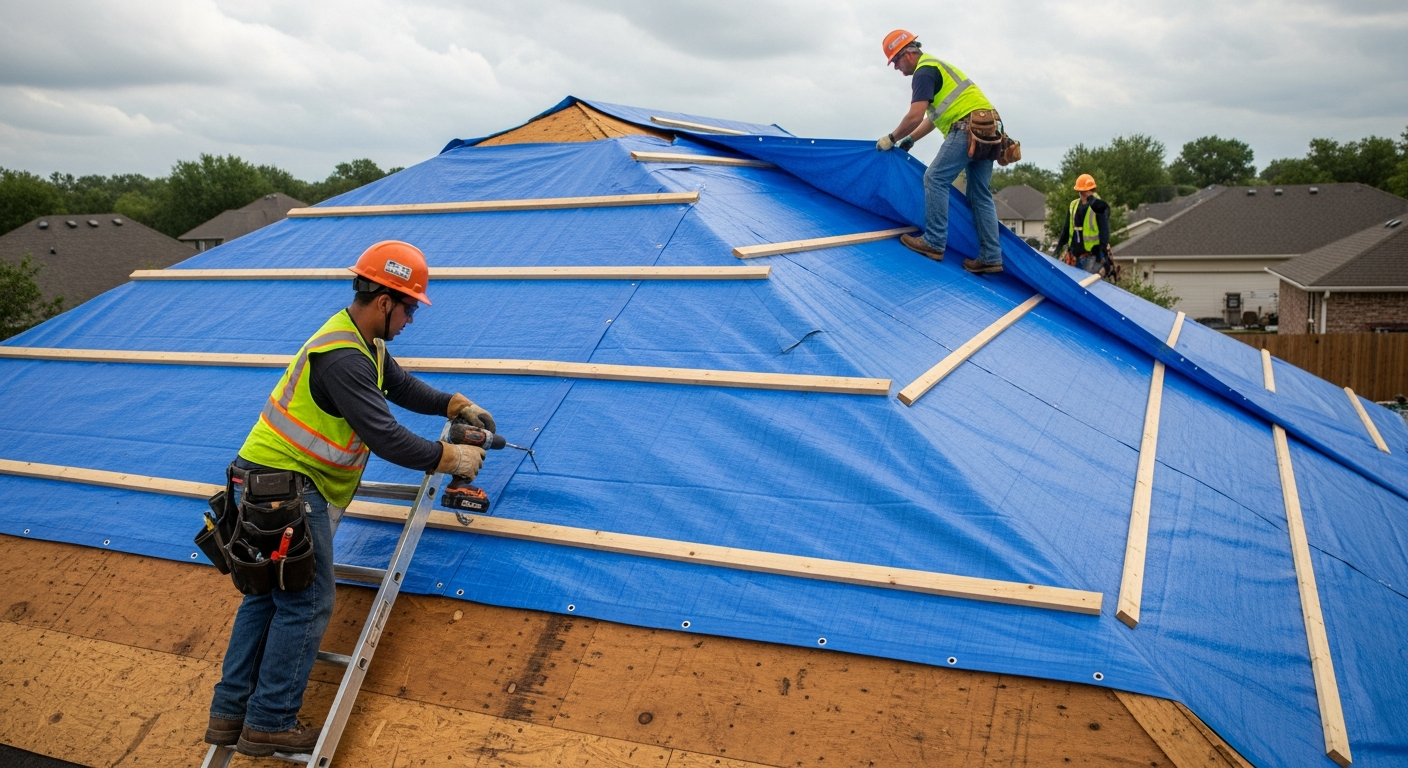
What should you do immediately after a tornado damages your house? First, confirm there are no gas leaks or downed power lines. Second, take a continuous video walk-through of the damage before moving any debris. Finally, arrange for emergency roof tarping and window board-ups to prevent subsequent rain from causing secondary water damage. Keep all receipts for these temporary repairs.
A tornado can alter your life in roughly thirty seconds. When you emerge from your basement or interior hallway, the shock of seeing your home torn apart is paralyzing. Your instinct will be to immediately start picking up debris and throwing things away to regain a sense of control.
Do not do this. The actions you take in the first 24 hours will dictate your physical safety and the financial success of your insurance claim. Here is exactly what you need to do, in chronological order, to protect your family and your property.
Step 1: The Safety Triage
Tornadoes do not just break wood and glass; they sever the high-voltage and highly combustible utilities that power your home.
| Hazard | Warning Signs | Immediate Action |
|---|---|---|
| Natural Gas | Hissing sounds, or the smell of rotten eggs (mercaptan). | Evacuate immediately. Turn off the main gas valve outside only if safe. Do not flip any light switches. |
| Electricity | Downed lines in the yard, sparking panels, or water pooling near outlets. | Assume all downed lines are live. Shut off the main breaker if the panel is dry and safely accessible. |
| Structural | Sagging ceilings, bowed walls, or large cracks in the foundation block. | Do not re-enter. A compromised roof can collapse hours later under its own weight. |
Step 2: The "Do Not Touch" Documentation Phase
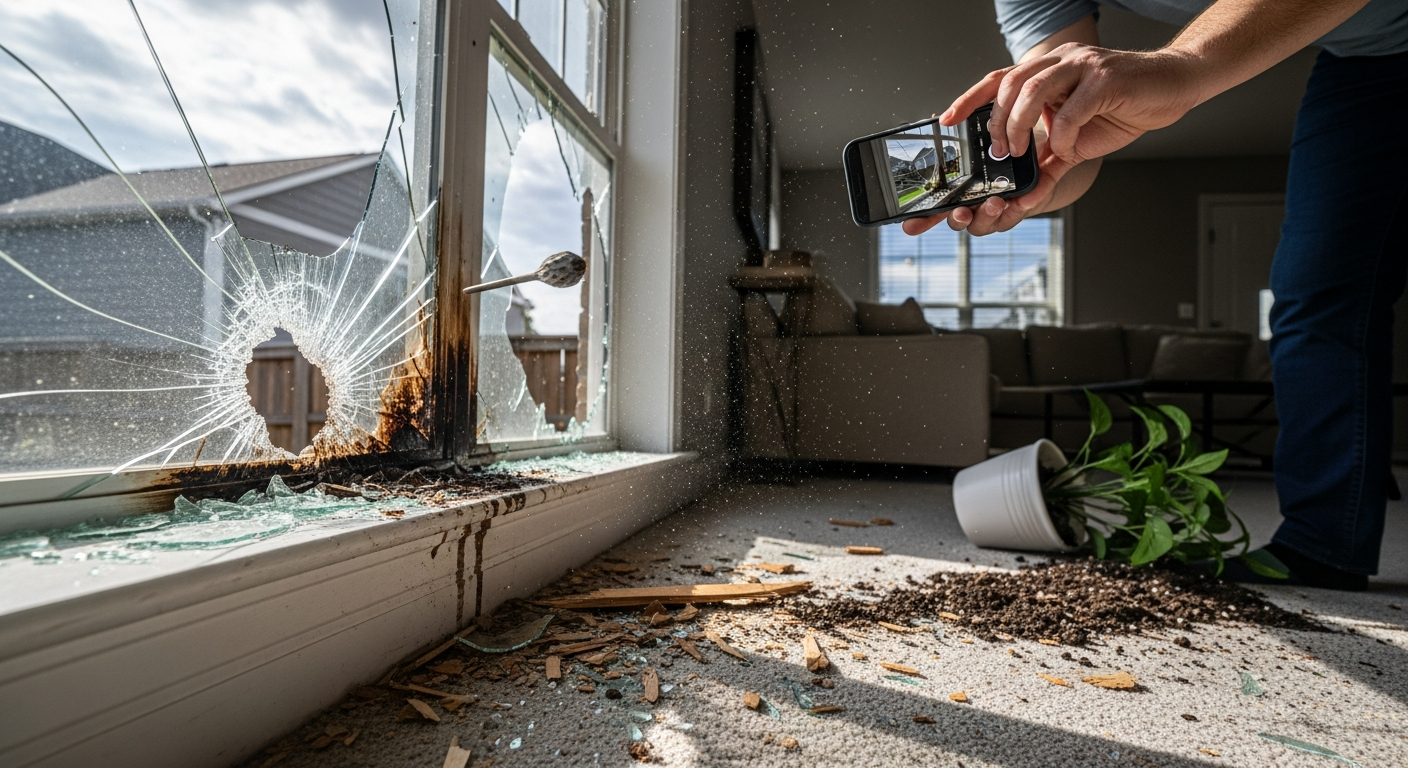
Your insurance claim relies entirely on proving the condition of your home immediately after the storm. If you throw away your ruined television before the insurance adjuster sees it, the insurance company has no proof it was destroyed by the tornado, and they will likely deny that specific line item.
How to Document Like a Pro
- The continuous video walk-through: Before you pick up a single piece of debris, take your phone and walk slowly through every room. Describe what you are seeing out loud. "This is the master bedroom. The window is blown out and the hardwood floor is soaked."
- Photograph the perimeter: Walk the outside of the house. Photograph the roof damage from the ground, the broken windows, and specifically, any debris from neighboring properties that landed on your house.
- Do not throw anything away: If a piece of ruined furniture poses a health hazard (like wet carpet), move it to the driveway or garage, but do not put it in a dumpster until the adjuster has inspected it.
Step 3: Call Your Insurance Company
Tornadoes are regional events. When one hits, thousands of homeowners are calling the same three major insurance carriers simultaneously. Call your carrier within hours of the storm to get into the queue for an adjuster appointment.
When you call, ask three specific questions:
- "What is my wind/hail deductible?" (This is often a percentage of your home's value, not a flat $1,000 fee).
- "Does my policy cover Additional Living Expenses (ALE) if I need to get a hotel?"
- "Am I authorized to hire a contractor for emergency board-up and tarping?"
The RCV vs. ACV Reality Check
When you review your policy, check how your personal property and roof are valued. This determines the size of the check you will eventually receive.
| Policy Type | What It Means | The Real-World Impact |
|---|---|---|
| Replacement Cost Value (RCV) | The insurer pays what it costs to buy a brand new item at today's prices. | You get a new $1,200 TV to replace your destroyed $1,200 TV. |
| Actual Cash Value (ACV) | The insurer pays what the item was worth exactly when it was destroyed (depreciation). | Your 5-year-old TV was technically only worth $200. You get a check for $200. |
Step 4: Emergency Mitigation (Stop the Bleeding)
Insurance policies explicitly require the homeowner to "mitigate further damage." If a tornado rips off half your shingles on Tuesday, and a rainstorm ruins your hardwood floors on Thursday because you didn't cover the roof, the insurance company will likely deny the floor claim.
Frequently Asked Questions
When is it safe to return to a tornado-damaged home?
Only return after local authorities have given the all-clear for your neighborhood. Even then, do not enter a home with visible structural leaning, a sagging roofline, or the smell of natural gas. Wait for a professional structural assessment or the fire department to clear the specific building.
Does homeowners insurance cover tornado damage?
Yes. Tornado damage falls under the "windstorm" peril, which is covered by all standard homeowners insurance policies. However, be aware that many policies in tornado-prone states carry a separate, higher deductible for wind damage, which is usually calculated as a percentage (1% to 2%) of your home's total insured value.
Can I start cleaning up before the insurance adjuster arrives?
You can (and should) make emergency repairs like tarping the roof and boarding up windows to prevent further water damage. However, you should not make permanent repairs or throw away damaged personal property until the adjuster has documented the loss. If you must remove soaked items (like carpet) to prevent mold, drag them outside and cover them with a tarp so the adjuster can still inspect them.
Should I use a door-to-door contractor after a tornado?
No. Major storms attract out-of-state "storm chasers" who knock on doors offering quick repairs. They often demand large upfront deposits, perform shoddy work, and leave the state before their "warranties" can be enforced. Always hire an established, local restoration contractor with a physical office in your community.
Ready to connect with a certified professional? Find restoration services near you through our verified contractor network.