
Does insurance pay for a hotel during water damage repair? Yes. If your home is uninhabitable due to a covered peril (like a burst pipe), your homeowners policy pays for temporary housing through "Loss of Use" or "Additional Living Expenses" (ALE) coverage. This operates on a reimbursement basis, covering the extra costs above your normal living expenses to maintain your standard of living.
Being forced out of your home by water or fire damage is chaotic. Suddenly, you are managing a construction project, arguing with an insurance adjuster, and trying to figure out where your family is going to sleep tonight.
The good news is that standard homeowners insurance is designed specifically for this scenario. However, insurance companies are not charities. They have strict rules about what kind of hotel you can book, what meals they will pay for, and how the math actually works. Here is exactly how to manage your temporary housing without getting stuck with the bill.
Coverage D: Understanding "Loss of Use"
In your insurance policy, temporary housing falls under Coverage D: Loss of Use (also called Additional Living Expenses or ALE). This coverage has two ironclad rules you must understand before you book a room.
Rule 1: The "Additional" Math
Insurance does not just hand you a blank check for a hotel. ALE covers the difference between your normal living expenses and your displaced living expenses. The goal is to maintain your current standard of living — not improve it.
| Expense Category | Normal Monthly Cost | Displaced Monthly Cost | What Insurance Pays (The Difference) |
|---|---|---|---|
| Housing / Mortgage | $2,000 (You still pay this) | $3,500 (Corporate apartment rent) | $3,500 (The full cost of the new rent) |
| Groceries / Meals | $800 | $1,500 (Eating at restaurants) | $700 (The additional burden) |
| Laundry | $20 (Water/Electricity) | $100 (Laundromat fees) | $80 (The additional burden) |
(If your temporary housing is a luxury resort that costs three times your normal standard of living, the insurance company will deny the reimbursement. Keep it reasonable and comparable to your own home.)
Rule 2: The Reimbursement Reality
With very few exceptions, ALE is a reimbursement program. You will likely need to put the hotel room on your personal credit card first, save the receipt, and submit it to the insurance company for a check later. Ask your adjuster immediately if they can arrange direct billing with a specific hotel chain to save your credit limit.

Temporary Housing Options by Duration
Your housing strategy should match the estimated timeline of your restoration.
| Duration | Best Housing Option | Why It Works |
|---|---|---|
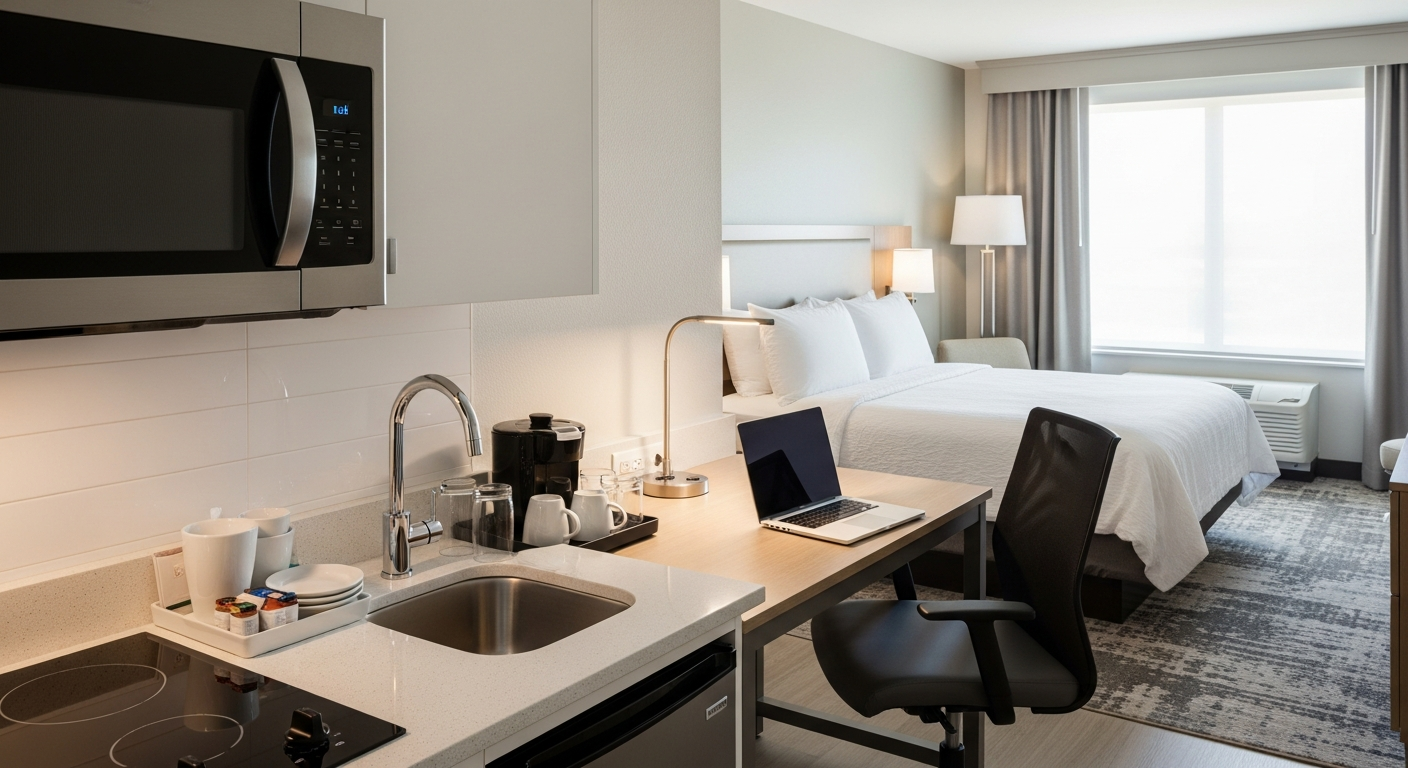
| 1 to 3 Weeks | Extended-Stay Hotels (e.g., Residence Inn, Homewood Suites) | No lease required. They include small kitchenettes so you aren't forced to eat expensive restaurant meals three times a day. |
| 1 to 3 Months | Corporate Housing (e.g., Furnished Finder, Blueground) | Fully furnished, turnkey apartments. More economical than hotels for mid-term stays, and provides actual living space for families. |
| 3 to 12 Months | Month-to-Month Rentals | For major structural rebuilds (like fire damage). Provides stability. Your insurance may hire a third-party housing locator to find this for you. |
What Else Does ALE Cover?
Beyond the actual roof over your head, ALE covers the hidden costs of being displaced. You must keep every receipt to claim these:
- Pet Boarding: If your temporary apartment or hotel does not allow your dog, ALE covers the kennel fees.
- Storage Units: The cost to rent a pod or secure storage unit for belongings that had to be moved out of the damaged house.
- Increased Transportation: If your temporary apartment is 20 miles further away from your office or your kids' school, you can claim the extra mileage/gas costs.
- Moving Costs: The cost of hiring movers to transport your salvaged furniture to the temporary apartment and back again when the house is fixed.

How to Avoid Claim Denials
The easiest way to get an ALE claim denied is failing to document it. Create a dedicated folder (physical or digital) on day one. Save every restaurant receipt, every hotel folio, and every laundromat charge. The adjuster will not take your word for it that you spent $40 on dinner.
Secondly, know your limits. Most policies cap Coverage D at 10% to 20% of your total dwelling coverage (Coverage A). If your home is insured for $300,000, you likely have $60,000 maximum for ALE. There is also usually a time limit (often 12 or 24 months). If you blow your entire budget on a luxury penthouse in the first three months, you will be paying out of pocket for the rest of the restoration.
Frequently Asked Questions
How does insurance pay for a hotel during water damage repair?
Insurance pays for a hotel through your policy's "Loss of Use" or ALE (Additional Living Expenses) coverage. You must be displaced due to a covered peril (like a sudden burst pipe, not gradual mold). Usually, you pay for the hotel upfront, save the receipts, and submit them to your insurance adjuster for reimbursement.
Does insurance cover food while displaced?
Yes, but only the additional cost. If you normally spend $800 a month on groceries, and you are forced to spend $1,500 eating at restaurants because your hotel lacks a kitchen, the insurance company will reimburse you for the $700 difference. You must provide receipts to prove the expense.
How long will insurance pay for temporary housing?
This depends on your specific policy. Most policies have a monetary limit (usually 10% to 20% of your dwelling coverage amount) and a time limit (typically 12 to 24 months). The insurance company will only pay for housing for the "shortest time required to repair or replace the damage," so unnecessary delays by your contractor can jeopardize your coverage.
Can I stay with friends or family and still claim ALE?
Usually, no. Because ALE is a reimbursement coverage, you must actually incur an expense to be paid. If you stay with your sister for free, you have no housing expense to claim. However, some insurance companies will allow you to claim a modest agreed-upon daily rate to pass on to your family members for hosting you, but you must negotiate this with your adjuster beforehand.
Ready to connect with a certified professional? Find restoration services near you through our verified contractor network.