
How much does it cost to dry out walls after water damage? Single-room professional drying typically runs $500 to $1,200; medium rooms $1,000 to $2,500; large rooms or open areas $2,000 to $5,000; whole-floor or multi-room jobs $5,000 to $15,000+. Add demolition, insulation replacement, drywall repair, and antimicrobial treatment and the total scope often doubles. Insurance covers most of this when the underlying water event is a covered peril.
Walls don't dry the way you'd hope. The drywall surface looks crisp by Tuesday and the homeowner thinks "we're through the worst of this," and meanwhile the framing behind the drywall and the insulation in the cavity is doing its slow, methodical impersonation of a sponge. (Walls have a stubborn streak. They are, in fairness, mostly air on purpose, and air is where moisture loves to live.)
Here's what professional wall drying actually costs in 2026, the variables that move the price, the hidden costs that come stacked on top, and when DIY is genuinely viable versus when it's a faster route to a much bigger invoice.
What "Professional Wall Drying" Actually Means
Professional wall drying is not pointing fans at wet drywall and hoping. It's a specific protocol with measurable targets:
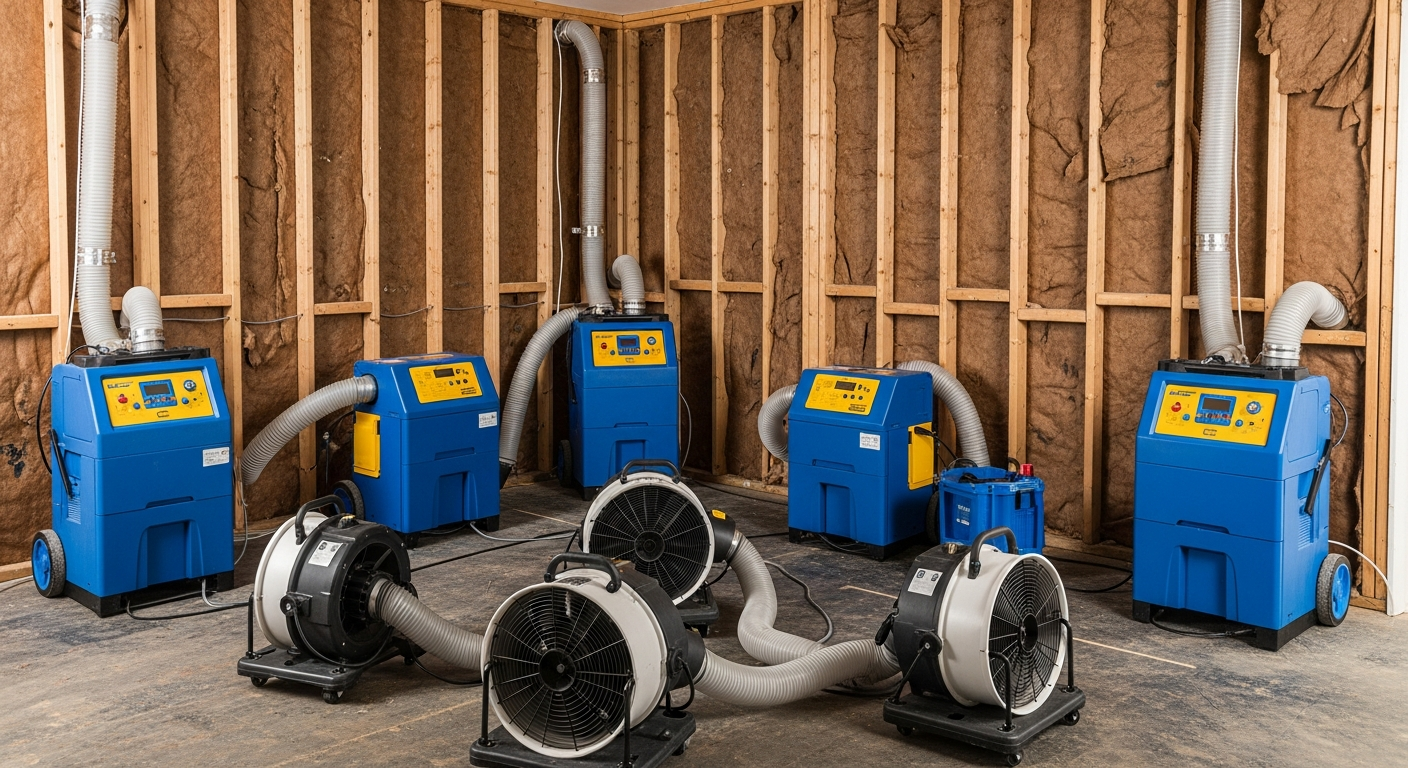
- Industrial-grade dehumidifiers (LGR — Low Grain Refrigerant) that remove 100–200 pints per day, vs. consumer units at 20–30 pints per day
- Strategic air mover placement aimed to circulate air across wet surfaces and into wall cavities (sometimes via baseboard removal or controlled drilling)
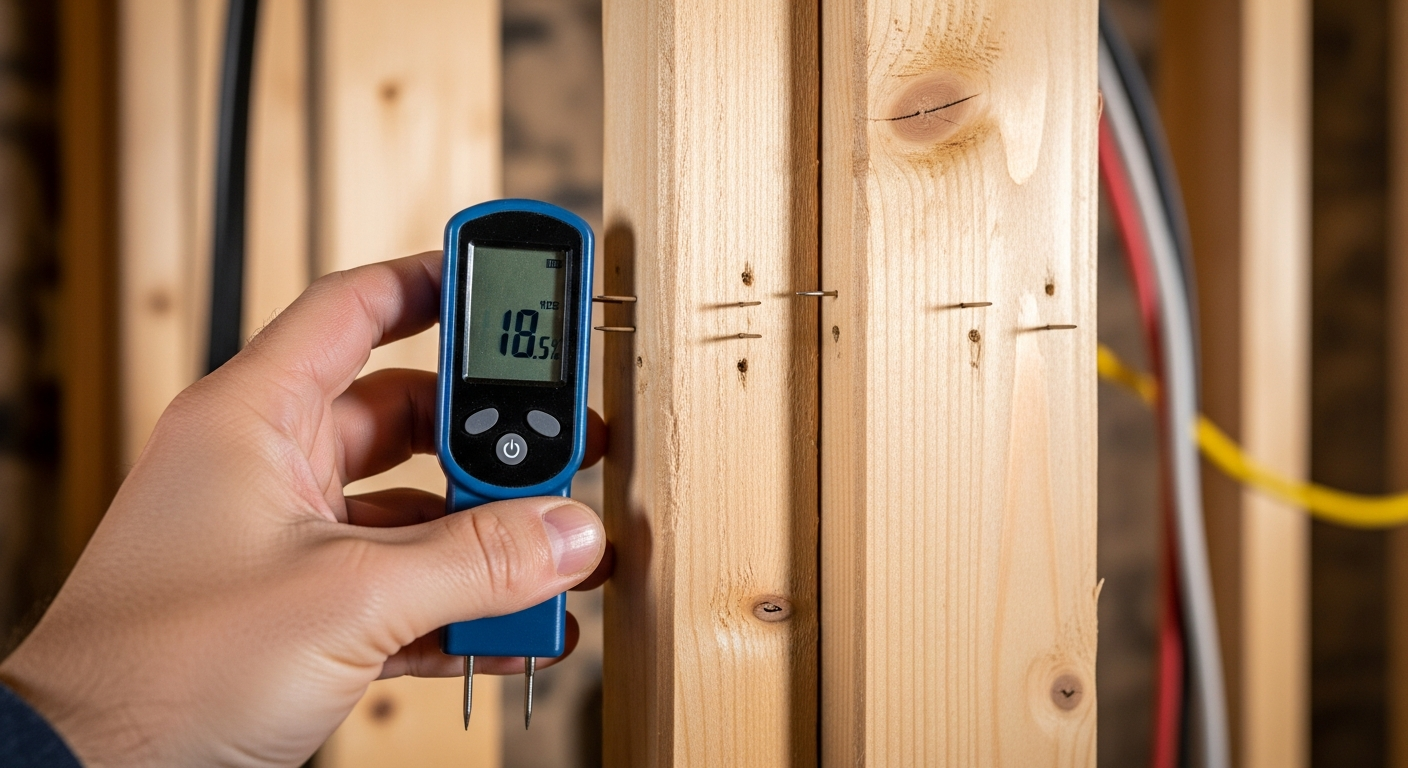
- Moisture meters measuring what's happening inside walls, not just on surfaces
- Thermal imaging cameras finding hidden saturation behind intact drywall
- Continuous monitoring with daily readings until target levels are achieved
The goal isn't surface-dry. The goal is structural-dry. Wood framing has to read below 16–19% moisture content (depending on species), drywall below 1%, insulation has to be either dried to spec or replaced. Visual inspection and touch don't get you there.
Drying typically takes 3–10 days for minor to moderate saturation. Severe saturation extends to 2–3 weeks of continuous treatment. Rushing this — calling it done early because the visible surface looks fine — guarantees future mold problems. (We have all done it. Most of us have learned not to.)
Wall Drying Costs by Room Size (2026)
Restoration companies typically price wall drying based on square footage of affected wall surface and the number of dehumidifiers/air movers needed. Realistic 2026 ranges:
| Affected Area | Typical Cost | What's Included |
|---|---|---|
| Small (bathroom, laundry, single wall section) | $500 – $1,200 | Equipment placement, 3–5 days monitoring, documentation |
| Medium (kitchen, bedroom, most/all walls in one room) | $1,000 – $2,500 | Multiple dehumidifiers, air movers, 5–7 days monitoring |
| Large (living room, basement, open-plan area) | $2,000 – $5,000 | Higher equipment count, ceiling drying if affected, 7–14 days |
| Whole floor or multi-room | $5,000 – $15,000+ | Comprehensive scope, multiple zones, longer timeline |
These are wall drying costs alone — not the full water damage restoration scope. Drying is one component; demolition, material replacement, and reconstruction stack on top of it.
What Drives the Cost Up (and Down)
Water category
Category 1 (clean) water is the cheapest baseline. Category 2 (gray) water adds 15–30% for additional PPE, antimicrobial treatment, and longer monitoring. Category 3 (black) water — sewage or floodwater — adds 50–100% because porous materials must be removed regardless of drying potential, and biohazard protocols apply throughout.
Wall construction
Standard drywall over wood studs dries relatively quickly. Walls with multiple layers (drywall over plaster, double-stud assemblies, dense-pack insulation) trap moisture deeper and take longer. Brick and concrete walls absorb significantly more water and dry on a different timeline — these can extend a job from days into weeks.
Insulation type
| Insulation | Salvageable When Wet? | Notes |
|---|---|---|
| Fiberglass batt | Sometimes | Can be dried if accessed quickly; otherwise replace |
| Blown-in cellulose | Almost never | Clumps and holds moisture; remove and replace |
| Spray foam (closed-cell) | Sometimes | Water-resistant but moisture can be trapped behind it |
| Spray foam (open-cell) | Rarely | Holds water like a sponge; usually replace |
| Mineral wool | Often | More forgiving than fiberglass; can usually dry in place |
Accessibility
Walls behind built-in furniture, in closets, or in finished spaces with limited access require more labour to set up properly. Open framing (after demolition) dries fastest because air can circulate freely — but if your walls are still intact and access is constrained, expect a longer timeline.
Structural saturation depth
When water has penetrated wall studs, top plates, or subflooring, drying times extend significantly. Severe structural saturation sometimes requires selective demolition to access and dry hidden areas — adding cost upfront but preventing far more expensive mold remediation later.
Additional Costs That Stack On Top
Wall drying alone is rarely the entire bill. Here's what typically gets added when scope expands:
| Add-On | Typical Cost | When It Applies |
|---|---|---|
| Moisture survey + insurance documentation | $200 – $500 | Most professional jobs (often included in base) |
| Demolition / opening walls for cavity access | $1 – $3 per sq ft of wall surface | When moisture readings show hidden saturation |
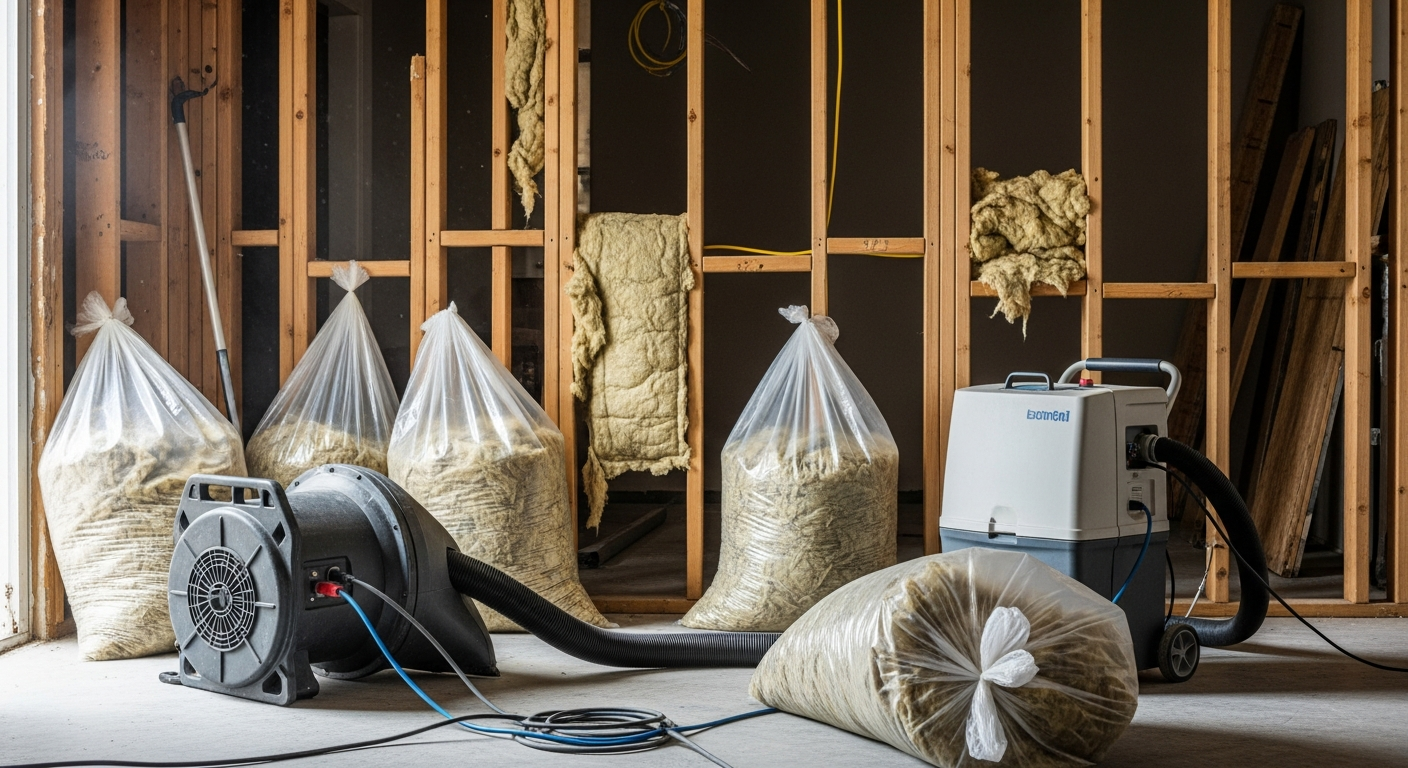
| Insulation removal + replacement (fiberglass batt) | $1.50 – $3 per sq ft | Standard residential applications |
| Insulation removal + replacement (blown cellulose) | $2 – $4 per sq ft | Often required after saturation |
| Spray foam removal | $3 – $8 per sq ft | Rare but expensive when needed |
| Drywall repair / replacement | $1.50 – $3.50 per sq ft installed | Most jobs with wet drywall |
| Antimicrobial treatment | $0.50 – $1.50 per sq ft | Recommended in any Cat 2/3 scenario; cheap insurance |
| Mold remediation (if delayed response) | $3,000 – $15,000+ | If drying didn't start within 48 hours |
The math homeowners often miss: a $1,200 drying job becomes a $4,500 drying-plus-demolition-plus-replacement job once the contractor confirms the insulation has to come out. Expect the initial estimate to grow as moisture readings reveal what's actually under the surface.
DIY Wall Drying: When It Genuinely Makes Sense
Minor, isolated water damage can be DIY-able. The conditions, all of which must be true:
- Water source was clean (Category 1) — not sewage, not contaminated
- Affected area is small (under ~4 square feet of wall)
- Water exposure was brief (under a few hours, not overnight)
- No visible warping, bubbling, or staining of drywall
- You have access to professional-grade equipment (rental dehumidifiers, air movers — not box fans)
- You have a moisture meter to verify drying — without this you're guessing
Rental costs: dehumidifier $50–$80/day, air mover $25–$40/day. Plan to run them 3–5 days minimum. So a DIY wall drying job costs $150–$300 in equipment plus your labour. If insurance is covering your claim, professional drying is almost always the smarter choice — they document everything, the insurer is happier, and you don't have a part-time job for a week.
Insurance Coverage for Wall Drying
Standard homeowners policies cover sudden and accidental water damage — pipe bursts, appliance failures, roof leaks from sudden weather events. Coverage typically pays for the drying scope, repairs, and sometimes contents cleaning.
Coverage gaps that catch homeowners out:
- Gradual leaks that went unnoticed are typically denied as maintenance issues, not sudden events
- Floods from outside sources (storm surge, groundwater) require NFIP or private flood insurance
- Sewer backup requires a specific endorsement on most policies
- Mold remediation may have a separate cap (often $5,000–$10,000) regardless of overall water damage coverage
Document obsessively from the moment you discover damage — photos before drying starts, during the process, and after. Save every receipt. Prompt notification and visible mitigation effort both improve claim outcomes meaningfully. Read more on water damage insurance coverage.
Frequently Asked Questions
How long does it take to dry out walls after water damage?
With professional equipment: 3–7 days for minor to moderate saturation, 7–14 days for severe cases, 2–3 weeks for very deep structural saturation. Without professional dehumidifiers and air movers, drying can take 2–4 weeks — and mold growth typically begins within 24–48 hours of water exposure, so the longer drying timeline often outpaces mold establishment.
Do professionals always have to remove drywall to dry walls?
Not always. Restoration companies use thermal cameras and moisture meters to assess whether in-place drying is viable. When moisture has penetrated insulation or accumulated in wall cavities, drywall removal becomes necessary to access the wet materials. The decision depends on saturation depth, insulation type, and drying speed required to beat the mold window.
How do I know if my walls are dry enough after water damage?
A moisture meter is the only reliable method. Wood framing should read below 16% moisture content (varies slightly by species). Drywall should read below 1% on a moisture meter scale. Visual inspection and touch are not reliable — materials can feel surface-dry while retaining problematic moisture inside. Never close a wall or proceed to reconstruction without documented moisture readings.
Will my insurance cover the cost to dry out walls?
If the water damage was sudden and accidental (covered peril), standard homeowners insurance typically covers professional drying as part of the overall water damage claim. Document the damage extensively before, during, and after drying. Gradual leaks, flood-source water, and unaddressed minor leaks may face coverage limitations. Read your declarations page to confirm specific coverage.
Can I just paint over a water-damaged wall after it looks dry?
No, and this is the single most expensive shortcut homeowners take. Paint over wet or marginally-dry drywall traps moisture inside, accelerates mold growth in the cavity, and creates the conditions for the paint to bubble and peel within 6–12 months. The paint job that "saved time and money" usually means redoing the work properly six months later, including all the now-mold-affected material. Verify dryness with a meter before any reconstruction.
Is it worth it to pay for professional drying if my insurance won't cover everything?
Often yes, if the damage scope is non-trivial. The cost difference between professional drying and DIY drying is usually a few hundred to a few thousand dollars. The cost difference between properly-dried walls and walls that grew hidden mold is typically tens of thousands of dollars in remediation a year later. The economics favour professional drying for any damage beyond the smallest contained spills.
Wall drying is one of those line items where paying a little more upfront prevents paying a lot more later. Get the moisture readings, run the equipment for the full duration, document everything, and resist the urge to call it done before the meter agrees with you. (Marco's neighbour painted over a "totally dry" wall in 2017 and rediscovered it in 2018 when the bedroom started smelling like a damp library. The remediation invoice now sits in his "do not repeat" folder, where it has filled in nicely as a cautionary keepsake.)
This post contains affiliate links. If you use them to find a contractor or product, we may earn a commission at no extra cost to you.