
Can I clean up water damage myself? Yes — for small clean-water spills (under 1 inch deep, under 10 sq ft, on non-porous surfaces, dried within 24 hours). No — for anything involving sewage, gray water, soaked drywall or carpet padding, structural saturation, multi-room spread, or water that's been sitting more than 24 hours. The wrong DIY call routinely turns a $4,000 mitigation into a $15,000 mold remediation.
The instinct to handle water damage yourself is reasonable. (You're a competent adult. You've got tools. The mop is right there. Why pay someone $4,000 to do what looks, optimistically, like an afternoon of work?) The honest answer is "sometimes you can, but the line where DIY becomes counterproductive is closer than most homeowners think — and crossing it tends to cost a lot more than the professional would have." Here's the decision framework, the equipment gap that decides most outcomes, and the cost math that explains why insurance adjusters frequently look unhappy when they hear "I tried to dry it myself."
The Honest Answer: It Depends — On Three Things
Water damage cleanup isn't one-size-fits-all. The decision hinges on three variables, in this order:
- Water category — Is this clean water (Category 1), gray water (Category 2), or black water (Category 3)? The category decides whether DIY is even on the table.
- Scope of damage — Square footage, depth, and which materials are wet. A puddle on a tile floor is a different problem than a saturated carpet over wood subfloor.
- Hidden moisture risk — Has water reached inside walls, under flooring, or into cavities you can't see? This is the variable that ruins more DIY attempts than any other, because you can't fix what you can't measure.
Get all three pointing toward "small, clean, contained" and DIY is reasonable. Get any one pointing toward "big, dirty, or hidden" and you're in pro territory.
When DIY Cleanup Is Actually Okay
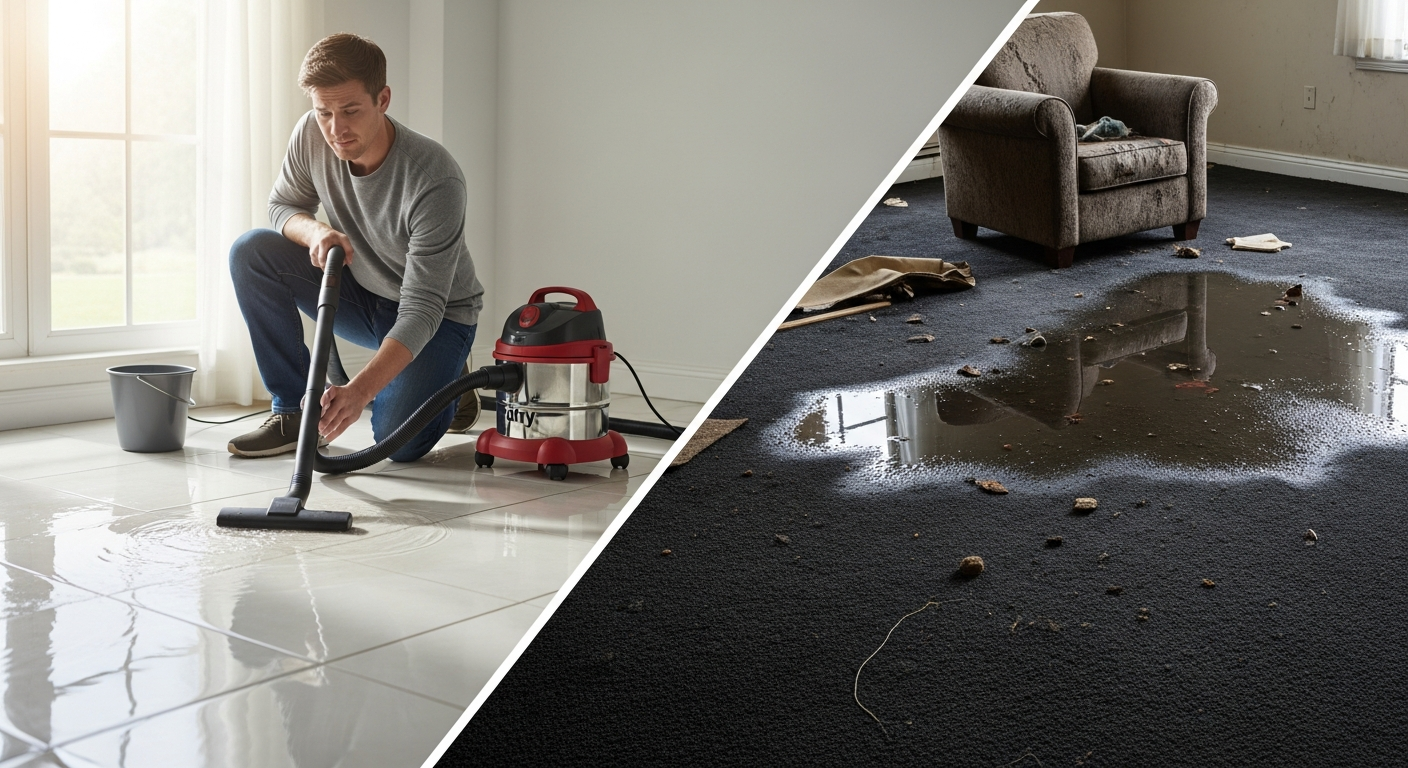
You can handle a small water incident yourself if ALL of these are true:
- The water is under 1 inch deep
- The affected area is less than 10 square feet
- The water is from a clean source (broken supply line, ice maker, melted snow tracked in — not toilet, not appliance drain, not sewage)
- Only non-porous surfaces are affected (tile, sealed concrete, vinyl, glass)
- You have access to a wet/dry vac and a real dehumidifier (not a box fan)
- You can complete extraction and drying within 24 hours
- No drywall, no carpet padding, no insulation got wet
When You Need a Professional (the Bigger List)
Call a certified water damage restoration company when ANY of these is true:
- Water is more than 1 inch deep at any point
- The affected area exceeds 10 square feet
- Drywall, insulation, baseboards, or wood subfloors are wet
- Water reached carpet padding (it almost always does — the surface dries first; the padding stays wet for weeks)
- The water is gray water or black water (categories explained below)
- Water has spread to multiple rooms or flowed into adjacent rooms via gaps
- You can't complete drying within 48 hours
- More than 24 hours have already passed since the incident
- Anyone in the household has respiratory issues, immune compromise, or mold sensitivity
Water Categories: What You're Actually Dealing With
The IICRC categorizes water damage in three tiers, and each tier rewrites the DIY calculus.
| Category | Source | DIY? |
|---|---|---|
| Category 1 — Clean water | Burst supply line, ice maker line, refrigerator water line, rainwater roof leak. Not contaminated at the source. | Maybe — if small, shallow, and addressed within 24 hours. |
| Category 2 — Gray water | Dishwasher overflow, washing machine, sink drain (no sewage), aquarium spill. Contains chemical or biological contaminants. | Generally no. Requires PPE and faster drying timelines than DIY can sustain. |
| Category 3 — Black water | Sewage backup, toilet overflow with waste content, floodwater, water that contacted any contaminated surface. Pathogens throughout. | Never. Professional biohazard remediation only. PPE, containment, EPA-registered antimicrobials. |
One trap: Category 1 water becomes Category 2 after 48 hours of sitting and Category 3 after 72 hours, because bacterial growth changes its classification. A clean burst pipe that sat over a long weekend isn't Category 1 anymore. The clock matters.
What Professionals Do That DIY Genuinely Can't Replicate
The single biggest reason DIY water damage cleanup fails isn't homeowner effort. It's equipment.
Industrial extraction
Truck-mounted pumps move thousands of gallons per hour. Your wet/dry vac moves perhaps 50–100 gallons per hour and needs to be emptied every five minutes. The capacity gap is multiple orders of magnitude. (We know. It feels productive. It is, just slowly.)
Commercial-grade dehumidification (this is the big one)
A consumer dehumidifier removes 20–30 pints per day under typical conditions. A professional LGR (Low Grain Refrigerant) dehumidifier removes 100–200 pints per day under the same conditions. That's not a marginal improvement — it's the difference between drying a room in 3 days versus 2–3 weeks. During those extra weeks, mold grows.
Air movers (the real ones, not box fans)
Professional air movers create directed high-velocity airflow across wet surfaces, dramatically accelerating evaporation. A box fan at maximum speed moves a fraction of the air a single restoration air mover does. Box fans also can't be aimed to do what air movers do — push air UNDER carpet via lifted edges, INTO wall cavities via baseboard drilling, and ALONG subfloor gaps.
Moisture detection (the part you definitely can't do without)
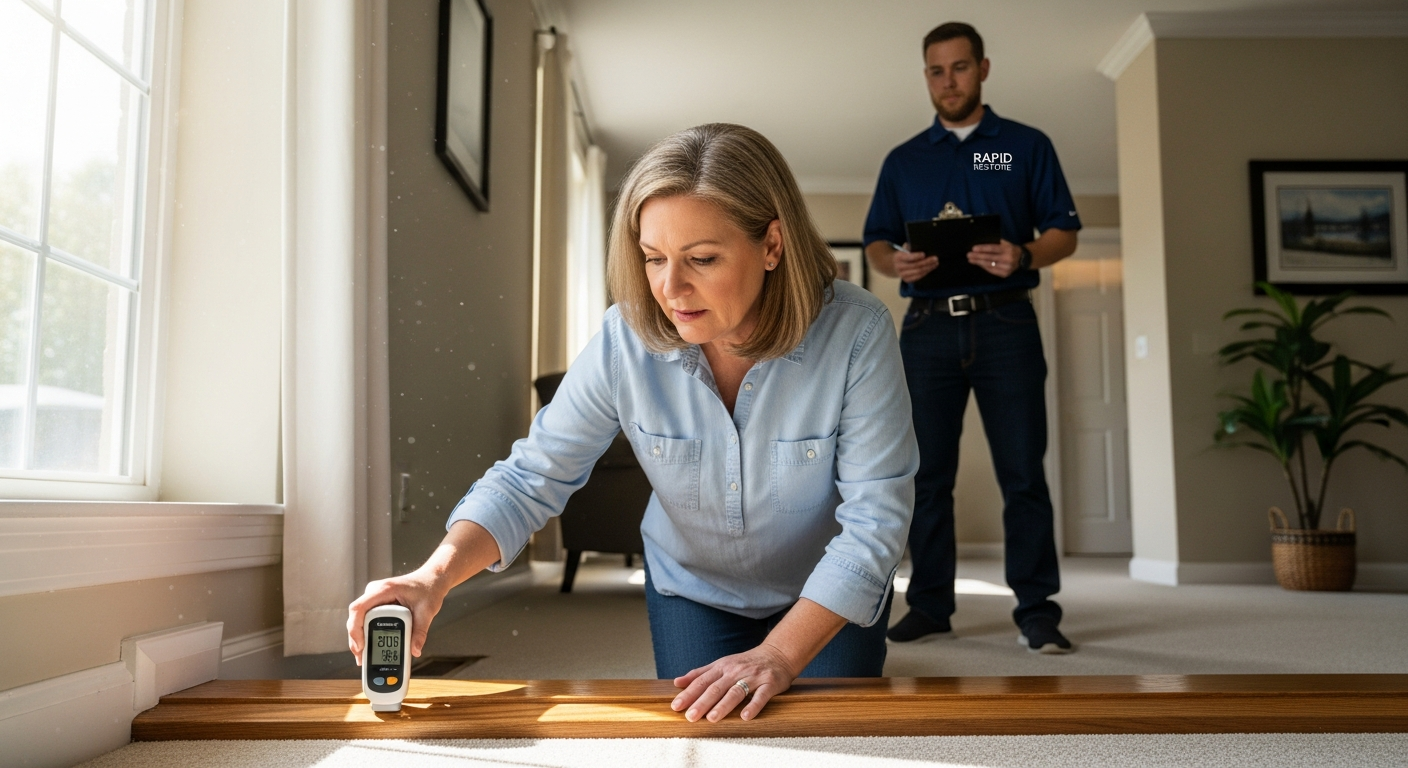
Thermal imaging cameras and moisture meters find water inside wall cavities, under flooring, and inside subfloor systems — places you cannot see and cannot dry without finding first. Without these, you're guessing whether the structure is actually dry, and the guesses tend to be optimistic. Hidden saturation that goes undried is mold tomorrow.
Antimicrobial treatment
EPA-registered biocides applied to all wet structural surfaces during the drying phase pre-empt mold establishment in the 24–48 hour window before it colonizes. Spray bottles of household disinfectant are not the same product.
Get a Professional Assessment
Most reputable restoration companies offer a free initial inspection to determine if you actually need professional help. Asking is free.
Find Water Damage Pros →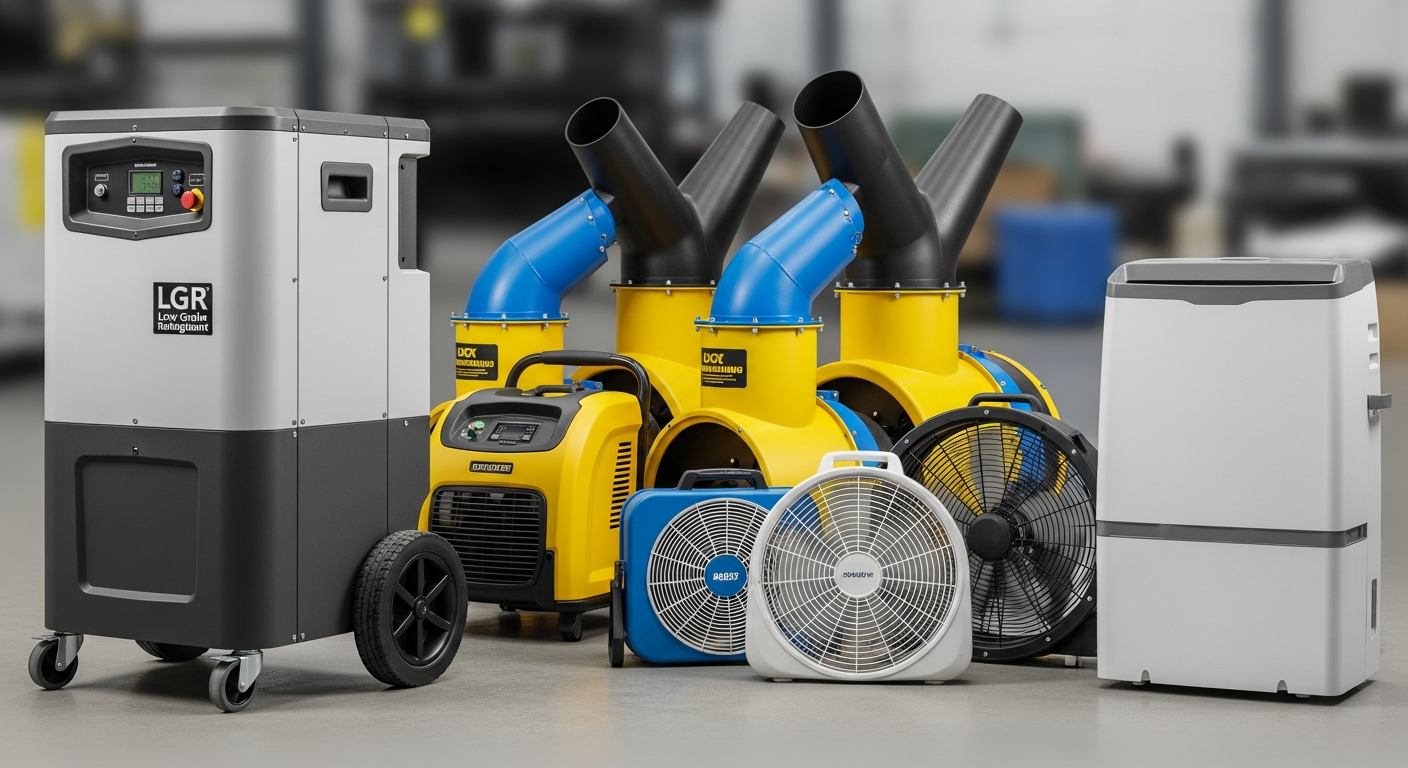
The Real Cost of DIY Mistakes
Homeowners who attempt DIY on damage that needed professional response routinely face four kinds of follow-up bills:
- Hidden mold remediation. Mold that grew while DIY drying was running insufficient equipment. Costs $3,000 to $20,000+ depending on scope. The single biggest hidden cost.
- Structural damage. Wet wood subfloors warp and rot if not dried properly. Replacement costs $2,000 to $10,000 per room.
- Insurance denials for secondary damage. Many policies require professional mitigation; if you DIY incompletely and mold grows, the secondary damage claim can be denied because you "failed to mitigate properly."
- Health costs. Mold exposure causes respiratory issues, allergic reactions, and in some cases more serious complications. These don't show on the cleanup invoice.
What to Do While Waiting for the Pros
Even if you're calling professionals, the first 30 minutes still matter. While you wait:
- Remove standing water if safe (wet/dry vac or buckets — only on Category 1 water with no electrical hazards)
- Move valuables, electronics, and porous items (books, paper, fabric) to a dry area
- Turn off electricity to affected areas if safely accessible
- Document the scene with photos and video — wide context, then close-ups, then any source visible
- Open windows for ventilation only if outdoor humidity is lower than indoor (a $15 hygrometer tells you)
- Don't use household fans without dehumidification — they spread moisture and contaminants without removing them
- Don't disturb anything that obviously contains contaminated water
Frequently Asked Questions
How do I know if there's moisture inside my walls?
Visible signs include bubbling or peeling paint, warped baseboards, persistent musty odors, water stains that grow over days, drywall that feels soft or cool to the touch, and tape lines that show through finished paint. None of these are reliable on their own — professional moisture meters and thermal cameras detect hidden moisture far more accurately than visual inspection. If you've had a water event and aren't sure if there's hidden saturation, that's the most common reason to bring a pro in for an assessment.
How long does professional water damage restoration take?
Minor damage (small area, clean water, contained): 1–3 days for full mitigation. Moderate damage (multiple rooms, structural saturation): 3–7 days for mitigation. Severe damage (whole-home saturation, mold prevention scope): 1–3 weeks for mitigation alone. Reconstruction (drywall, paint, flooring) typically adds 2 weeks to 3 months on top of mitigation, depending on scope and contractor availability.
Can I use a regular vacuum for water cleanup?
No. Regular vacuums are not rated for water — using them on wet surfaces can damage the motor, void warranties, and create electrical shock hazards. Only wet/dry vacs (also called shop vacs) are designed to handle water. If you don't have a wet/dry vac, professional extraction is the right call. Renting one for a small job is also reasonable.
How much does professional water damage restoration cost?
Typical 2026 ranges: minor damage (one room, clean water) $1,500 to $4,500. Moderate damage (multiple rooms or structural materials) $4,500 to $12,000. Severe damage (whole house, contaminated water, or mold remediation) $12,000 to $30,000+. The biggest cost variables are water category, square footage, time before mitigation began, and whether porous materials had to be removed and replaced. See our detailed cost guide for line-item breakdowns.
Will my insurance still pay if I tried to clean it up myself first?
Often yes for the original damage, but secondary damage claims (mold, structural deterioration, ruined materials beyond what the original event caused) can be denied if your DIY cleanup is judged to have been inadequate. Most policies require homeowners to "mitigate" damage promptly and properly — and "promptly" usually means calling professionals quickly, not running consumer fans for two weeks. If you're unsure, document everything and call your insurer before starting major DIY.
What if I already started DIY and now I'm worried it's not working?
Stop and call a professional. They'd much rather come in and finish a job that was started DIY than show up two weeks later to a mold remediation. Most restoration companies will assess what you've done, finish the drying with proper equipment, and verify with moisture meters whether structural materials are actually dry. The earlier the handoff, the cheaper the rescue.
The Right DIY Equipment (If You're Proceeding)
If the damage is genuinely minor and you've confirmed it's safe to handle yourself, use proper equipment — not just whatever's in the garage:
- Wet/Dry Shop Vac (6–12 gallon) — for extracting water from hard floors and tight spaces. The 6-gallon range handles most small jobs without constant emptying.
- Moisture Meter — the single most important DIY tool, and the one most homeowners skip. Tells you whether materials are actually dry, not just feeling dry on the surface. Never close a wall, replace baseboards, or call the job done without checking the readings first.
- Commercial-Grade Dehumidifier (70-pint or larger) — consumer-grade dehumidifiers are not powerful enough for water damage drying. A 70-pint unit is the practical minimum for a single water-damaged room. Smaller units extend the drying timeline into mold-establishment territory.
The honest framework: small + clean + fast = DIY can work. Big, dirty, slow, or hidden = call the pros and stop debating it. The decision isn't about effort or capability — it's about whether the equipment you can deploy in your garage is enough to dry the structure inside the 48-hour mold window. (Marco's brother once spent six days drying his kitchen with two box fans and a hopeful attitude. The mold remediation that followed took fourteen. He now uses an LGR dehumidifier as a coffee table conversation piece, which is concerning on multiple fronts.)
This post contains affiliate links. If you use them to find a contractor or product, we may earn a commission at no extra cost to you.