
What should you do in the first 72 hours after hurricane water damage? Wait for the all-clear before re-entering, check for structural damage and gas before stepping inside, document everything photographically before touching anything, file your insurance claim within hours, and get a certified restoration crew dispatched as fast as possible. The 24–48 hour mold window is the line between repair and remediation.
Hurricanes do not arrive in solitude. They bring rising water, wind-driven rain, downed trees, displaced everything, and a slow-rolling logistical mess that lasts longer than the storm itself. The first three days after the wind dies down are the part nobody plans for — and they're also the part that decides whether your home recovers in a month or in a year.
This is the playbook. Safety first, documentation second, drying third. In that order. (Skipping any of the three is how households lose more money to the recovery than to the storm.)
Hours 0–4: Safety Assessment
The post-storm hours are when most secondary injuries happen. Adrenaline is high, the ground is uneven, and people walk into compromised structures because they want to know if the photo albums survived. Slow down, do the safety pass first, and bring a flashlight — not a candle, regardless of what the romantic-comedy version of post-disaster looks like.
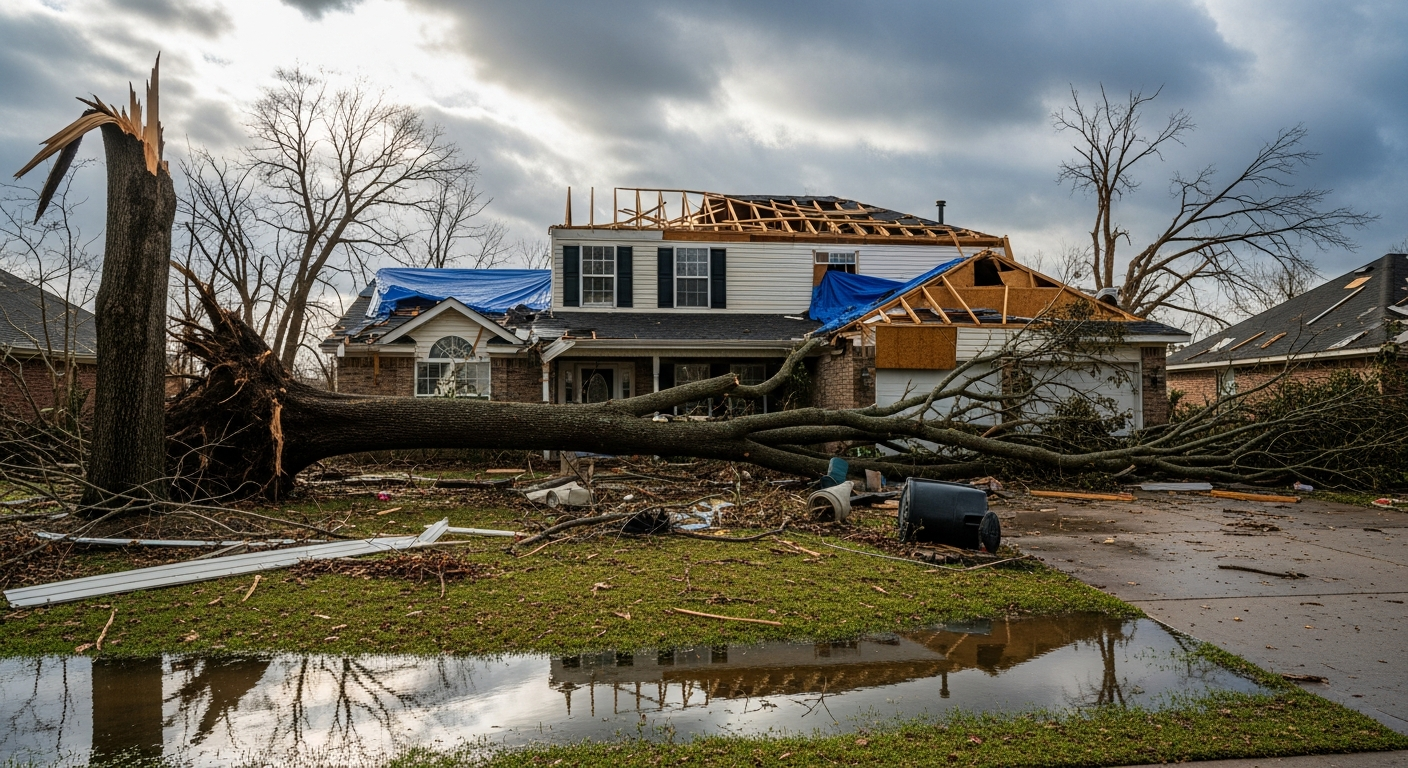
From outside the home, look for: leaning or bowing walls, foundation cracks wider than a hairline, partial roof collapse, large sections of siding torn away, fallen trees against the structure, and any visible structural shift. Any of these means a structural engineer or your local building inspector should clear the property before you go in. Insurance covers the inspection cost in most cases, and "I just took a quick look" has put more people in emergency rooms than this paragraph will undo.
If you smell gas or hear a hissing sound, do not enter. Move clearly away from the building, turn off the gas at the meter if you can do so safely from outside, and call your gas utility's emergency line. Until they clear it: no electrical switches, no flashlights with sparking switches, no lighters, no phones inside. The "phone" rule surprises people. A phone can spark.
If you can reach the main electrical panel safely without walking through floodwater, shut off power to the entire home before entering. If the panel is in a flooded area or you'd have to wade to reach it, contact your utility and ask them to disconnect power at the meter. Floodwater plus live electrical equals a category of bad outcome that nobody recovers from.
Hurricane floodwater is, almost without exception, Category 3 — contaminated. Storm surge has touched ocean, sewer, gas station runoff, and every storm drain on its way to your living room. Treat all standing water as contaminated. Wear rubber boots, gloves, and at least an N95 respirator for any contact. Do not let pets or children near affected areas until cleanup is done.
Hours 4–12: Documentation
Documentation is the part most homeowners shortcut, and it's the part that costs them most when the claim gets adjusted. Spend an hour here. It pays for itself many times over.
Walk through every room and document systematically. Wide shots first (room context), then medium shots (damage zones), then close-ups (specific damage detail). Capture: water level marks on walls (hold a yardstick or tape measure against the line for scale), damaged materials, the exterior of the home, the roof from ground level, every visible point of water entry, and the contents of every room. Enable the timestamp setting on your camera. Yes, it's tedious. Yes, you'll be photographing furniture you don't even like. Do it anyway.
If your phone is dead and the power is out, this is what the truck-stop USB hub was made for.
Report the claim as soon as you have signal. Get a claim number and the name of your assigned adjuster in writing. Ask specifically: (a) am I authorized to begin emergency mitigation immediately, or do I need to wait for an adjuster visit? and (b) what's the deadline for the Proof of Loss form?
Most insurers authorize immediate emergency mitigation — every hour the water sits in your home is more cost for everyone, including the insurer. But "most" is not "all," and you want this in the call notes. While you have them on the line, ask whether your policy includes Additional Living Expenses (ALE) and what the daily allowance looks like, because if your home is uninhabitable you'll be using that quickly.
From the moment you start mitigating, keep receipts for: tarps, plywood, plastic sheeting, dehumidifier rentals, fans, generator fuel, hotel stays, restaurant meals if you're displaced, replacement clothing if yours is lost, transportation costs to and from the property. ALE coverage often reimburses these. The receipts pile is unromantic but it's also the thing that pays for the next month of your life.
Hours 12–48: Emergency Mitigation
After major hurricane events, certified restoration companies receive enormous call volume — sometimes hundreds of calls per crew per day. Companies service customers in the order they're received, so the difference between calling at hour 12 versus hour 48 can be the difference between a 3-day drying job and a six-week mold remediation project.
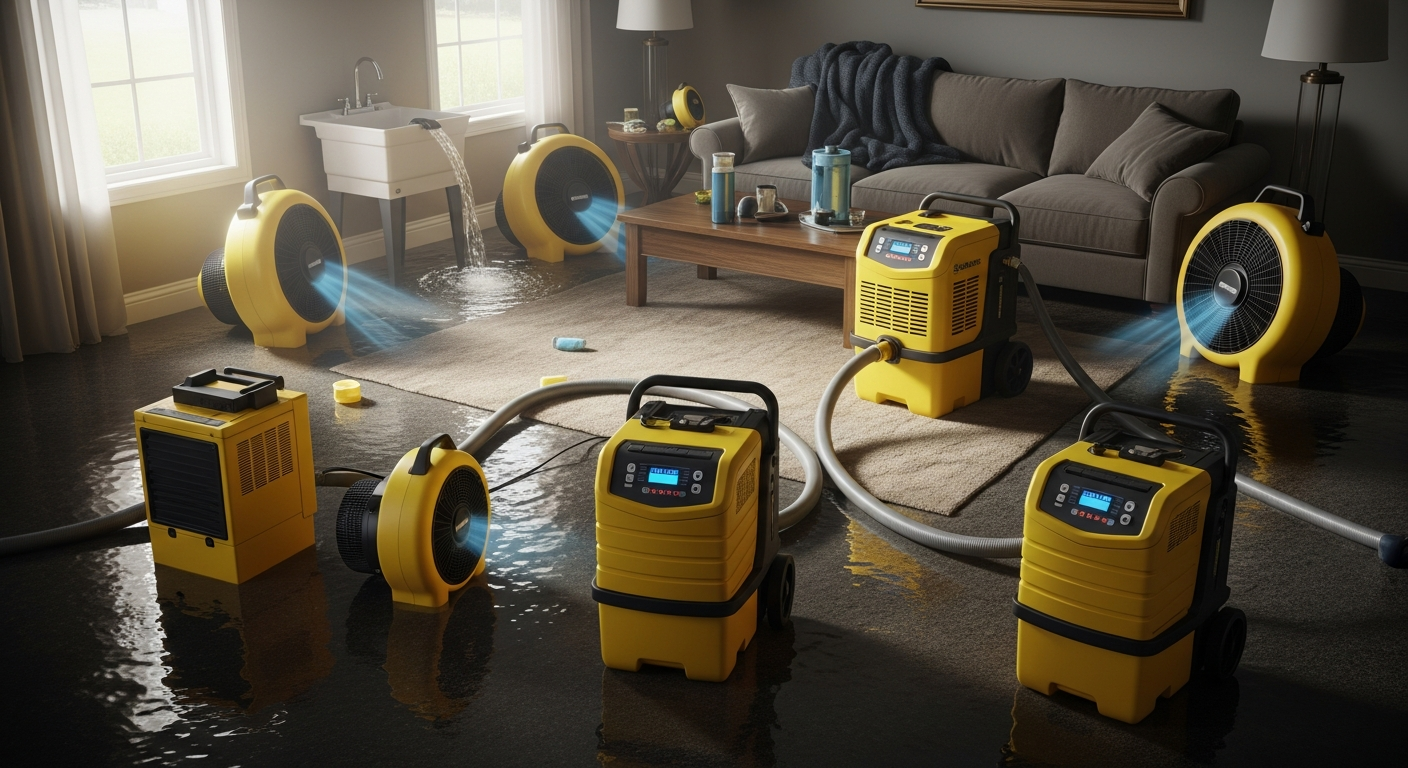
What professional restoration brings that you cannot replicate at home: industrial water extraction pumps, commercial-grade LGR dehumidifiers (100–200 pints per day, vs. 30–50 for consumer units), thermal imaging to find moisture inside walls and under floors, and moisture metering to confirm complete drying before reconstruction begins. Drying that looks done at the surface is rarely done in the structure. The metering is what proves it.
If significant standing water remains and the professional dispatch is days out, removing it with a wet/dry shop vac or portable pump reduces total damage. Conditions: only Category 1 or Category 2 water, no electrical hazards anywhere near the work area, and you're wearing the appropriate PPE.
Do not attempt to dry walls, framing, or subfloor with consumer fans alone — they move room air without removing moisture, and in a humid coastal post-hurricane environment that just spreads moisture into adjacent rooms while doing nothing to the wet structure. Pump it out, blot what you can, then wait for the proper equipment.
If the roof has been compromised, temporary tarping prevents additional water entry during post-storm rain (and there is, almost always, post-storm rain). Use a tarp that extends over the ridge of the roof — not just covering the damaged section — and secure it with boards screwed in place, not just rope and bungees. Water finds any opening at the peak. Wind finds any rope you tied at 4 a.m. while exhausted.
If you're uncomfortable on a roof in any condition (and especially a hurricane-damaged one), this is what tarping crews are for. Many restoration companies offer emergency tarping as a stand-alone service. Insurance reimburses it.
Hours 48–72: Mold Prevention and Material Triage
Some materials cannot be effectively dried or cleaned after significant water exposure and become mold food sources even after the visible water is gone. They have to come out. The list:
- Carpet and padding that was submerged or sat wet beyond 24–48 hours.
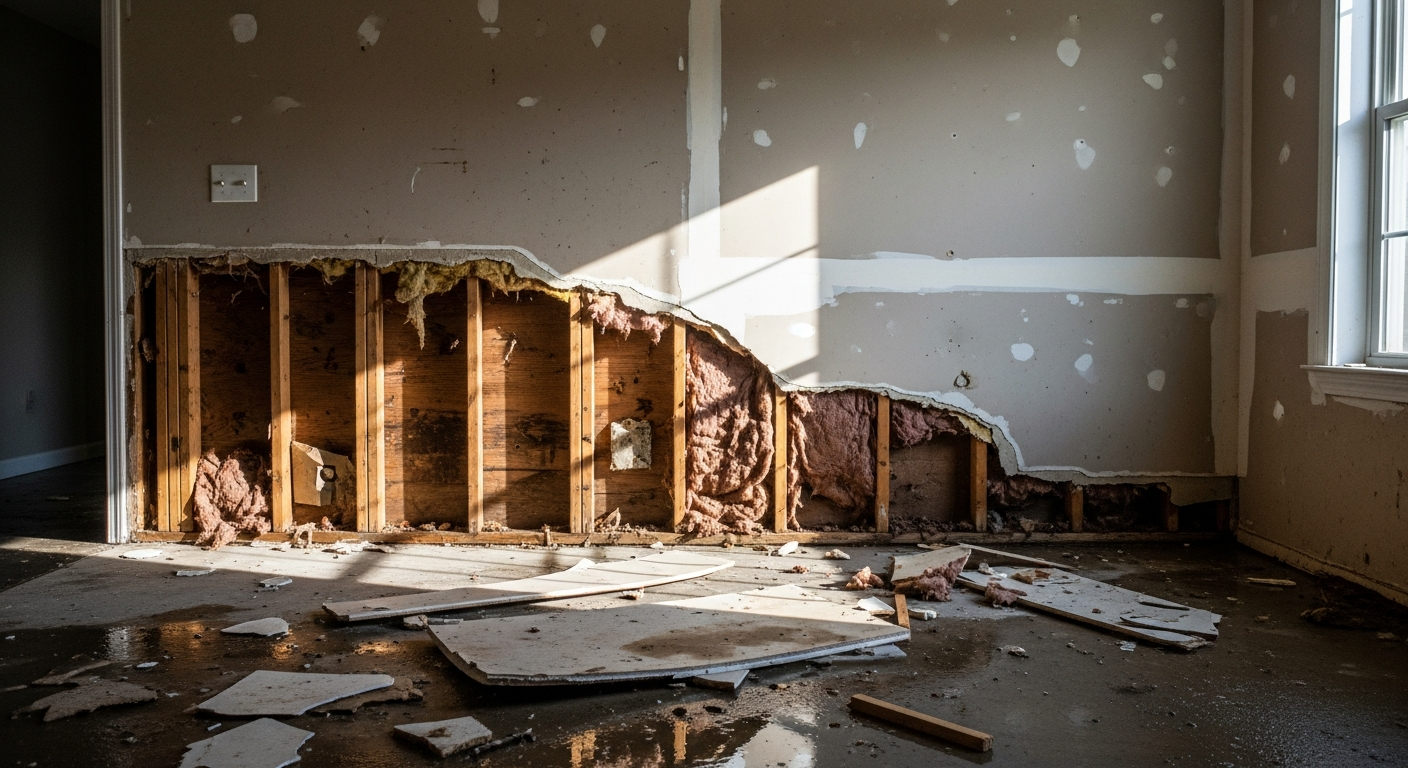
- Drywall that was wet for more than 24–48 hours, or that was contacted by Category 3 water for any duration. The drywall paper backing is the mold's favourite breakfast.
- Insulation that absorbed water — fibreglass and cellulose both lose insulation value when wet and don't recover.
- Particleboard, OSB subfloor, MDF — engineered woods that swelled or delaminated.
- Upholstered furniture that was submerged or saturated, especially in Category 3 water.
- HVAC ductwork contaminated by floodwater. The ductwork redistributes contaminants every time the system cycles.
What stays: solid wood structural framing (dried and tested), tile flooring (cleaned), metal fixtures (cleaned and dried), and any material proven dry by moisture meter readings within acceptable ranges. The decision rule: if a material is porous and was wet, it usually goes; if it's non-porous, it usually stays after cleaning.
Opening windows and doors only accelerates drying when outdoor humidity is lower than indoor humidity. After a hurricane in a coastal environment, outdoor humidity is often 80–95% — bringing that air inside slows drying instead of speeding it up. Check current outdoor humidity with a hygrometer (consumer ones cost $15) before opening the home up. Most of the time, the answer is: keep it closed and run mechanical drying.
Professional drying setups establish a controlled drying environment — sealed doors, dehumidifiers running constantly, air movers strategically placed to push air across wet surfaces. The whole house becomes one big controlled chamber. This is why the equipment matters and why a roomful of box fans isn't a substitute.
Visible mold within 48 hours is a sign that the drying is failing. Black, green, or grey patches on drywall, behind baseboards, or around water-line marks need to be reported to your restoration crew immediately. Don't try to clean mold yourself in a hurricane recovery context — disturbing it spreads spores throughout the home and into HVAC systems. Containment first, cleaning second, and both are professional jobs at this scale.
Day 4 Onward: Insurance, Adjusters, and the Long Tail
By day four, the immediate emergency is mostly handled. Now the slower, harder work begins — insurance claim management, adjuster meetings, scope negotiations, contractor selection, supplemental claims for hidden damage, and somewhere in there, a normal life.
A few things to know about hurricane-claim adjusting that don't apply to ordinary water damage:
- Two policies, one event. Wind damage is homeowners insurance; flood damage is NFIP or private flood. Hurricane claims usually involve both, and the two adjusters will negotiate which damage belongs to which policy. Document the source of water entry obsessively — photos of broken windows, missing roof shingles, water lines on exterior walls — because the wind/flood split decides which policy pays which line item.
- Public adjusters can help. If the claim is large and complicated, a public adjuster (separate from your insurer's adjuster) represents you for a percentage of the settlement. Worth it on six-figure claims; usually overkill on smaller ones.
- Supplemental claims are normal. Hidden damage often isn't found until demolition is underway. A contractor who refuses to file supplements is a contractor who's eating the cost as cut corners. Pick a contractor who will document supplements, not absorb them.
- The 60-day Proof of Loss rule on flood claims is enforced. If your flood damage went through NFIP, you have 60 days from the date of loss to file the formal Proof of Loss form. Calendar reminder, set it now.
Frequently Asked Questions
How quickly does mold grow after hurricane flooding?
In humid coastal climates, mold can begin establishing colonies within 24–48 hours of water exposure — faster than in drier regions. The combination of warm temperatures, high ambient humidity (often 80–95% post-hurricane), and saturated building materials creates ideal mold conditions. Professional drying must begin as quickly as possible after the storm passes — every hour past the 48-hour mark increases remediation cost and complexity.
Is hurricane water damage covered by homeowners insurance?
It depends on how the water entered. Wind damage from a hurricane is typically covered under standard homeowners insurance, including water that entered through wind-created openings (broken windows, compromised roof). Storm surge, rising groundwater, and overland flooding require separate flood insurance through NFIP or a private carrier. Most major hurricane claims involve both policies — documenting the water entry source is critical to the wind-vs-flood split.
Can I use regular fans to dry my home after hurricane flooding?
No. Consumer fans move room air without removing moisture, and in a post-hurricane coastal environment that just spreads humidity into adjacent rooms. Effective drying requires commercial-grade air movers paired with industrial LGR dehumidifiers operating in a sealed environment — equipment used by professional restoration companies. Box fans are not a substitute and may actually slow drying by recirculating humid air.
When is it safe to return to my home after a hurricane?
Return only after local authorities have issued an all-clear. Even then: do not enter if you see structural damage, smell gas, see floodwaters around the property, or notice downed power lines near the building. If sewage-contaminated water entered the home, wait for professional remediation before extended occupancy. The house will still be there in a few hours; emergency room visits after a premature return are common and avoidable.
What should I throw out after hurricane water damage?
Items submerged or saturated by Category 3 (contaminated) hurricane floodwater that should generally be discarded: upholstered furniture, mattresses, carpet and padding, wet drywall, water-soaked insulation, particleboard furniture, contaminated food (anything in compromised packaging), water-damaged paper documents (or send to a specialist freeze-dryer), and personal hygiene items. Document everything photographically before discarding for the insurance claim.
How long does hurricane water damage restoration take?
Mitigation (water extraction, drying, demolition of unsalvageable materials) typically takes 5 to 14 days after a major event, depending on the severity and how quickly professionals can be dispatched. Reconstruction (drywall, paint, flooring, cabinetry, finish work) takes 1 to 6 months for typical residential damage, longer for severe cases. Total displacement is often 2 to 4 months for moderate hurricane damage, and longer when the regional contractor pool is overloaded after a big storm.
Hurricane recovery is a marathon, not a sprint, and the first 72 hours are the part where the time pressure is highest. Make the safe call. Document obsessively. Dispatch the pros early. Save every receipt. The house can be rebuilt, the photos and the routine will return, and somewhere on the other side of the dehumidifier rental you will be home again. (Marco's neighbours rebuilt after Wilma. They're still there, with a slightly different deck and a much better insurance binder.)