
What does flood insurance cover? NFIP flood insurance covers direct physical damage to the structure (up to $250,000) and personal contents (up to $100,000) caused by surface flooding. It does NOT cover temporary housing, finished basement contents, vehicles, outdoor property, or mold from delayed cleanup. Private flood insurance can extend coverage but isn't federally backed.
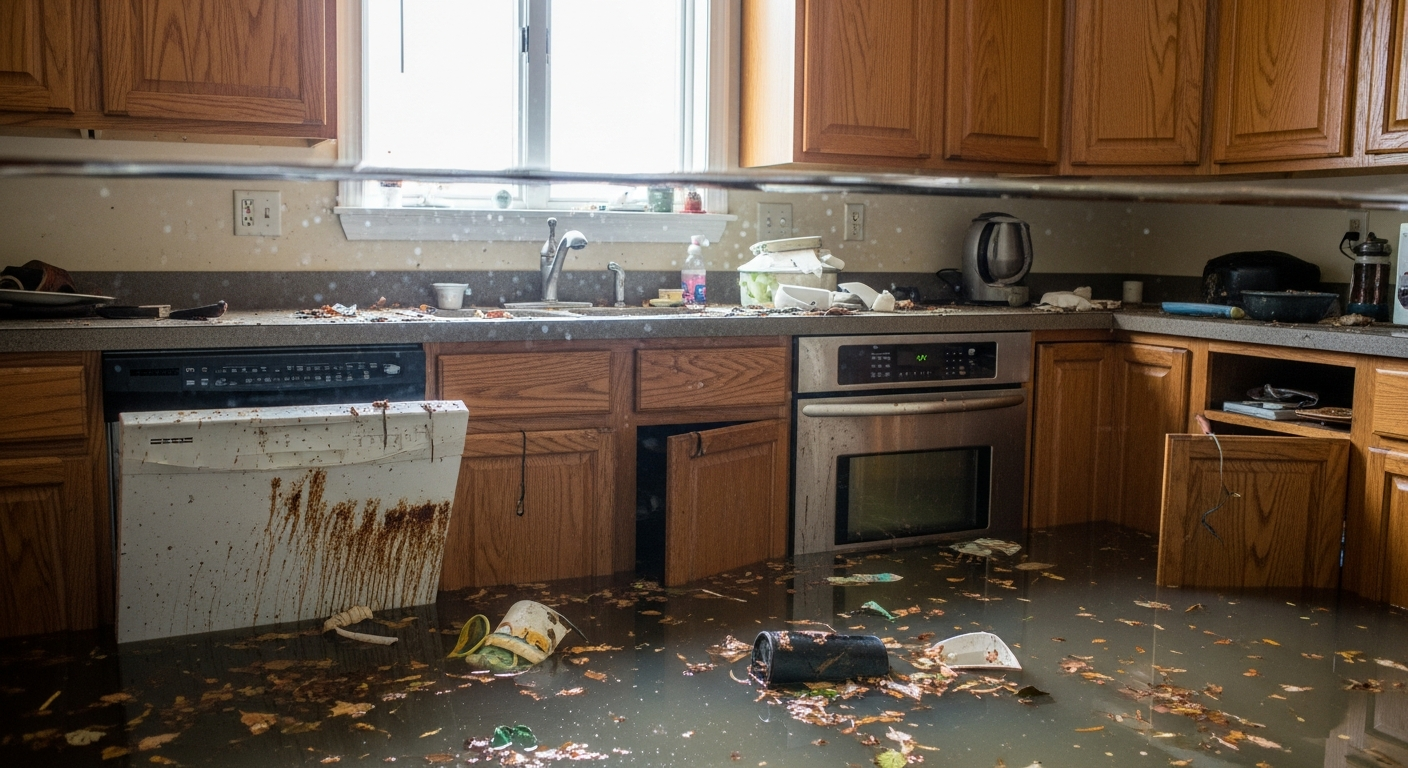
Flood insurance is the personal-finance product nobody understands until they're standing in two feet of water on what used to be the kitchen floor. (And then, in fairness, they understand it very rapidly. Crisis is an excellent tutor.) The standard misconceptions go in both directions: people who don't have it assume their homeowners policy covers floods (it doesn't), and people who have it assume it covers everything water-related (it doesn't, and the exclusions are specific enough to make a tax form look casual).
Here's the full breakdown — what NFIP actually covers, what it pointedly does not, where private flood insurance fills the gaps, and the small but expensive details (waiting periods, ACV vs replacement cost, basement contents) that decide whether your claim makes you whole or makes you grumpy.
Why Flood Insurance Exists As Its Own Thing
Standard homeowners insurance excludes flooding. Specifically, it excludes water that rises from the ground rather than entering from above. A burst pipe spraying water into your living room is covered. A river coming up through the floorboards is not. The dividing line is the direction of travel — water from above, covered; water from below or sideways, not covered. (Yes, this is genuinely the legal distinction. No, the water cares not at all.)
Private insurers historically avoided flood coverage because of the catastrophic, correlated nature of flood losses — when a flood hits, an entire neighbourhood files claims simultaneously, which breaks the actuarial math that underpins most insurance. The federal government created the National Flood Insurance Program (NFIP) in 1968 specifically to provide what private markets weren't offering. Today, both NFIP policies (issued through private insurers but backed by the federal government) and genuine private flood insurance policies are available — and they cover different things in different ways.
NFIP Flood Insurance: What's Actually Covered
NFIP flood insurance has two parts: building coverage (the structure) and contents coverage (your stuff). They are sold separately. You can buy one, both, or neither — and most lenders only require building coverage on the mortgage, which leaves a lot of homeowners surprised when the contents claim gets denied.
Building Coverage — Up to $250,000
Building coverage applies to the structure and its permanently installed components:
- Foundation walls, anchorage systems, and staircases
- Electrical and plumbing systems
- HVAC equipment, water heaters, and fuel tanks
- Built-in appliances (refrigerators, cooking stoves, dishwashers, microwaves if built in)
- Permanently installed carpeting (over unfinished flooring only — see exclusions)
- Permanently installed paneling, wallboard, and cabinets
- Window blinds and built-in bookcases
- Detached garages — up to 10% of the building coverage limit
- Solar energy equipment, well pumps, and water tanks
Contents Coverage — Up to $100,000
Contents coverage applies to personal belongings — but with significant fine print:
- Clothing, furniture, and electronics
- Portable and window air conditioners
- Washers and dryers (if they're not built-in)
- Stand-alone microwaves
- Valuable items (art, jewelry, furs, silverware) — limited to $2,500 per category
The hidden detail: standard NFIP contents coverage pays actual cash value (depreciated), not replacement cost. A 7-year-old television worth $1,200 new is worth $200 under ACV. The math gets ugly fast on contents-heavy losses. You can buy a Replacement Cost Value endorsement for primary residences, but it's not the default — read the policy.
What NFIP Flood Insurance Does NOT Cover
The exclusions are the part that catches most policyholders out. None of these are fine print — they're explicit policy terms — but they're also not the part insurance agents lead with at the kitchen table.
- Finished basement contents. If your basement has drywall, carpet, finished flooring, or living-space construction, the personal property stored there is largely excluded. Building coverage extends to basement systems (HVAC, water heaters), but the couch, the TV, the kid's old PlayStation, your wedding photos in the box marked "FRAGILE" — none of that is covered. This single exclusion is responsible for more "I thought I was covered" disasters than any other.
- Additional living expenses. Standard homeowners insurance pays for a hotel when your house is uninhabitable. NFIP does not. If your house is unliveable for three months while it dries out, the hotel bill is yours. Some private flood policies include ALE — NFIP doesn't.
- Vehicles. Cars, motorcycles, boats — none of these are covered by flood insurance. Comprehensive coverage on your auto policy is what pays for a flooded car. Park accordingly.
- Outdoor property. Fences, landscaping, swimming pools, patios, decks, septic systems, walkways, retaining walls — all excluded. Pool guys hate this fact. Pools are expensive.
- Mold from delayed cleanup. If you don't clean up promptly, mold growth that "could have been avoided" is excluded. The "could have been avoided" language is doing real work here — adjusters use it generously.
- Business interruption. Lost income from a home business is not covered. If your home office floods and you can't see clients for two months, that lost revenue is on you.
- Damage above policy limits. The $250,000/$100,000 NFIP caps were last meaningfully adjusted decades ago and are insufficient for many high-value homes. Whatever your structure costs to rebuild beyond $250,000 is your problem unless you've layered private excess flood coverage on top.
One more category that surprises people: currency, valuable papers, deeds, stock certificates, and precious metals are excluded entirely. Yes, even if they were inside the home. The NFIP isn't paying for the Krugerrand collection. (We don't recommend storing a Krugerrand collection in a basement, but you do you.)

Private Flood Insurance: Where It Beats NFIP and Where It Doesn't
Private flood insurance has grown significantly since 2016, when federal regulations made it easier for lenders to accept private policies in lieu of NFIP. For some properties — especially newer homes outside high-risk zones — it can offer better coverage at a lower price. For others, NFIP is still the right call.
| Coverage Detail | NFIP | Private Flood |
|---|---|---|
| Maximum building coverage | $250,000 | Often $1M+ available |
| Maximum contents coverage | $100,000 | Often $250K+ available |
| Contents valuation | Actual Cash Value (default) | Often Replacement Cost Value |
| Additional Living Expenses | Not covered | Often included |
| Waiting period | 30 days | 10–14 days typical |
| Federal backing | Yes (US government) | No (private insurer's balance sheet) |
| Premium for low-risk properties | Often higher | Often lower |
| Premium for high-risk properties | Often lower (subsidized) | Often higher |
The honest assessment: private flood insurance is usually the better option for low-to-moderate risk properties that need higher limits, replacement cost contents, and ALE. NFIP is usually the better option for high-risk Special Flood Hazard Area properties (the federal subsidy is meaningful) and for anyone who wants the certainty of federal backing in a catastrophic, region-wide event. Some homeowners carry both — NFIP as the base layer, private excess flood on top.
The 30-Day Waiting Period (And Why You Don't Wait)
NFIP policies take effect 30 days after the application date. There are limited exceptions — for example, when flood insurance is required as a condition of a mortgage closing, the waiting period is waived. But for everyone buying voluntarily, 30 days. This means buying flood insurance when a hurricane is named and approaching does literally nothing for that storm. (The forecasters and the actuaries had a meeting. The actuaries won.)
The actionable rule: if you live in or near a flood zone, buy flood insurance now and renew it on time, every year, regardless of the weather forecast. Do not let it lapse during the dry months. The 30-day window has cost a lot of homeowners a lot of money, including some who bought the policy on a Tuesday and watched their house flood on a Friday three weeks later.
What Flood Insurance Costs in 2026
Premiums vary enormously by location, elevation, and risk profile. Since FEMA's Risk Rating 2.0 reform (rolled out in 2021), NFIP policies are priced individually based on each property's flood risk rather than just zone designation.
| Property Risk | Typical NFIP Annual Premium | Typical Private Flood Premium |
|---|---|---|
| Outside Special Flood Hazard Area (low risk) | $400 – $700 | $300 – $500 |
| Moderate-risk zone (X-shaded) | $700 – $1,500 | $500 – $1,200 |
| High-risk SFHA (zones A and V) | $1,500 – $4,000+ | $2,000 – $6,000+ |
| Coastal high-risk (V zone) | $3,000 – $10,000+ | $4,000 – $15,000+ |
One frustrating reality: NFIP premiums in high-risk zones have risen sharply under Risk Rating 2.0, and many homeowners in coastal areas are paying significantly more than they were five years ago. Private flood may or may not undercut NFIP at the high end — it depends on the carrier's appetite for that specific zip code.
Filing a Flood Claim: Don't Skip Step One
The steps look simple. The deadlines are not.
- Contact your insurance agent or company immediately. Same-day if possible. They'll dispatch an NFIP-authorized adjuster.
- Document everything before moving anything. Photos, video, wide and close. The water level marks on the wall matter. The mud line on the furniture matters.
- Mitigate further damage as best you can — pump out water, run dehumidifiers, remove saturated materials. Keep all receipts.
- Do not discard damaged property until the adjuster has inventoried it or given written authorization. Photographs alone are not the same as adjuster sign-off.
- File the Proof of Loss form within 60 days of the flood event. This deadline is enforced. Late filings get denied.
The Proof of Loss is the document where most NFIP claims go sideways. It's a sworn statement of the loss with itemized supporting documentation. If you've been living through a flood for two months and forget to file this on time, the claim can be denied even if the loss is otherwise covered. Calendar reminders are your friend here.
Frequently Asked Questions
What does NFIP flood insurance cover?
NFIP covers direct physical loss from surface flooding. Building coverage (up to $250,000) applies to the structure and its built-in components: electrical and plumbing systems, HVAC, water heaters, built-in appliances, foundation walls, and permanently installed flooring and cabinets. Contents coverage (up to $100,000) applies to personal belongings — but only at actual cash value in standard policies, with replacement cost value available as an endorsement on primary residences.
What does flood insurance not cover?
NFIP excludes additional living expenses (hotel bills if displaced), finished basement contents, vehicles, outdoor property (fences, decks, patios, landscaping, pools), mold from delayed cleanup, business interruption, currency and valuable papers, and damage above policy limits. The finished-basement-contents and ALE exclusions catch the most homeowners out. Private flood insurance often fills these gaps but isn't federally backed.
How much does flood insurance cost in 2026?
NFIP premiums average $700 to $900 nationally but vary enormously by location and elevation. Low-risk properties pay $400 to $700 annually; high-risk Special Flood Hazard Area properties pay $1,500 to $4,000 or more; coastal V-zone properties can exceed $10,000. Risk Rating 2.0 (implemented 2021) prices each property individually rather than by zone alone. Private flood often beats NFIP for low-risk properties; NFIP often wins on high-risk subsidized rates.
Is flood insurance worth it if I'm not in a flood zone?
Yes, often. Approximately 20–25% of NFIP claims come from properties outside designated high-risk zones — flooding can result from intense rainfall overwhelming drainage, flash floods, urban runoff, and other causes unrelated to traditional flood-zone proximity. Premiums outside high-risk zones are typically inexpensive ($400–$700 annually). The cost-benefit math usually favors carrying it, especially for properties with finished basements or significant contents.
How long is the NFIP waiting period?
NFIP policies take effect 30 days after the application date, with limited exceptions (notably when flood insurance is required at mortgage closing). Buying flood insurance with a named storm approaching provides no protection for that storm. Maintain coverage year-round in flood-prone areas, and never let an existing policy lapse — re-applying triggers a new 30-day wait.
Does flood insurance cover hurricane damage?
It covers the flooding from hurricane storm surge and rainfall — water that rises from outside or accumulates from prolonged rain. It does not cover wind damage to the structure (that's homeowners insurance) or windborne debris. Hurricane claims often involve both perils on the same property, which means filing claims against both policies and dealing with two adjusters who will negotiate which damage came from which cause. (This is exactly as fun as it sounds.)
Flood insurance is one of those products that's invisible until the day it isn't. Read your declarations page once before you need it, write down the exclusions, and check whether you have ALE and replacement cost contents — because those are the two clauses that decide whether the claim feels fair or feels like a punchline. (Marco's brother-in-law learned this in 2021 and now has a 3-ring binder labeled "POLICY" on the shelf above the water heater. The binder is, in fact, on the second floor.)