
How do you claim water-damaged furniture on your insurance? To successfully claim personal property, you must take photos of the items before throwing them away, document their brand and age on an inventory list, and understand whether your policy pays "Actual Cash Value" (depreciated) or "Replacement Cost Value" (new). Never throw away damaged items before the adjuster inspects them.
When a pipe bursts or a roof leaks, homeowners instinctively focus on the big ticket structural items: the soaked drywall, the ruined hardwood floors, the sagging ceilings. Consequently, personal property — the furniture, electronics, and clothing inside the house — becomes the most underutilized and undervalued part of a water damage claim.
Insurance companies love it when you are too overwhelmed to list every pair of ruined shoes or waterlogged book. Building a complete, well-documented personal property claim is tedious work, but it is the difference between a frustrating payout and a fair recovery.
The Golden Rule: Do Not Throw Anything Away
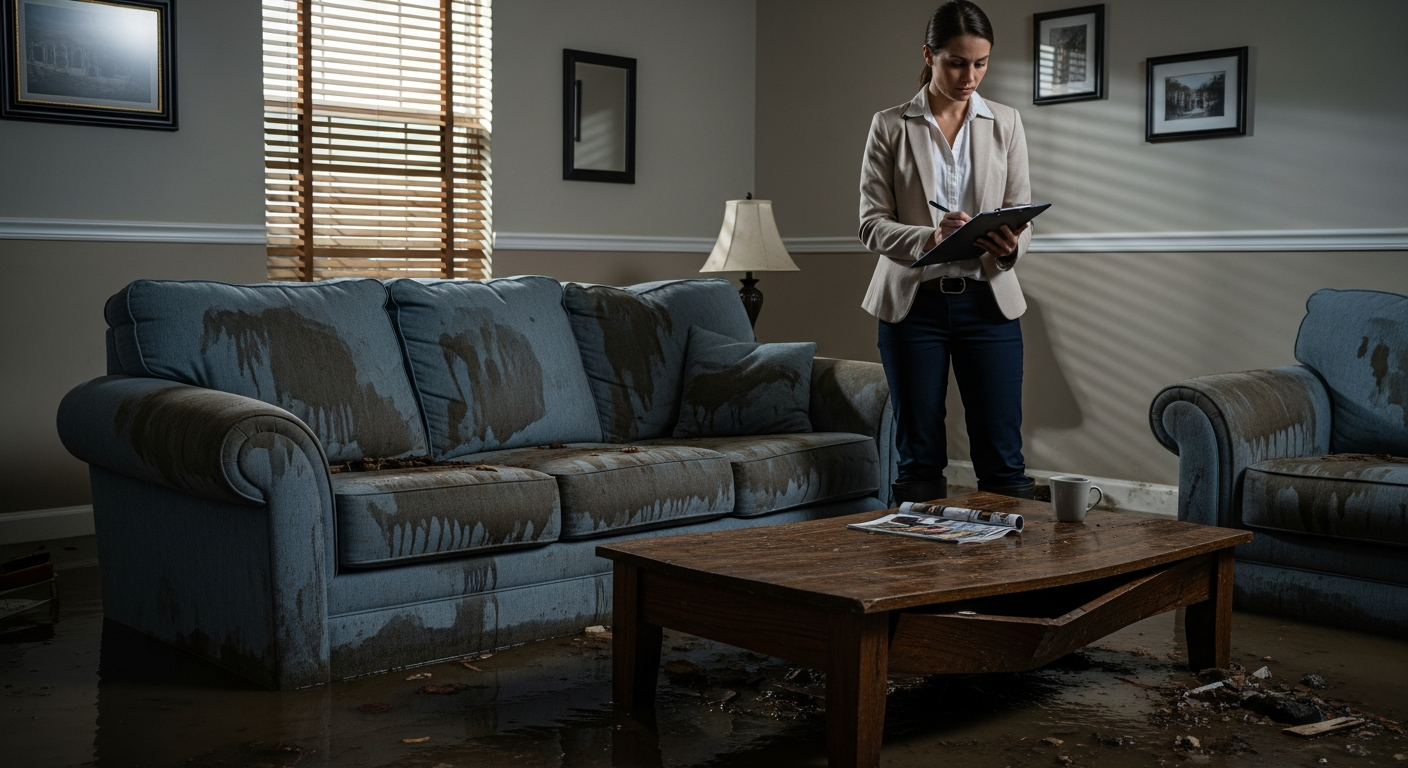
If you take one piece of advice from this article, let it be this: Do not throw your ruined belongings in a dumpster until the insurance adjuster has physically seen them.
If you throw away a ruined $2,000 sofa because it smells like mildew, and the adjuster never sees it, the insurance company has no proof it existed or that it was destroyed by the covered event. They will likely deny the item entirely. If you must remove soaked items from the house for health reasons (like mold), drag them into the garage or the yard and cover them with a tarp.
The Math: ACV vs. RCV and "Recoverable Depreciation"
The single most important factor in your personal property payout is three little letters on your declarations page: ACV or RCV.
| Policy Type | How It Pays | The Real-World Impact |
|---|---|---|
| Actual Cash Value (ACV) | Pays the current, depreciated value of the item. | Your 5-year-old laptop was $1,500 new. The adjuster says it depreciated 80%. You get a check for $300. |
| Replacement Cost Value (RCV) | Pays what it costs to buy a brand new, comparable item today. | You get the $300 ACV check upfront. When you buy a new $1,500 laptop and show the receipt, they send you the remaining $1,200. |
The Depreciation Holdback: If you have an RCV policy, the insurance company will intentionally hold back the depreciation amount (the $1,200 in the example above) until you prove you actually replaced the item. Millions of dollars in "recoverable depreciation" go unclaimed every year simply because homeowners forget to send in their final receipts.
Building the Ultimate Inventory List
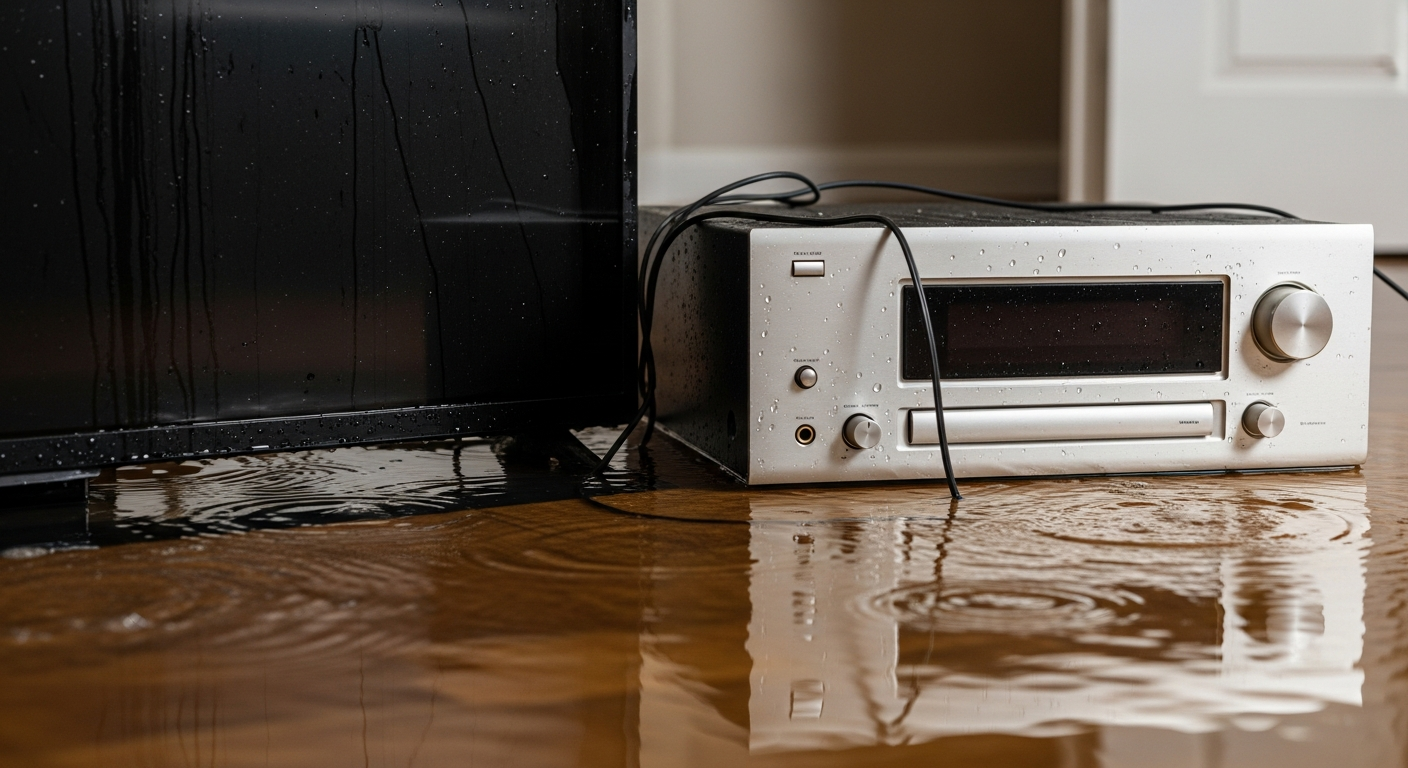
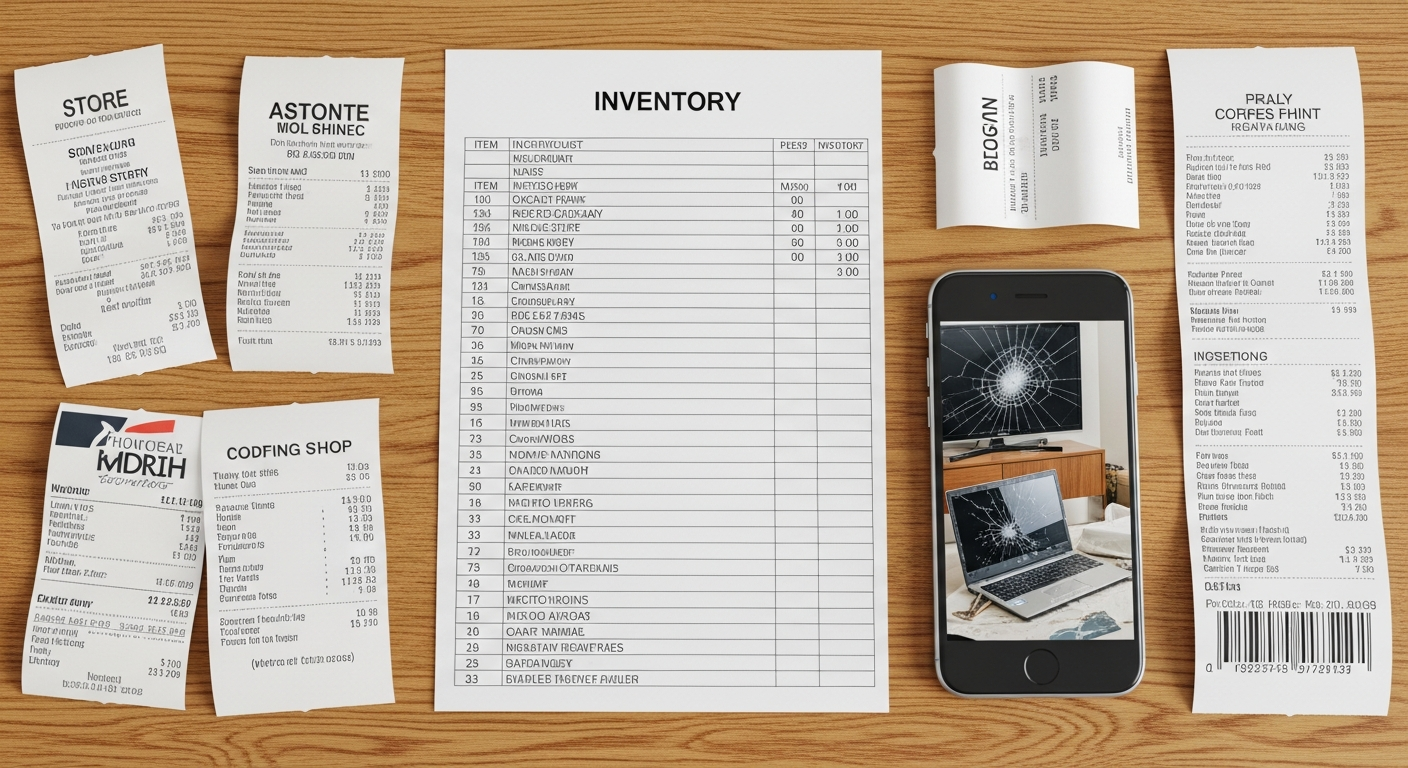
A successful claim requires a spreadsheet. Work room by room, listing every single damaged item. If you bought a dining set as a package, list the table and the chairs separately. The more detail you provide, the harder it is for the adjuster to apply aggressive depreciation.
| What to Record | Why the Adjuster Needs It |
|---|---|
| Brand, Make, & Model | Proves the quality tier. A "Sony 65-inch OLED" pays out much higher than just "TV." |
| Serial Numbers | Essential for appliances and electronics. Usually found on the back/bottom. |
| Approximate Age | Dictates the depreciation percentage. Do not guess older than it actually is. |
| Original Purchase Price | Establishes the baseline value (use credit card statements or old emails if you lost the receipt). |
The "Forgotten Items" Checklist
When you are staring at a flooded living room, it is easy to forget the smaller things. Small items add up to thousands of dollars. Do not forget to claim:
- The Pantry: Dry goods, spices, and boxed food ruined by humidity or contaminated water.
- The Bathroom: High-end cosmetics, electric toothbrushes, razors, and medications.
- The Closets: Shoes (water ruins leather immediately), luggage stored on the floor, and winter coats.
- The Garage/Basement: Power tools, holiday decorations, sporting equipment, and camping gear.
Frequently Asked Questions
What does personal property coverage include in a water damage claim?
Personal property coverage applies to your non-structural belongings — furniture, electronics, clothing, appliances, and household items — that are damaged by a covered water event. It is subject to your policy's deductible and any category-specific sublimits (like caps on jewelry or artwork).
How do you claim water damaged furniture on insurance?
First, take detailed photos and videos of the damaged furniture in its original location. Second, add it to your inventory spreadsheet, noting the brand, age, and purchase price. Third, move the furniture to a safe location (like a garage) to prevent mold, but do not throw it away until the insurance adjuster has inspected it.
What is recoverable depreciation?
If you have a Replacement Cost Value (RCV) policy, the insurance company will initially write you a check for the depreciated value of your ruined items (Actual Cash Value). They "hold back" the rest of the money. Once you actually purchase the replacement items and submit the receipts to the adjuster, they will release the held-back funds to you. This is called recoverable depreciation.
Should I hire a public adjuster for my personal property claim?
If your home suffered a catastrophic loss (like a whole-house flood) and you have tens of thousands of dollars in ruined belongings, a public adjuster can be highly valuable. They will meticulously inventory your home, fight aggressive depreciation schedules, and manage the paperwork. They typically charge 10% to 15% of your final settlement amount.
Ready to connect with a certified professional? Find restoration services near you through our verified contractor network.