
What is the difference between actual cash value and replacement cost? Actual cash value (ACV) pays the depreciated value of your damaged property — what it was worth at the time of loss. Replacement cost value (RCV) pays what it costs to replace it with a comparable new item at today's prices, with no deduction for age or wear.
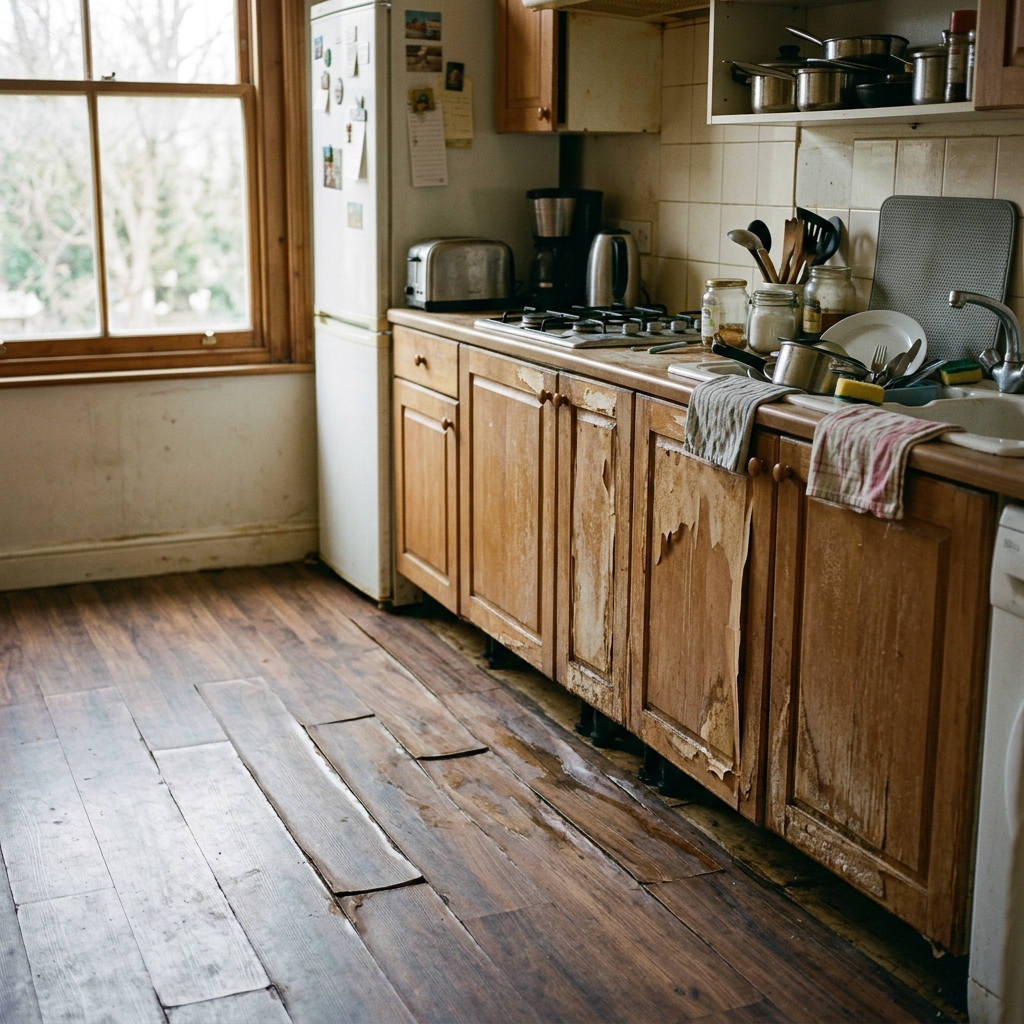
If that sounds like a small distinction, consider this: your ten-year-old kitchen flooring gets destroyed by a burst pipe. Under RCV, you get $8,000 to install new flooring. Under ACV, you get $4,800 — because apparently your floor has been "depreciating" while you've been walking on it. (Which, technically, is what walking does. But still.)
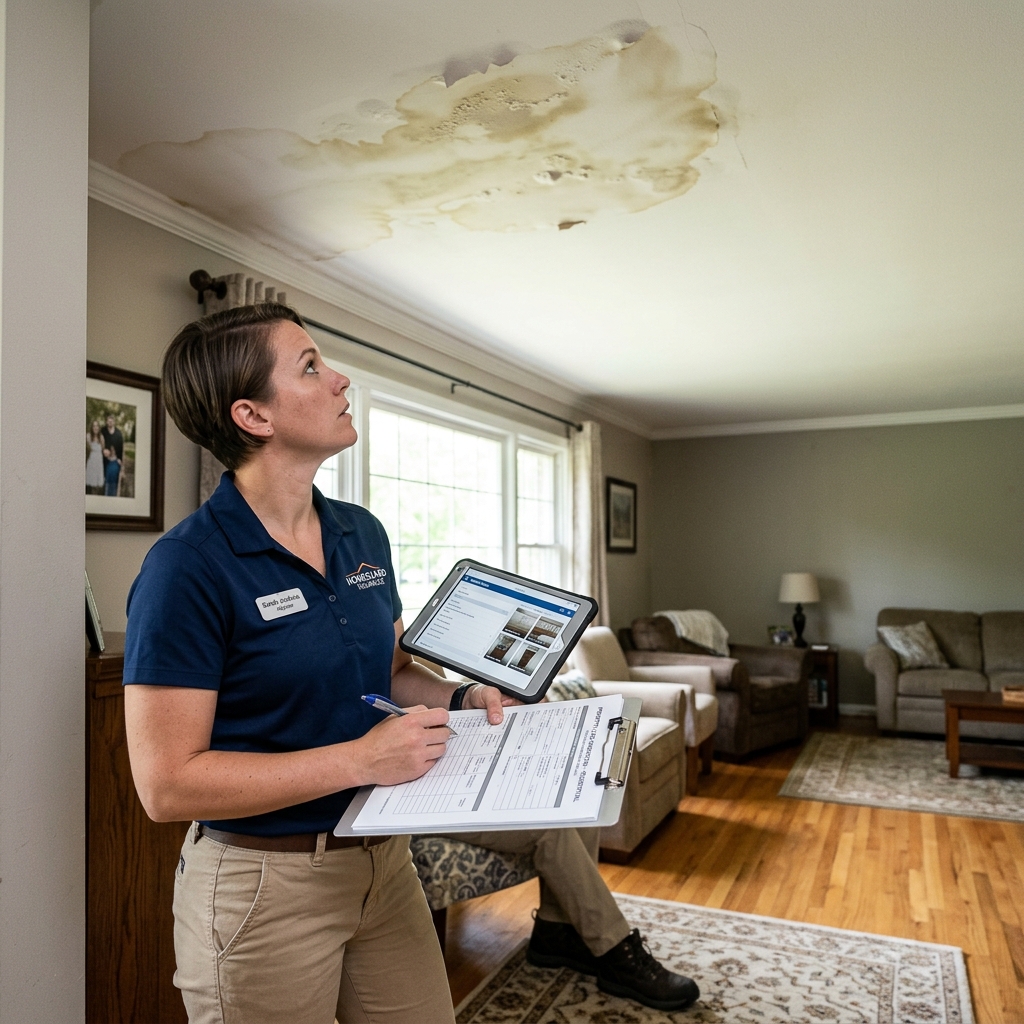
I've watched homeowners discover this difference the hard way, standing in their gutted living room while their adjuster explains that their policy only covers what their belongings were worth, not what it costs to replace them. If Seinfeld taught us anything, it's that the details in a contract always matter — and insurance policies are the ultimate fine print.
Actual Cash Value (ACV) Explained
Actual cash value is calculated with a straightforward formula: the current replacement cost minus depreciation. Depreciation accounts for age, wear and tear, and the remaining useful life of your property.
In practice, this means your insurer applies depreciation schedules to every damaged item. A 15-year-old roof with a 20-year expected lifespan has used 75% of its life — so under ACV, you'd receive roughly 25% of the replacement cost, minus your deductible. Your 8-year-old refrigerator that cost $1,800 new? The adjuster says it's worth $540. (My wife says the food inside it was worth more than that. She's probably right.)
ACV policies do come with lower premiums — typically 10–20% less than equivalent RCV policies. That's the tradeoff: you pay less every month, but when a major claim hits, the gap between what you receive and what it actually costs to rebuild can be enormous.
Replacement Cost Value (RCV) Explained
Replacement cost value pays what it actually costs to repair or replace your damaged property with materials of "like kind and quality" at today's prices — no depreciation deducted. For a major water damage claim, this difference is not subtle.
RCV claims work in two payments:
- Initial payment (ACV amount): The insurer pays replacement cost minus depreciation after the adjuster completes their assessment. Yes, even with an RCV policy, they start by paying you the depreciated amount.
- Recoverable depreciation payment: Once you complete the repairs and submit invoices, the insurer releases the withheld depreciation as a second payment.
Here is the part that costs homeowners real money: you must actively file for that second payment. Many people don't, either because they don't know it exists or because they assume the first cheque was the final word. It isn't. (Think of it as the insurance equivalent of leaving a tip on the table — except the tip is $12,000 and it's yours.)
ACV vs RCV: The Numbers Side by Side
Here is what the difference actually looks like on common items damaged in a water loss:
| Damaged Item | Age | Replacement Cost | ACV Payout | You're Short |
|---|---|---|---|---|
| Asphalt roof (25-yr life) | 15 years | $15,000 | $6,000 | $9,000 |
| Hardwood flooring | 10 years | $8,000 | $4,800 | $3,200 |
| Refrigerator | 8 years | $1,800 | $540 | $1,260 |
| Sofa | 6 years | $2,500 | $1,000 | $1,500 |
| Laptop | 4 years | $1,200 | $360 | $840 |
| Total | $28,500 | $12,700 | $15,800 |
That $15,800 gap is what you'd need to cover out of pocket under an ACV policy. Under RCV, you'd get the full $28,500 (minus your deductible) once you complete the work and submit your receipts.
Personal Property Coverage: It's a Separate Line Item
Here is something most homeowners miss entirely: your policy can cover the structure at replacement cost while covering your personal property (furniture, electronics, clothing) at actual cash value. These are separate coverage categories on your declarations page.
Check your policy for:
- Coverage A (Dwelling): Your home's structure. Usually RCV on modern policies.
- Coverage B (Other Structures): Detached garage, shed, fence. Can be ACV or RCV.
- Coverage C (Personal Property): Everything inside. Often ACV by default.
Many insurers offer a personal property replacement cost endorsement that upgrades Coverage C from ACV to RCV. It typically costs $50–$200 per year. If your house floods tomorrow and you lose a living room full of furniture and electronics, that endorsement pays for itself approximately six hundred times over. (That's a rough number. I didn't use a calculator. But the point stands.)
How to Find Out What Coverage You Have
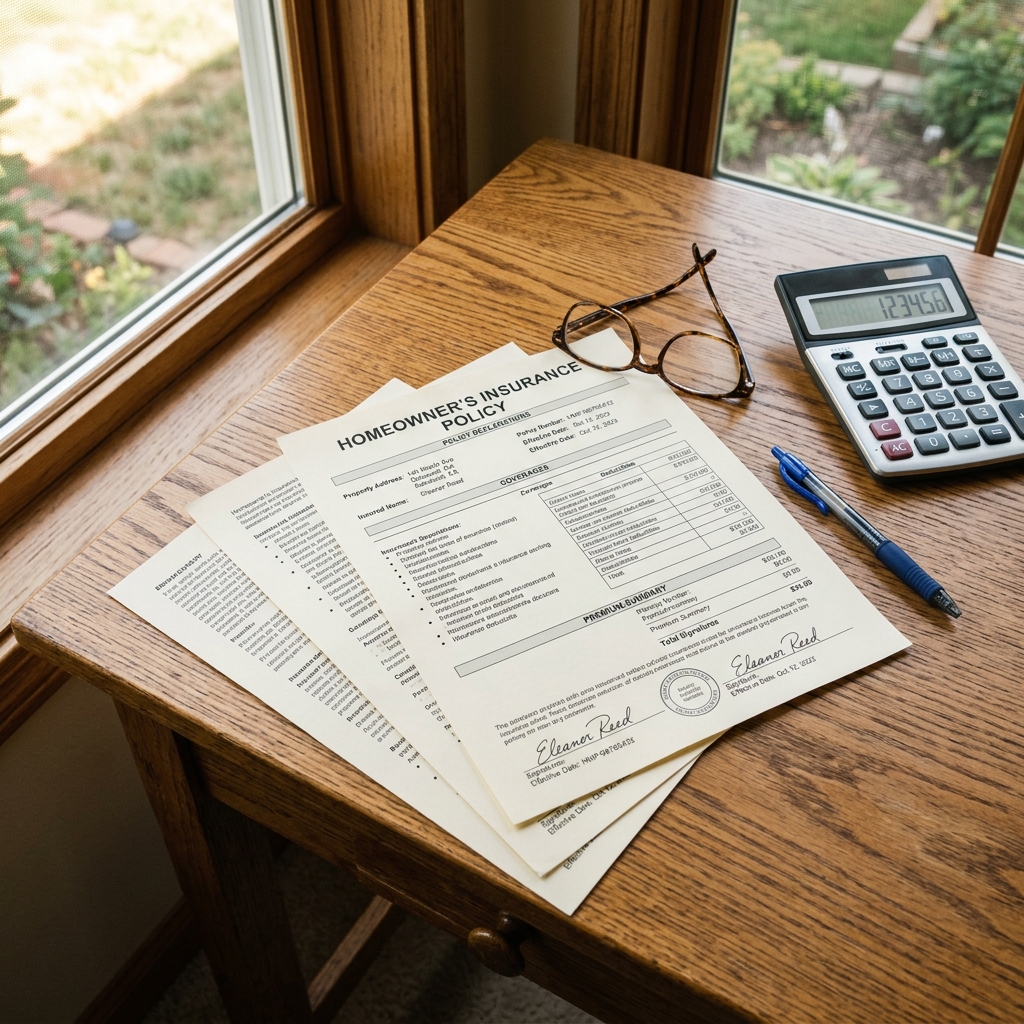
Your declarations page — the summary sheet that comes with your policy — tells you everything. Look for these terms:
- "Replacement Cost" or "RC" next to a coverage category means RCV applies.
- "Actual Cash Value" or "ACV" means depreciation will be deducted from your payout.
- Check each coverage line separately — A, B, and C can each have different settlement methods.
If you can't decode the declarations page (no judgment — they're written by people who apparently get paid by the acronym), call your agent and ask directly: "For a water damage claim, will structural repairs be paid at replacement cost or actual cash value? What about my personal property?"
Challenging a Depreciation Assessment
If your claim is paid at ACV and you believe the depreciation applied is excessive, you absolutely can push back. Here is how:
- Request the depreciation schedule the adjuster used for each item. They are required to provide it.
- Research the expected useful life of each item category. A well-maintained hardwood floor can last 50+ years — not the 15-year schedule some adjusters apply.
- Document pre-loss condition: Photos of your property in good condition before the loss are worth their weight in gold. (Or, more accurately, worth their weight in recovered depreciation.)
- Get a public adjuster involved if the gap is significant. They work for you, not the insurer, and typically recover 20–50% more on disputed claims.
When ACV Actually Makes Sense (Yes, Sometimes It Does)
Before you call your agent demanding an upgrade, ACV policies aren't always the wrong choice:
- Rental properties: Landlords insuring a property with older finishes and appliances may prefer the lower premium, knowing the depreciation gap is manageable.
- Homeowners with substantial savings: If you could comfortably cover a $10,000–$20,000 gap out of pocket, the annual premium savings might be worth it over a long enough timeline.
- Homes nearing major renovation: If you were planning to gut the kitchen anyway, ACV on an older kitchen is less painful.
For everyone else — which is most people — RCV is the safer bet. The premium difference is usually a few hundred dollars per year. The claim difference can be tens of thousands.
Frequently Asked Questions
What is the difference between actual cash value and replacement cost?
Actual cash value pays the depreciated value of your damaged property — what it was worth at the time of loss, accounting for age and wear. Replacement cost pays what it costs to buy a new equivalent item at today's prices. For a 10-year-old roof, ACV might pay 40% of replacement cost; RCV pays 100% minus your deductible.
Which is better for homeowners, ACV or replacement cost?
Replacement cost is almost always better for homeowners. RCV policies cost slightly more in annual premium — typically a few hundred dollars — but after a significant claim, the difference in payout can be $20,000 to $50,000 or more. The premium increase pays for itself many times over in a single claim.
How is actual cash value calculated?
ACV is calculated using the formula: current replacement cost minus depreciation based on age, condition, and expected useful life. Depreciation schedules vary by item — electronics depreciate quickly (a 5-year-old laptop might retain only 20% of its value), while structural items like roofing depreciate more slowly. Request the specific depreciation schedule from your adjuster if ACV applies to your claim.
What is recoverable depreciation and how do I claim it?
Recoverable depreciation is the portion of depreciation that an RCV policy will pay back after you complete repairs. Initially, even RCV policies pay only the ACV amount. Once you finish the work and submit invoices or receipts, the insurer releases the withheld depreciation as a second payment. You must actively file for it — many homeowners leave this money unclaimed.
Can I switch from ACV to replacement cost coverage?
In most cases, yes. Contact your insurance agent to request an upgrade from ACV to RCV. The premium increase is typically modest — often $100–$300 per year for dwelling coverage and $50–$200 for personal property. Some insurers may require a home inspection before approving the switch, particularly for older properties.
If your ceiling is currently dripping and you're wondering what your policy actually covers, now is an excellent time to find out. We'd rather you read the fine print before the adjuster does — consider it free advice, plus one mediocre Seinfeld reference, which is either a bonus or a warning depending on your taste.