
How much does fire damage restoration cost? Minor smoke damage in a single room costs $3,000–$10,000. Moderate fire damage with some structural involvement runs $15,000–$50,000. Major structural fires cost $50,000–$200,000+. The national average for professional fire restoration is $12,000–$27,000, with costs typically running $4–$7 per square foot of affected area.
A house fire is not one problem. It's about six problems that arrive simultaneously and then invite their friends. There's the fire damage itself, obviously. Then there's the smoke that's penetrated every surface in the house. Then there's the water damage from the thousands of gallons the fire department used to put it out. Then there's the soot, the structural compromise, the contents that need professional cleaning, and the smell that makes you wonder if your home will ever stop reminding you of what happened.
The good news — and I'll lead with it because you need some — is that fire damage is one of the most comprehensively covered events under homeowners insurance. The bad news is that "covered" and "painless" are very different words. Let's break down what each piece actually costs so you can have an informed conversation with your adjuster and your contractor.
Fire Damage Restoration Cost Breakdown
Fire restoration involves multiple distinct work categories, each billed separately. Here's what each costs in 2026:
| Restoration Category | Typical Cost Range | When It Applies |
|---|---|---|
| Emergency board-up and securing | $500–$3,000 | Immediately — windows, doors, roof openings |
| Water extraction and drying | $3,000–$15,000 | Nearly always — firefighting water damage |
| Smoke and soot cleaning | $2,000–$15,000 | Entire home — smoke travels everywhere |
| Thermal fogging and ozone treatment | $1,000–$4,000 | Odour removal after surface cleaning |
| HVAC cleaning and restoration | $1,500–$8,000 | If soot entered the duct system |
| Structural demolition and debris removal | $3,000–$20,000 | Removing charred materials safely |
| Contents cleaning and restoration | $5,000–$30,000 | Salvageable furniture, electronics, clothing |
| Full structural reconstruction | $30,000–$200,000+ | Rebuilding damaged structure to code |
Most fire events involve at least four of these categories simultaneously. A "small kitchen fire" that was out in five minutes still typically generates $15,000–$25,000 in total restoration costs because of smoke penetration, water from extinguishment, and the soot that's now coating surfaces two rooms away. (Fire is rude that way. It never stays where it started.)
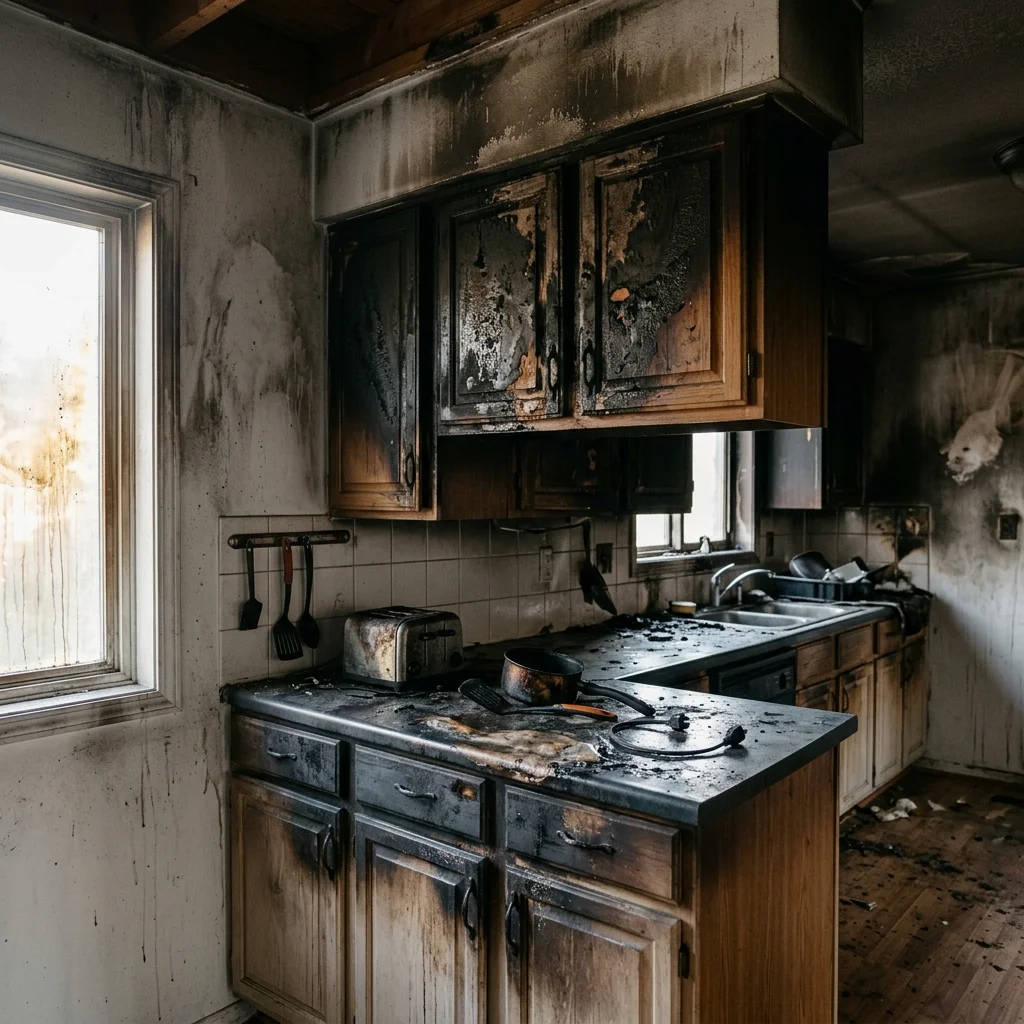
Cost by Severity Level
Here's what homeowners typically pay at each damage level — mitigation plus reconstruction combined:
| Severity | Example Scenario | Total Cost Range | Typical Timeline |
|---|---|---|---|
| Minor | Small appliance fire, smoke damage to 1–2 rooms | $3,000–$10,000 | 2–4 weeks |
| Moderate | Contained fire, structural damage to one area, whole-home smoke | $15,000–$50,000 | 1–3 months |
| Severe | Multi-room fire, significant structural damage | $50,000–$150,000 | 3–8 months |
| Total loss | Structure requires complete rebuild | $100,000–$300,000+ | 8–18 months |
The Hidden Cost: Water Damage from Firefighting
Here's something most homeowners don't anticipate: a typical residential fire response uses thousands of gallons of water. The fire department's job is to extinguish the fire — and they are exceptionally good at it. What they are not doing is worrying about your hardwood floors.
The resulting water damage to the non-burned portions of your home must be extracted and dried immediately, or you're stacking mould remediation on top of fire restoration. Water damage from firefighting efforts typically adds $5,000–$20,000 to the total project cost — and it's often the part that surprises homeowners most.
This is also why the first call after the fire department leaves should be to a restoration company, not a general contractor. A restoration company starts extraction and drying while the general contractor is still scheduling a site visit. (Think of it as the difference between calling an ambulance and scheduling a check-up. Timing matters.)
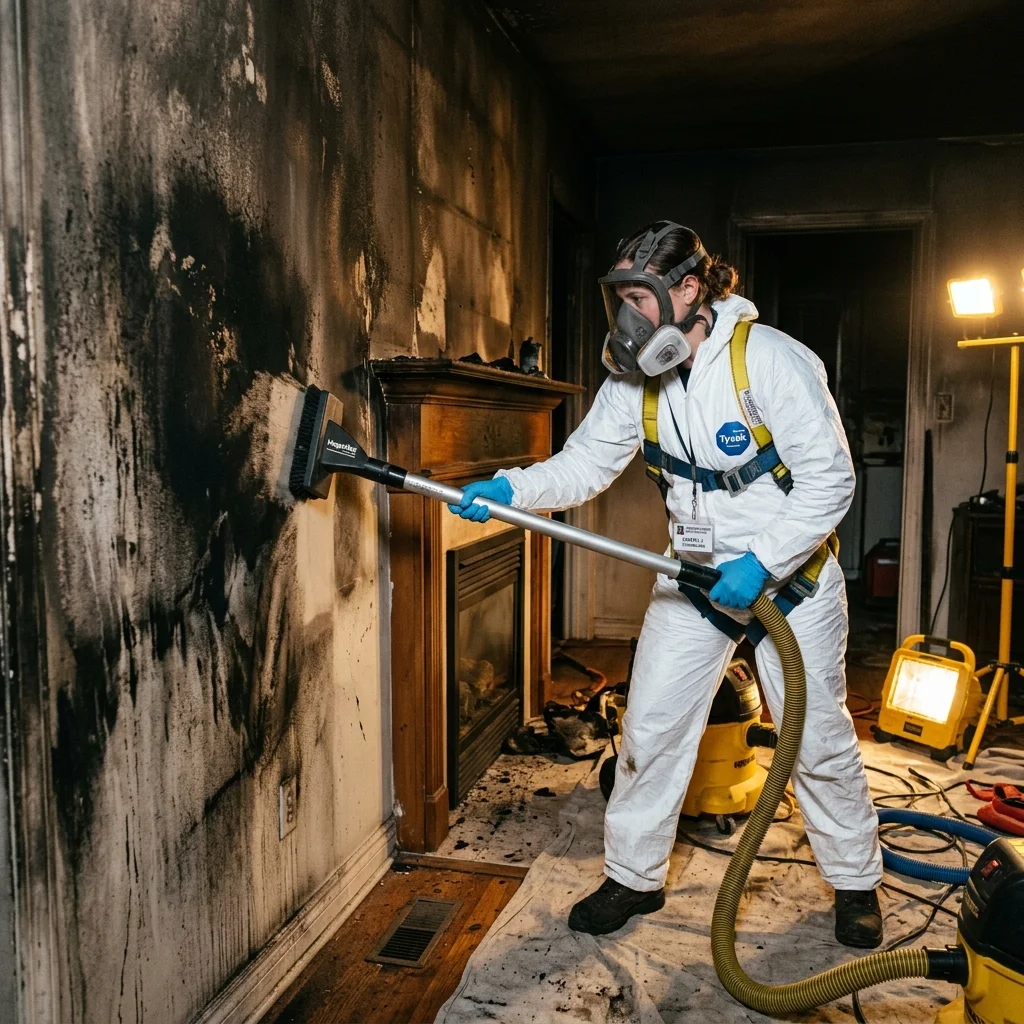
Smoke and Soot: The Damage You Can't See
Smoke doesn't respect boundaries. A fire contained to a single room will deposit soot throughout the entire home via HVAC ductwork and natural air circulation. That black film on surfaces three rooms away from the fire? That's soot, and it contains acids that will permanently etch glass, corrode electronics, and stain porous surfaces if not cleaned within days.
Professional smoke remediation includes:
- Surface cleaning: Every wall, ceiling, and hard surface wiped with specialised soot sponges and cleaning solutions
- HVAC cleaning: Complete duct system cleaning or replacement — soot circulates through the system with every heating/cooling cycle
- Thermal fogging: Chemical deodoriser dispersed as a fog that penetrates the same surfaces smoke penetrated
- Ozone treatment: Ozone generators used to oxidise odour molecules in enclosed spaces
- Hydroxyl treatment: UV-activated hydroxyl generators for occupied spaces where ozone can't be used
Cost for whole-home smoke remediation: $2,000–$15,000 depending on the home's size and smoke density. If your HVAC system is heavily contaminated, add another $1,500–$8,000 for duct cleaning or replacement.
Contents Restoration: Saving What Can Be Saved
Not everything damaged by smoke needs to be replaced. Professional contents restoration companies use ultrasonic cleaning, ozone chambers, and specialised processes to restore:
- Furniture: Upholstery cleaning, wood refinishing, structural repair
- Electronics: Circuit board cleaning, component testing (success rates vary)
- Clothing: Ozone treatment and professional cleaning for smoke-saturated fabrics
- Documents and photos: Freeze-drying and digital scanning for irreplaceable items
- Art and collectibles: Specialised conservation cleaning
Contents restoration typically costs 30–50% of replacement value, which makes it worth pursuing for anything valuable or irreplaceable. Your grandmother's dining table can be restored. Your 2019 laptop probably can't — and honestly, the fire may have done that laptop a favour.
Navigating the Fire Insurance Claim
Fire is one of the most clearly covered perils under standard homeowners insurance. But "covered" is the start of the conversation, not the end. Here's how to protect your payout:
- Do not discard anything until your adjuster has inventoried all damaged property. Even seemingly destroyed items may have recoverable value for insurance purposes.
- Document everything. Photograph every room, every damaged item, and every area before any cleanup begins. Video is even better — walk through the house narrating what you see.
- Request separate coverage for mitigation and reconstruction. These are distinct phases, often handled by different contractors, and both should be covered.
- File for ALE immediately. Additional Living Expenses coverage pays for temporary housing, meals, and related costs while your home is uninhabitable. Start tracking expenses from day one.
- Understand ACV vs. RCV. Actual cash value policies depreciate contents based on age. Replacement cost policies pay today's replacement price. This distinction can mean $20,000+ on a significant fire claim. (If you're unsure which you have, read our ACV vs RCV guide.)
- Consider a public adjuster for claims exceeding $50,000. They work for you, not the insurer, and typically increase settlements by 20–50% on complex fire claims.
Choosing a Fire Restoration Contractor
Fire restoration requires specialised expertise beyond general contracting. A great general contractor who builds beautiful kitchens may have no experience stabilising a fire-compromised structure or removing carcinogenic soot from HVAC systems. Look for:
- IICRC FSRT (Fire and Smoke Restoration Technician) certification — the industry standard for fire work
- Experience with insurance documentation — fire claims involve extensive paperwork and Xactimate estimating
- In-house or coordinated contents restoration — separate from structural work
- Clear written scope separating mitigation from reconstruction — these are different jobs with different timelines and often different crews
- References from fire-specific projects — not just general water damage experience
Frequently Asked Questions
How much does fire damage restoration cost?
Fire damage restoration costs range from $3,000 for minor smoke damage in one room to $200,000+ for major structural fires requiring full reconstruction. The national average is $12,000–$27,000, with costs typically running $4–$7 per square foot of affected area. Most significant fire events involve multiple cost categories — smoke cleaning, water extraction, structural demolition, and reconstruction — billed separately.
Does homeowners insurance cover fire damage?
Yes — fire damage is one of the most comprehensively covered perils under standard homeowners insurance. Your policy typically covers damage to the structure (Coverage A), personal property (Coverage C), and additional living expenses if your home is uninhabitable (Coverage D/ALE). Review your policy limits to ensure coverage is adequate for full reconstruction, and understand whether your contents are covered at actual cash value or replacement cost.
How long does fire damage restoration take?
Minor smoke damage: 2–4 weeks. Moderate fire with structural damage to one area: 1–3 months. Major structural fires: 3–8 months. Complete rebuilds can take 8–18 months. The mitigation phase (cleanup, drying, soot removal) is typically 1–3 weeks. The reconstruction phase — rebuilding damaged structure — is where the timeline extends significantly.
Can I stay in my home during fire damage restoration?
It depends on the extent of damage. Smoke damage alone, without structural compromise, sometimes allows continued occupancy — though air quality and construction disruption make it difficult. Any structural damage, HVAC contamination, or chemical hazards typically require vacating. Your homeowners policy's ALE coverage pays for temporary housing during the displacement period.
Should I hire a fire restoration company or a general contractor?
Start with a fire restoration company for mitigation — they handle the emergency phase (water extraction, soot cleaning, structural stabilisation, odour removal) that general contractors aren't equipped for. For the reconstruction phase, some restoration companies handle both; others partner with general contractors. Either way, the mitigation work must happen first and should not wait for a GC's availability.
If your home smells like campfire and your insurance adjuster is asking questions you don't know how to answer, take a breath. Fire damage is dramatic, expensive, and emotionally brutal — but it's recoverable. Get certified professionals in early, document everything like your claim depends on it (because it does), and remember that the smell does eventually go away. Your patience might go first, but the smell goes second.