
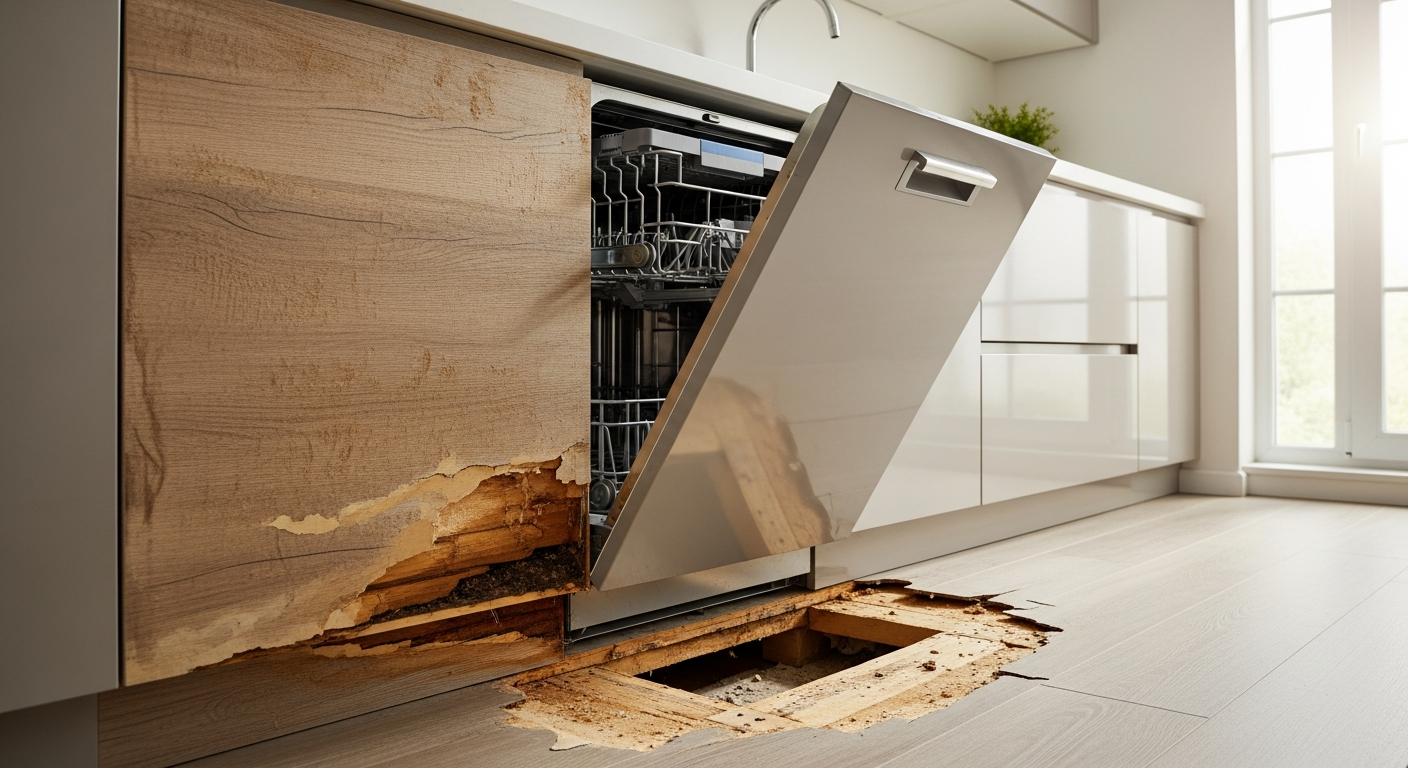
How bad can a dishwasher leak get? Worse than it looks. A dishwasher uses 3–6 gallons per cycle, and the leak usually runs UNDER the appliance where you can't see it — soaking the subfloor, the cabinet base, and adjacent flooring before any water reaches the visible kitchen floor. Hours of unnoticed leaking causes subfloor damage; overnight leaks cause mold in the cabinet base; multi-day leaks reach the room below in two-storey homes.
The dishwasher leak is the deceptive disaster of kitchen plumbing. (You see a small puddle. You wipe it up. You feel virtuous.) The puddle on the floor is the symptom — the actual leak is usually behind it, in the cavity under the dishwasher you can't see without pulling it out. By the time the visible puddle is impressive enough to take seriously, the cabinet base, the subfloor, and possibly the adjacent flooring have been quietly absorbing water for hours. Here's the playbook for the leak you just found, what it's likely costing you in places you can't see, and how to stop the next one before it starts.
How Dishwashers Leak (and Where)
The "where" matters as much as the "why." Most dishwasher leaks are FRONT leaks — water dripping forward and down into the cavity beneath the unit before any of it reaches the kitchen floor. This is the failure mode that does the most hidden damage.
The common causes:
- Worn door gasket. The rubber seal around the door degrades with age and detergent exposure. Water escapes during the wash and rinse cycles. Average lifespan: 3–5 years.
- Damaged spray arm. Cracks or loose connections allow water to spray sideways onto the door and out.
- Failed pump or motor. Internal seals fail, water escapes from the pump housing during operation.
- Loose hose connections. Water supply or drain hose connections at the back loosen over time, especially if the unit was bumped during cabinet work.
- Overdosed detergent. Too much detergent creates excess foam that overflows the door seal. Less common but real — modern dishwashers need a fraction of what older units did.
- Clogged drain. Water backs up inside the unit and overflows the door. Usually paired with poor drainage signs (standing water at cycle end).
- Failed door latch. Door doesn't seal properly even though the gasket is fine. Water pours out during operation.
Immediate Steps When You Discover a Leak
The faster you stop the source, the smaller the eventual repair scope.
- Stop the cycle immediately. Press cancel or open the door briefly to halt the wash.
- Turn off the water supply. The shutoff valve is usually under the kitchen sink — a small valve on the dishwasher supply line. Turn clockwise to close. (If you don't know which valve, today is a great day to learn. Take a photo for next time.)
- Unplug the dishwasher. Or trip the breaker that serves it. Water near electrical components is the kind of thing that turns a small problem into a much larger one very quickly.
- Remove standing water. Towels, mop, or wet/dry vac. Get the visible water up before it spreads.
- Document everything. Photos of the leak source if visible, photos of the affected floor and cabinets, photos of any water staining on adjacent surfaces. Wide shots, then close-ups. Insurance lives on photos.
- Pull the dishwasher out if you can. The cavity behind and beneath is where most of the damage lives. If the supply lines and drain are flexible enough, slide the unit forward 12–18 inches and look.
How Bad Can It Actually Get? (A Timeline)
The damage scope is almost entirely determined by how long the leak ran undetected.
| Duration | Damage Pattern | Typical Repair Cost |
|---|---|---|
| Caught immediately (single drip event) | Surface water on tile/vinyl. Easily mopped. Minimal hidden moisture. | $0 (DIY) – $200 (small drying) |
| Hours of unnoticed leaking | Water under unit, cabinet base damp, subfloor edge starting to absorb. Floor edges may show water staining. | $500 – $2,000 (drying + minor cabinet base replacement) |
| Overnight or weekend leaking | Subfloor saturation, cabinet base structurally compromised, possible adjacent cabinet damage, mold conditions established. | $2,500 – $8,000 (drying, cabinet replacement, possible flooring repair) |
| Multi-day leaking | Subfloor delamination, joist saturation, floor refinishing or replacement needed, mold remediation likely. | $5,000 – $15,000+ (full kitchen flooring scope) |
| Multi-day leaking, two-storey home | Water travels through the floor to the ceiling below — drywall damage, possible electrical issues, double-room repair scope. | $10,000 – $25,000+ |
When to Call Professionals
Call a water damage restoration company if any of these is true:
- Water has spread beyond the immediate area in front of the dishwasher
- Cabinet bases or adjacent flooring appear warped, swollen, or discoloured
- You notice musty odors (mold may already be growing)
- The leak ran for more than a few hours
- Water reached electrical components (dishwasher motor, garbage disposal, kitchen outlets)
- The kitchen is on the second floor of a multi-storey home
- You can see water staining on adjacent walls, baseboards, or in adjacent cabinets
Find Water Damage Restoration Pros
Professional moisture mapping finds the hidden saturation in cabinet bases, subfloor, and wall cavities that towels can't reach.
Get Free Estimates →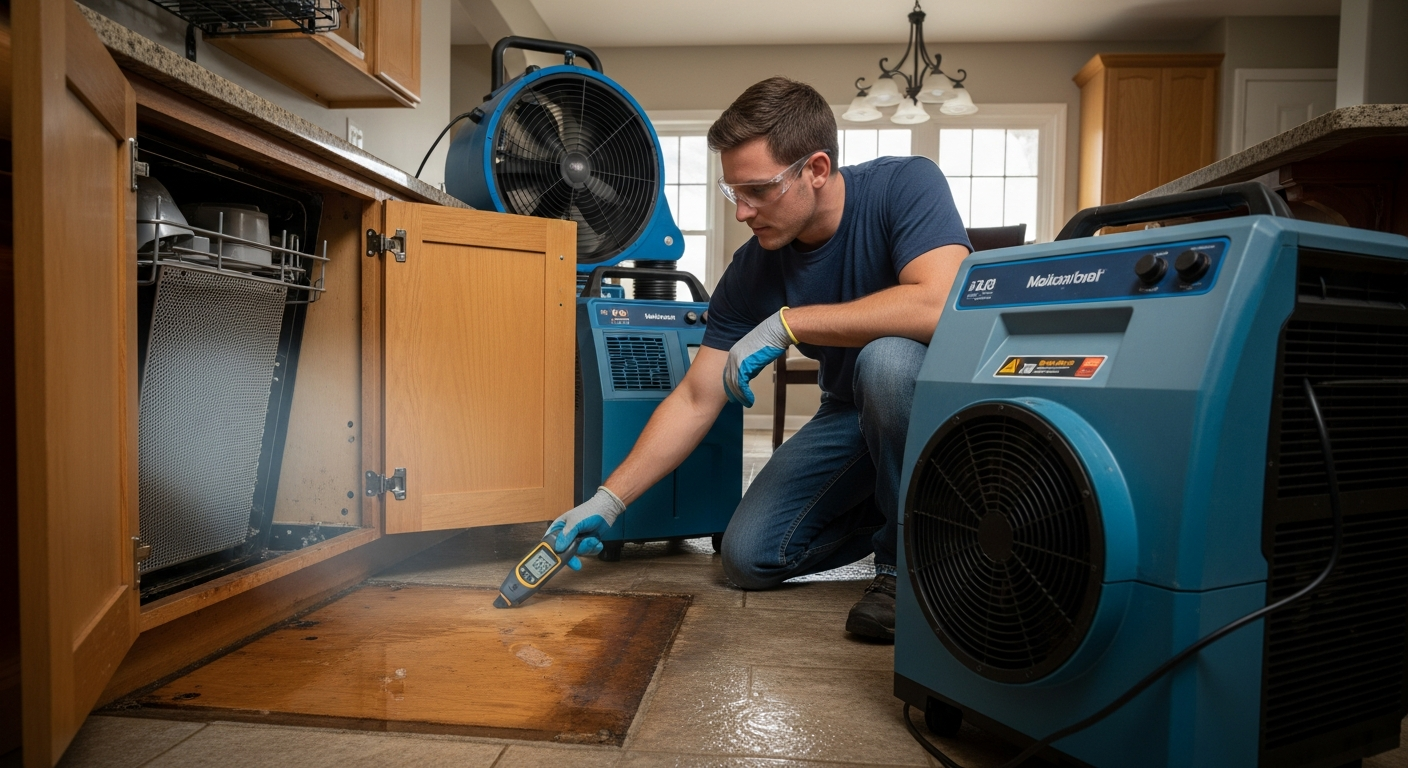
Will Insurance Cover This?
Standard homeowners policies typically cover dishwasher leak damage when:
- The leak was sudden and accidental (a hose burst, a pump failed)
- The damage resulted from mechanical failure of the appliance
- The damage wasn't due to neglect, lack of maintenance, or a slow leak you ignored
Coverage gets more contested when:
- The leak was slow and progressive (water staining suggests it's been going for weeks)
- The dishwasher was old and the door gasket visibly failing
- The damage extended because no shutoff was attempted (insurance considers this a "failure to mitigate")
Document the cause aggressively — keep the failed gasket or hose if replaced, photograph the failure, save service receipts. See water damage insurance coverage details.
Preventing the Next Dishwasher Leak
The best dishwasher leak is the one that never happens. Reasonable prevention:
- Run the dishwasher only when you're awake and home. Overnight cycles are how multi-hour undetected leaks happen.
- Check under the dishwasher monthly. Pull it forward enough to look at the cabinet base. Any moisture or staining is a warning.
- Replace the door gasket every 3–5 years or when you can see compression loss. Gaskets are $20–$60 and a 30-minute job.
- Use the right detergent dose. Modern dishwashers need a fraction of what older units did. Overdose causes overflow.
- Inspect water supply and drain connections annually. Tighten if loose, replace if showing wear.
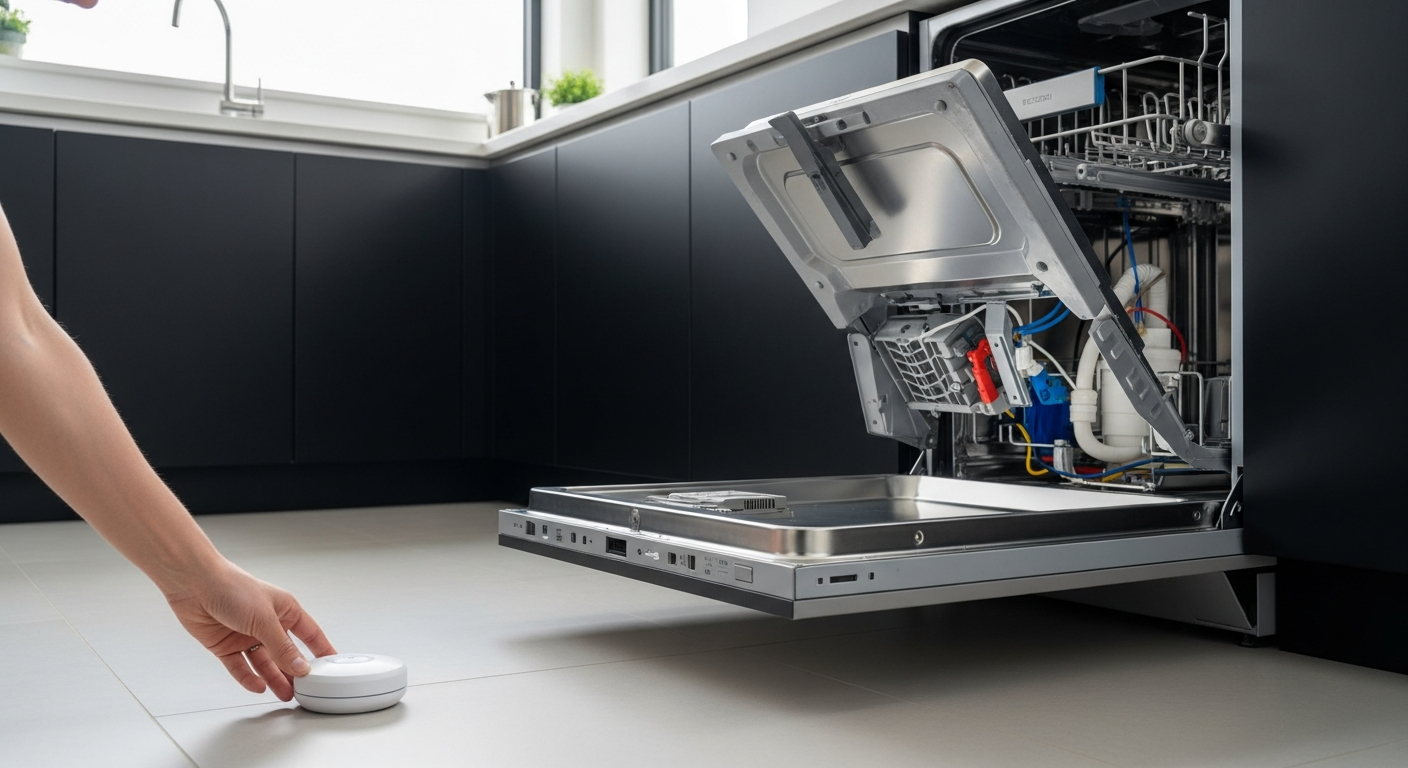
- Install a smart water leak detector under the dishwasher. $20–$40, alerts you immediately on detection. The single best preventive investment in this category.
- Know where the main water shutoff is. Photograph it, label it, share the location with everyone in the household.
- Replace the supply line if it's older than 10 years. Braided stainless lines fail eventually; the upgrade is cheap insurance.
Frequently Asked Questions
How much water can a dishwasher leak?
A dishwasher uses 3–6 gallons per cycle. If a leak runs through an entire 90-minute cycle, that's 3–6 gallons of water entering your cabinet cavity and subfloor. Multiple unobserved cycles compound — a leak that runs three cycles before discovery puts 9–18 gallons under your kitchen, almost all of it in places you can't see from the floor above.
How do I know if my subfloor is damaged from a dishwasher leak?
Visible signs include floor tiles cracking or lifting along the dishwasher edge, the floor feeling soft or bouncy when you walk on it, gaps appearing between tiles, musty odors emanating from beneath, and visible swelling in the cabinet base. A moisture meter pressed against wood subfloor or cabinet base reads above 16% on damaged material — the only reliable verification method.
Can I repair a leaking dishwasher myself?
Minor repairs like replacing the door gasket, tightening hose connections, or replacing supply lines are reasonable DIY jobs (45 minutes, $20–$80 in parts). Pump motor failures, internal seal replacements, and electronic control board issues are professional appliance repair territory. Either way, the bigger question is whether you can repair the WATER DAMAGE yourself — and unless the leak was caught immediately, the answer is usually no.
How long does it take for mold to grow after a dishwasher leak?
Mold can begin establishing within 24–48 hours when conditions are right (warmth, moisture, organic material) — and the cavity under a dishwasher provides all three. The 24–48 hour window is why immediate response matters. Even a leak you "caught quickly" may have been running undetected for hours before you noticed it, putting you closer to mold establishment than you realize.
Should I replace my dishwasher after a major leak?
Depends on cause. If the leak was a single failed gasket or hose, repair and continue. If the leak was a pump failure, internal seal failure, or motor fault on a unit older than 10 years, replacement is often more economical than repair — and a new unit comes with a warranty. The water damage cost is typically far higher than the appliance, so there's no value in keeping a unit with a worsening failure history.
How long does dishwasher leak water damage repair take?
Surface-only damage with quick response: 1–3 days for drying and cleanup. Cabinet base + subfloor saturation: 5–10 days for drying, plus 1–3 weeks for cabinet/flooring replacement. Severe scope with adjacent damage and possible mold remediation: 3–8 weeks. Two-storey scenarios with ceiling damage in the room below typically run 4–10 weeks for the full scope.
Useful Tools After a Dishwasher Leak
- Moisture Meter — checks the cabinet base, subfloor, and adjacent drywall after cleanup. If readings are above 16% on wood or above 1% on drywall, professional drying is needed.
- Dehumidifier — running in the kitchen during drying pulls moisture from cabinet voids and the air. A 30-pint unit handles a typical kitchen.
- Smart Water Leak Detector — once repairs are complete, place a sensor under the dishwasher AND under the kitchen sink. Most modern detectors send phone alerts the moment they sense moisture. Cheap insurance for the next leak.
The dishwasher leak is the kitchen-appliance plot twist nobody asks for. Catch it early and the recovery is a Saturday and some cabinet drying. Catch it late and you've got a renovation project sponsored by your insurer's deductible. The cheapest way to be ready is the leak detector under the unit and a monthly habit of glancing at the cabinet base. (Marco's brother-in-law installed leak detectors after his 2022 dishwasher incident took out the kitchen, the dining room ceiling below it, and his patience. The detectors have alerted twice since. He calls them "the smartest $40 I ever spent on the same item.")
This post contains affiliate links. If you use them to find a contractor or product, we may earn a commission at no extra cost to you.