
What furniture can be saved after water damage? Solid hardwood, metal, glass, and hard plastic furniture can usually be saved if dried within 24–48 hours by clean water. Particleboard, MDF, and pressed wood almost always fail. Upholstered pieces submerged in contaminated water should be discarded regardless of how clean they look. The decision rests on three things: water category, material, and how long it sat wet.
There is a particular grief reserved for the moment you walk back into your living room and discover your sofa has become a sponge. (A sponge with opinions about its previous life as a sofa.) The carpet is squelching. The bookshelf is doing a slow tilt. The rug looks like it's auditioning for a role in a swamp documentary. Now you have to decide, very quickly, what stays and what goes — and the wrong call costs you in two directions: throwing away something salvageable, or saving something that turns into a mold colony six weeks later.
This is the save-or-bin guide nobody wants to need. We'll cover the timing window, the materials that usually survive, the materials that almost never do, the cost calculus on professional restoration, and how to document everything so your insurance does the financial part of the grieving for you.
The 24-48 Hour Decision Window
The clock starts the second the water touches the furniture. Not when you notice the leak. Not when the plumber arrives. The second the water touches the furniture.
Within 24 hours, particleboard begins swelling, fabric absorbs water all the way through to the foam, leather starts staining, and solid wood starts to cup if it stays saturated. Within 48 hours, mold spores establish on any porous wet material — cushions, mattress interiors, the underside of a wood dresser sitting in standing water. Past 72 hours, you are no longer making restoration decisions; you are making remediation decisions. (Different word, same regret.)
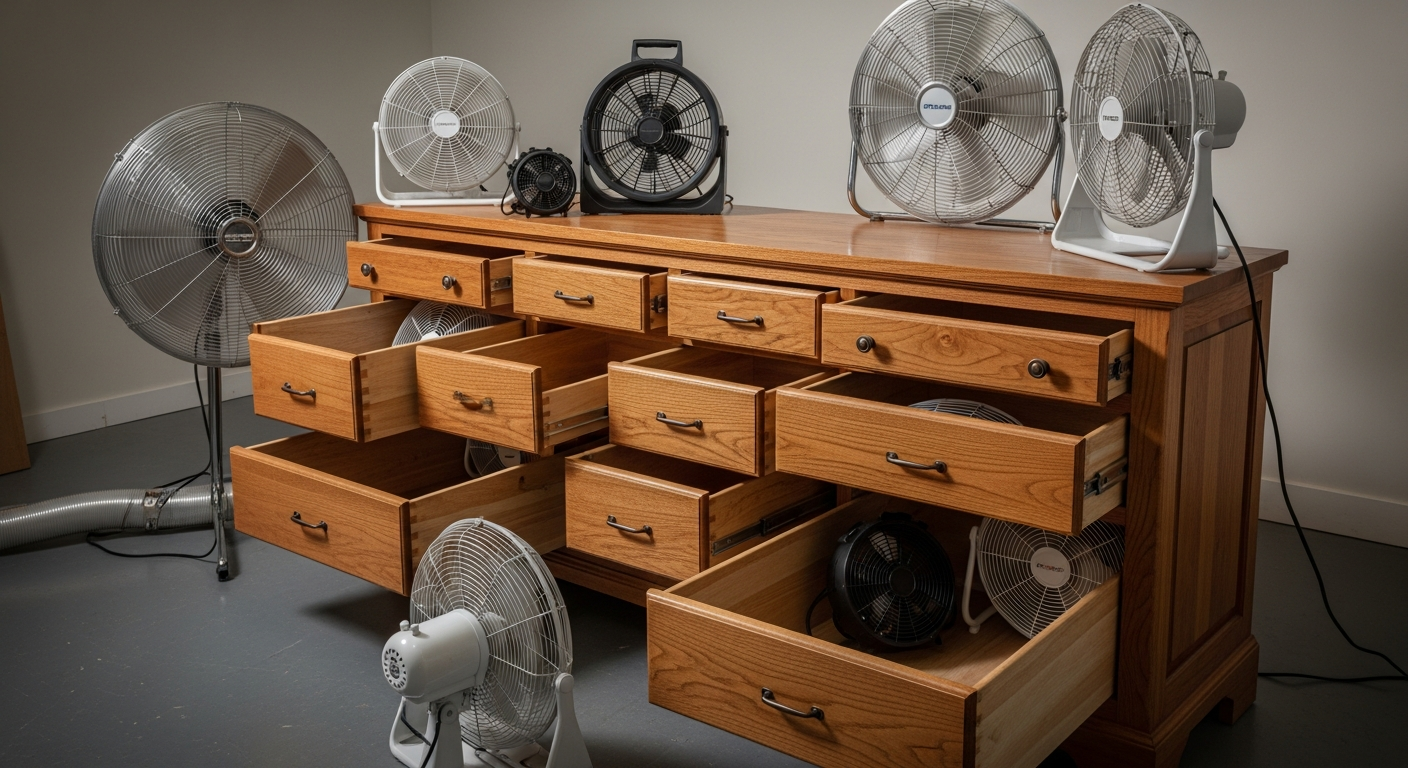
The single best thing you can do in the first hour is move what's movable. Get porous items off wet floors. Open drawers and doors to encourage drying. Crank a fan if you've got one. The water you can squelch out of a cushion now is mold you don't have to fight in three weeks.
Step One: Identify the Water Category
Restoration decisions depend almost entirely on what kind of water touched the furniture. The IICRC categorizes this in three tiers, and each tier rewrites the salvage rules.
| Category | Source | Furniture Salvage Rule |
|---|---|---|
| Category 1 (clean) | Burst supply line, ice maker line, rainwater from a roof leak, melting refrigerator | Most furniture is salvageable if dried within 24–48 hours. Upholstered items often recoverable. |
| Category 2 (gray) | Dishwasher overflow, washing machine, toilet overflow (clean side), aquarium | Hard surfaces cleanable. Upholstered items require professional cleaning judgment; many get discarded. |
| Category 3 (black) | Sewage backup, river/storm flooding, water that contacted toilet trap or any contaminated surface | Discard all porous items regardless of apparent condition. The pathogens are inside the material, not on it. |
The hardest part of Category 3 is psychological. The sofa looks fine. It just sat in floodwater for an afternoon. Surely a good cleaning... no. The contamination is throughout the foam interior, and standard cleaning cannot reach it. This is where people lose money trying to be thrifty.
The Save List: What Usually Survives
Solid Wood Furniture (the antiques are tougher than they look)
Solid hardwood — oak, maple, walnut, cherry, anything that grew as a tree — is remarkably forgiving if you act quickly. Furniture that's been wet less than 48 hours by clean water has a reasonable shot at full recovery. The process:
- Move it to a dry, ventilated area. Out of standing water immediately.
- Remove drawers, doors, and any loose hardware. Air needs to circulate everywhere.
- Wipe down standing water with absorbent towels. Don't rub upholstery — blot.
- Let it dry slowly. Over days, ideally weeks. Not with a heat gun, not with a hair dryer, not in direct sunlight. Wood dried fast cracks; wood dried slowly often flattens back out.
- Once fully dry, assess for refinishing. White marks (water stains) often respond to a light sanding and re-oil; deep cup or warp may need professional refinishing.
Antique furniture is, counter-intuitively, often the most recoverable thing in the room. Pre-1950s pieces tend to be solid hardwood with hide-glue construction — the glue softens when wet, which sounds bad but actually means a skilled restorer can re-set the joints rather than replace them. Marco's grandfather's table was underwater for an evening in 1987 and is, as he is fond of pointing out, still where the family eats Christmas dinner.
Metal Furniture and Hardware
Metal frames, metal legs, metal hardware — clean and dry promptly and they're nearly always fine. Steel develops surface rust within hours; aluminum is more forgiving. Saltwater (from coastal storm surge) is more aggressive and may have done corrosion damage you can't reverse, especially on chrome or anodized surfaces.
Glass and Hard Plastic
Tempered glass tabletops, glass shelving, hard plastic components — these are non-porous, so the water didn't get *into* anything. Clean with appropriate disinfectant if Category 2 or 3 contact, dry, done. Just check carefully for hairline cracks if the piece took any thermal shock.
Leather (with caveats)
Leather treated within 24 hours can usually be saved. Blot dry, condition with a leather conditioner once surface-dry, keep the piece out of direct heat. Leather that sat soaking past 48 hours stains permanently and the cushions underneath will already be fighting their own mold battle.
The Discard List: What Almost Never Comes Back
Particleboard, MDF, and Pressed Wood (the saddest category)
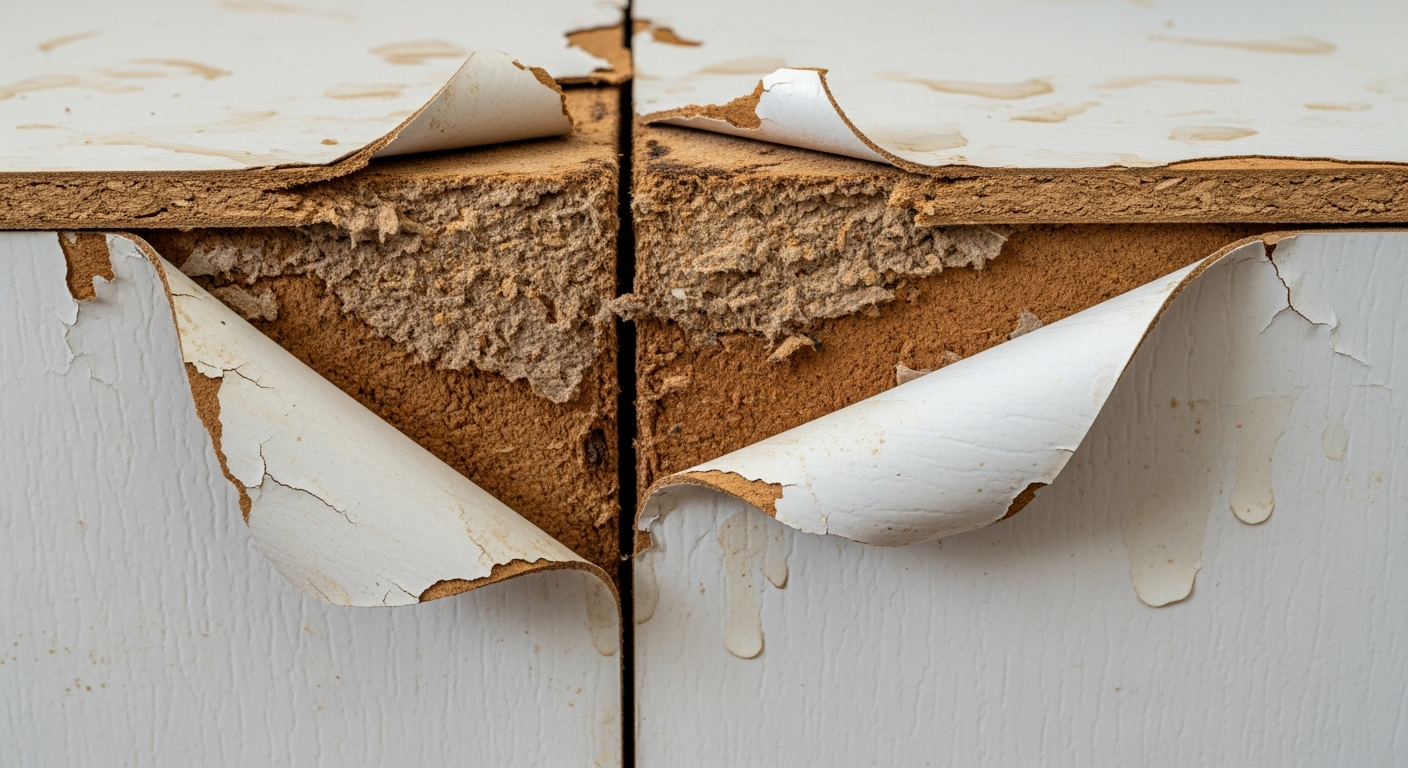
If your furniture was assembled with an Allen key and the instructions had pictures of a Swedish elf, it was probably particleboard or MDF. These engineered woods are sawdust glued together with resin, then wrapped in a printed vinyl or paper veneer. They absorb water like a paper towel that's pretending to be furniture. Within hours of getting wet, the swell is irreversible. The veneer delaminates. The structural integrity is gone.
You can dry it. You can fan it. You can pray over it. The swelling does not reverse, and the now-fluffy interior is a mold farm waiting for a weekend. (We're not insulting flat-pack furniture as a category — half of every modern home is built from it, and most of it is fine, until it gets wet. The catastrophe is the water, not the IKEA.)
Upholstered Furniture in Category 3 Water
Sofas, armchairs, ottomans, mattresses, cushions of any kind — if they were submerged in floodwater, sewage, or any Category 3 source, they go. The fabric isn't the problem. The foam interior is the problem. Pathogens, contaminants, and mold establish throughout the foam structure within hours, and surface cleaning can't reach them. Professional cleaning *might* be possible for a high-value piece, but the cost almost never justifies it versus replacement.
Insurance treats this as standard furniture loss. Document, photograph, and discard with adjuster authorization. Don't keep it in the garage "just in case" — you're now storing a mold incubator.
Submerged Mattresses and Pillows
Even Category 1 water — clean water — that fully saturates a mattress is usually a write-off. Mattresses are dense, multi-layer constructions that take weeks to dry through, and mold establishes long before they're dry. Memory foam in particular acts as a wick that pulls water deep into the structure. Pillows are simpler: when in doubt, replace.
Printed Vinyl and Laminate Surfaces
Even on otherwise solid furniture, the printed vinyl or low-pressure laminate finishes (the wood-grain stickers on cabinets and dressers) typically delaminate after extended water exposure. The substrate underneath might still be solid, but the finish is going to peel. Refinishing replaces the look but costs a meaningful percentage of replacement value.
The Cost Reality: Restoration vs. Replacement
Here's the math nobody puts on the salvage decision: professional furniture restoration typically costs 30–60% of the item's replacement value. Useful for the right pieces; ridiculous for the wrong ones.
| Item Type | Typical Restoration Cost | When It's Worth It |
|---|---|---|
| Solid wood dining table | $300 – $1,200 | Almost always — these have value, replace cost is high |
| Upholstered sofa (Cat 1, salvageable) | $400 – $1,500 | If the piece is high-end or sentimental; not for IKEA-tier replacements |
| Antique furniture (any solid hardwood) | $200 – $2,000+ | Always worth assessing — replacement is impossible |
| Particleboard / MDF | Not restorable | Replace |
| Mattress (saturated) | Not restorable | Replace |
| Leather chair (treated within 24hr) | $150 – $600 | Usually worth it; leather replacement is expensive |
| Documents and photos (specialist drying) | $5 – $25 per item | Always — irreplaceable |
The decision shortcut: if the item is mass-produced and currently available at a furniture retailer for less than 2× the restoration estimate, replace it. If the item is solid hardwood, antique, custom, or sentimental, restore it. (Sentimental value is real and counts — but make sure your insurance scope reflects the actual replacement cost, not just the sentiment.)
Documenting Furniture Damage for Your Insurance Claim
Personal property coverage on a standard homeowners policy pays for damaged furniture, either at actual cash value (depreciated) or replacement cost value depending on your policy. The difference between a well-documented claim and a poorly-documented one is often thousands of dollars. Here's the documentation pass:
- Photograph everything before moving anything. Wide shots showing context, then close-ups showing damage, then any maker's marks or labels. Multiple angles per piece.
- Inventory each item with brand, age, original purchase price if known, and current replacement cost. Online research counts — screenshot the comparable model's current retail price.
- Don't discard anything until you have written authorization from your adjuster. Even when an item is obviously beyond saving, the adjuster needs to inventory it. A photo with a tape measure is not the same as the adjuster's own inspection notes.
- Get written restoration estimates on borderline pieces — especially items where you're choosing between restore and replace. The restoration estimate is also evidence of damage extent if the insurer pushes back.
- Track temporary storage costs if you've moved items out of the home during restoration. ALE coverage often includes this.
DIY vs. Calling the Pros
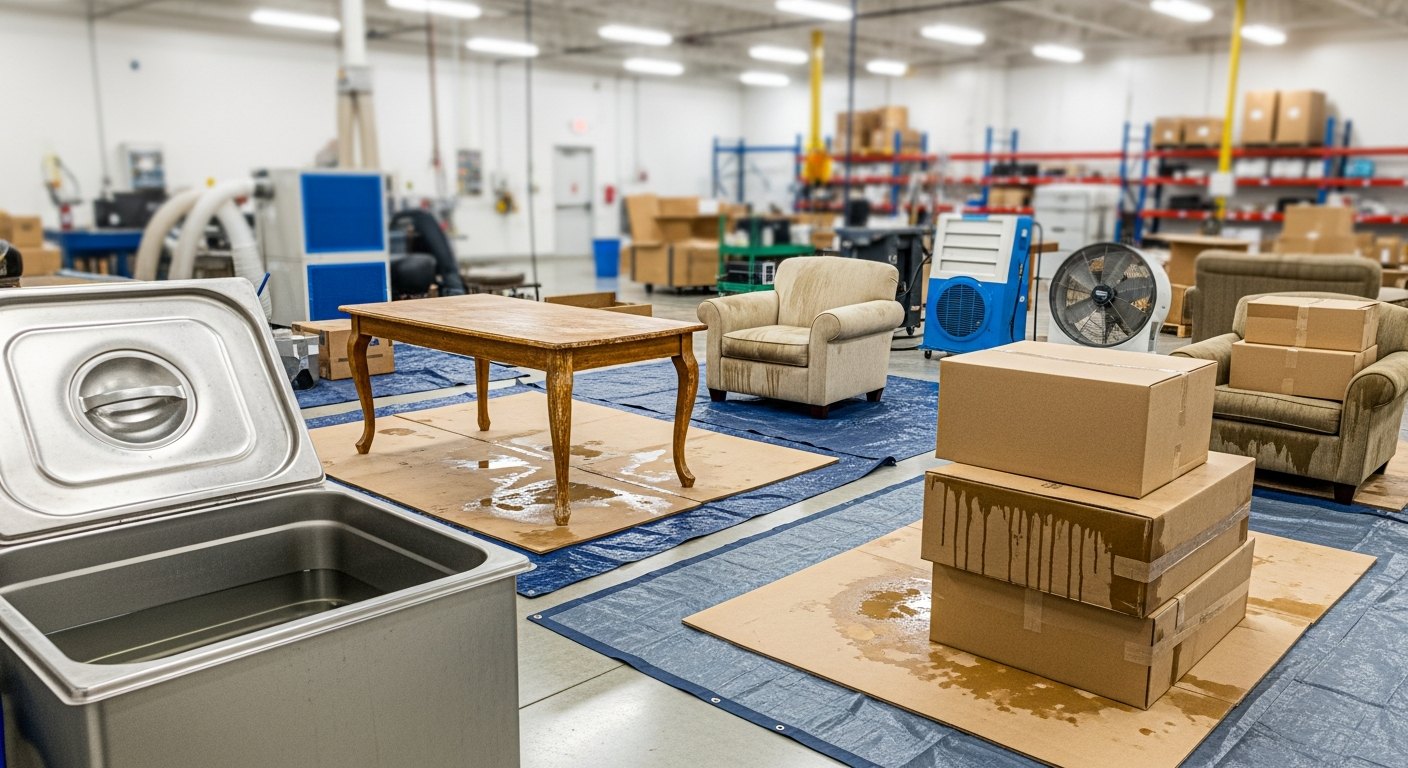
The honest test for any restoration job: can you keep it dry, ventilated, and visible while it's drying? If the piece is small, light, and you have garage space, DIY drying for solid wood and metal is reasonable. If the piece is heavy, upholstered, or sat in any contaminated water, get a contents restoration assessment before deciding.
Things you should never DIY:
- Upholstery cleaning after Category 2 or 3 contact. The pathogens you're spreading with a rental Rug Doctor will eventually find their way back into your living room atmosphere. Professional contents cleaning uses HEPA-filtered extraction and EPA-registered antimicrobials.
- Antique refinishing. Stripping and refinishing an antique without knowing the original finish almost always devalues the piece. Consult a furniture restorer first.
- Leather rehab past 48 hours. By the time leather has dried unevenly, the visible damage is the smaller half of the problem; the foam underneath the leather is the larger half.
- Document and photo drying. These need specialist freeze-drying and chamber drying. Wet documents air-dried at home almost always come out warped, foxed, or stuck together permanently.
Frequently Asked Questions
Can water-damaged furniture be restored?
Solid hardwood, metal, glass, and hard plastic can usually be restored if dried within 24–48 hours by clean water. Particleboard, MDF, and pressed wood almost always swell beyond recovery and should be replaced. Upholstered furniture submerged in contaminated water should be discarded regardless of how it looks — pathogens establish throughout the foam interior. Antiques and high-value pieces are often worth professional restoration even when expensive.
How quickly does water damage furniture?
Particleboard and MDF begin swelling within hours. Solid wood absorbs slowly but warps and cups if wet beyond 24–48 hours. Upholstery fabric saturates immediately and supports mold growth within 24–48 hours. Leather should be dried within 24 hours to prevent permanent staining. The 24–48 hour window is the difference between restorable and replaceable for almost every porous material.
Does homeowners insurance cover water-damaged furniture?
Yes — if the underlying water damage event is a covered peril (burst pipe, appliance failure, covered storm damage). Personal property coverage pays up to your policy limits, either at actual cash value (depreciated) or replacement cost value depending on your specific policy. Flood damage from rising water requires a separate NFIP or private flood insurance policy. Document every damaged item with photos before discarding anything.
How much does professional furniture restoration cost?
Typical professional restoration runs $150 to $2,000 per piece depending on type, damage extent, and value. A solid wood dining table refinish is $300 to $1,200; an upholstered sofa restoration is $400 to $1,500; antique refinishing varies widely with complexity. As a rule, restoration is worthwhile when the cost is under 60% of replacement value or when the piece is irreplaceable (antiques, custom work, sentimental items).
How do I clean mold off furniture that got wet?
For small surface mold (under 10 square feet) on solid wood with finished surfaces, careful cleaning with appropriate antifungal product and an N95 respirator is reasonable. For upholstered furniture with mold, professional cleaning may help limited surface contamination — but pieces submerged in floodwater or contaminated water should be discarded. Mold inside cushions or foam is not safely cleanable at home.
Can I dry furniture myself with a fan?
For solid wood and metal furniture in clean-water situations, fan-assisted air drying in a ventilated space is appropriate. For upholstered furniture, a fan helps the surface but doesn't reach the foam interior — professional drying chambers or replacement is the safer option. Never use heat guns, hair dryers, or direct sunlight on wood furniture; rapid drying causes cracking and irreversible warp.
Furniture is one of those things you only think about until you suddenly have to think about it very hard. When in doubt: photograph it, dry it slowly, and let a contents specialist tell you what's actually salvageable. The wrong call costs you twice — once in the discard pile, once in the regret. (Marco's wife still hasn't forgiven him for tossing a chair he could have saved. He's brought it up at three Thanksgivings.)