
How long does water damage restoration take? Minor events (single room, clean water, fast response): 2–4 weeks total. Moderate events (1–3 rooms, standard materials): 6–10 weeks. Significant events with mould or kitchen/bath involvement: 10–20 weeks. Major structural or sewage events: 16–36 weeks. The drying phase takes 3–7 days; the reconstruction phase is where the real timeline lives.
The most common conversation in water damage restoration goes something like this: "So how long until everything's back to normal?" The answer is never the one you want. Homeowners expect days. The reality is weeks to months. Not because anyone is dragging their feet — but because drying, insurance, and construction each have their own timeline, and they stack sequentially, not concurrently.
Understanding the realistic timeline for each phase — and where the delays actually hide — is the difference between planning your life around the restoration and being perpetually surprised by it. Let's walk through each phase in order.
The Five Phases of Water Damage Restoration
| Phase | What Happens | Typical Duration | Can Start Before Previous Phase Ends? |
|---|---|---|---|
| 1. Emergency Response | Extraction, moisture mapping, equipment placement | Day 1 | N/A — this is first |
| 2. Structural Drying | Commercial air movers + dehumidifiers running 24/7 | 3–7 days | Starts Day 1 |
| 3. Demolition | Removing damaged drywall, carpet, insulation | 1–3 days | Yes — overlaps with late drying |
| 4. Mould Remediation | If mould established (24–48 hrs in warm conditions) | 1–3 weeks | No — must complete before reconstruction |
| 5. Reconstruction | Insulation, drywall, paint, flooring, trim, fixtures | 1–16 weeks | No — must wait for drying clearance |
Notice what these phases have in common: each one gates the next. Drying must finish before reconstruction starts. Mould remediation must clear before anything gets rebuilt. Insurance must approve before work begins. The total timeline is the sum of all phases, not the longest single phase.
Phase 1: Emergency Response (Day 1)
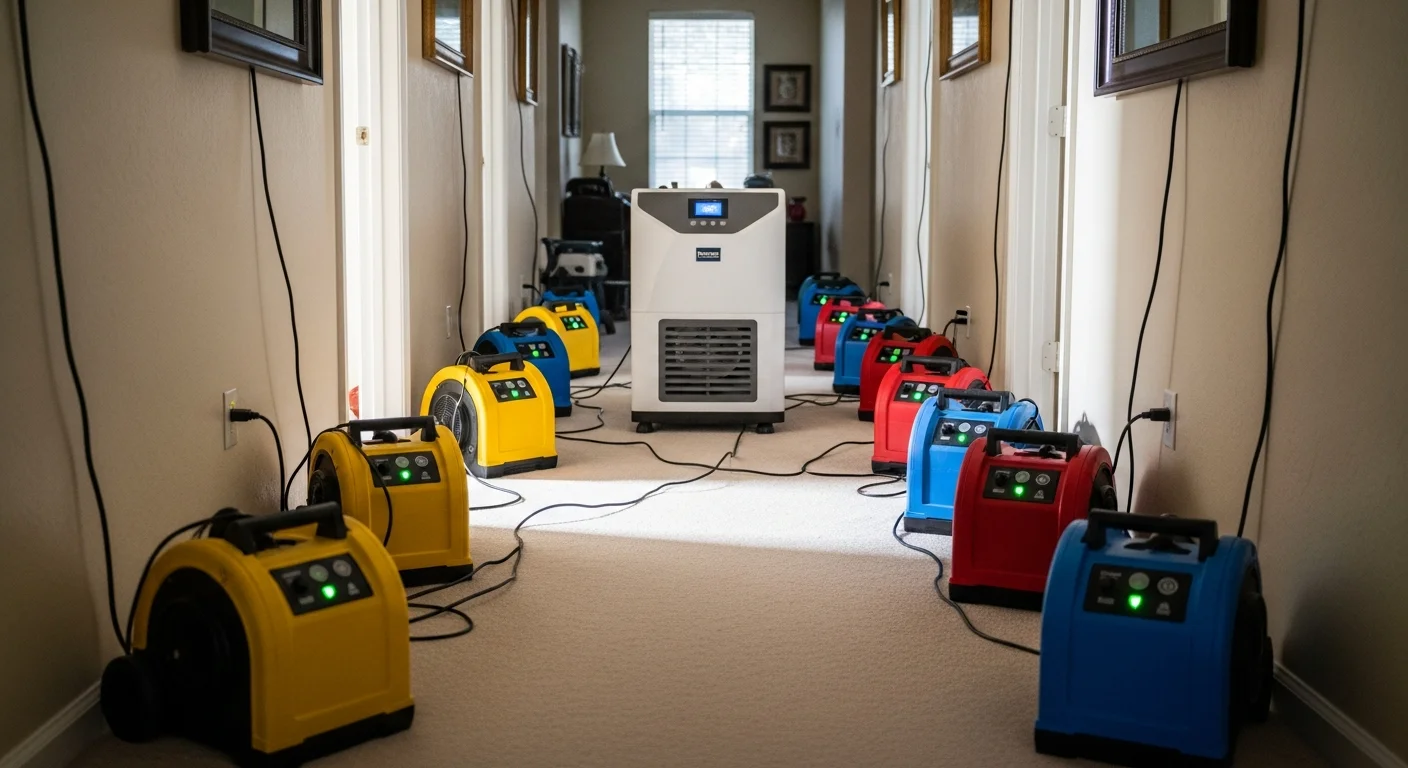
The first day is the most activity-dense day of the entire process. A certified restoration company arrives, assesses the full extent of moisture migration with meters and thermal imaging, removes standing water with industrial pumps, and positions commercial drying equipment throughout the affected area.
This phase also includes initial documentation for insurance — photographs, moisture readings, a written scope of emergency work. Most restoration companies can begin emergency response within 1–4 hours of your call.
Day 1 feels productive because things are happening fast. Enjoy that feeling. It doesn't last. (I say this with affection for the process, not bitterness. OK, maybe a little bitterness.)
Phase 2: Structural Drying (Days 2–7+)
This is the phase that tests your patience. Commercial drying equipment runs continuously — 24 hours a day — and technicians return daily to take moisture readings and adjust equipment placement as materials dry.
IICRC standards require structural materials to reach specific moisture levels before drying is declared complete:
- Drywall: 14–17% moisture content
- Wood framing: 9–13% moisture content
- Concrete subfloor: Must reach equilibrium with ambient conditions
Typical drying timelines by scenario:
| Scenario | Drying Time |
|---|---|
| Small area, clean water, caught immediately | 3–4 days |
| Multiple rooms, moderate saturation | 5–7 days |
| Deeply saturated framing or crawl space | 7–10 days |
| Hardwood flooring (drying in place) | 7–14 days |
| High-humidity climate (Gulf Coast, Southeast) | Add 2–3 days to any scenario |
Phase 3: Demolition and Material Removal (Days 5–14)
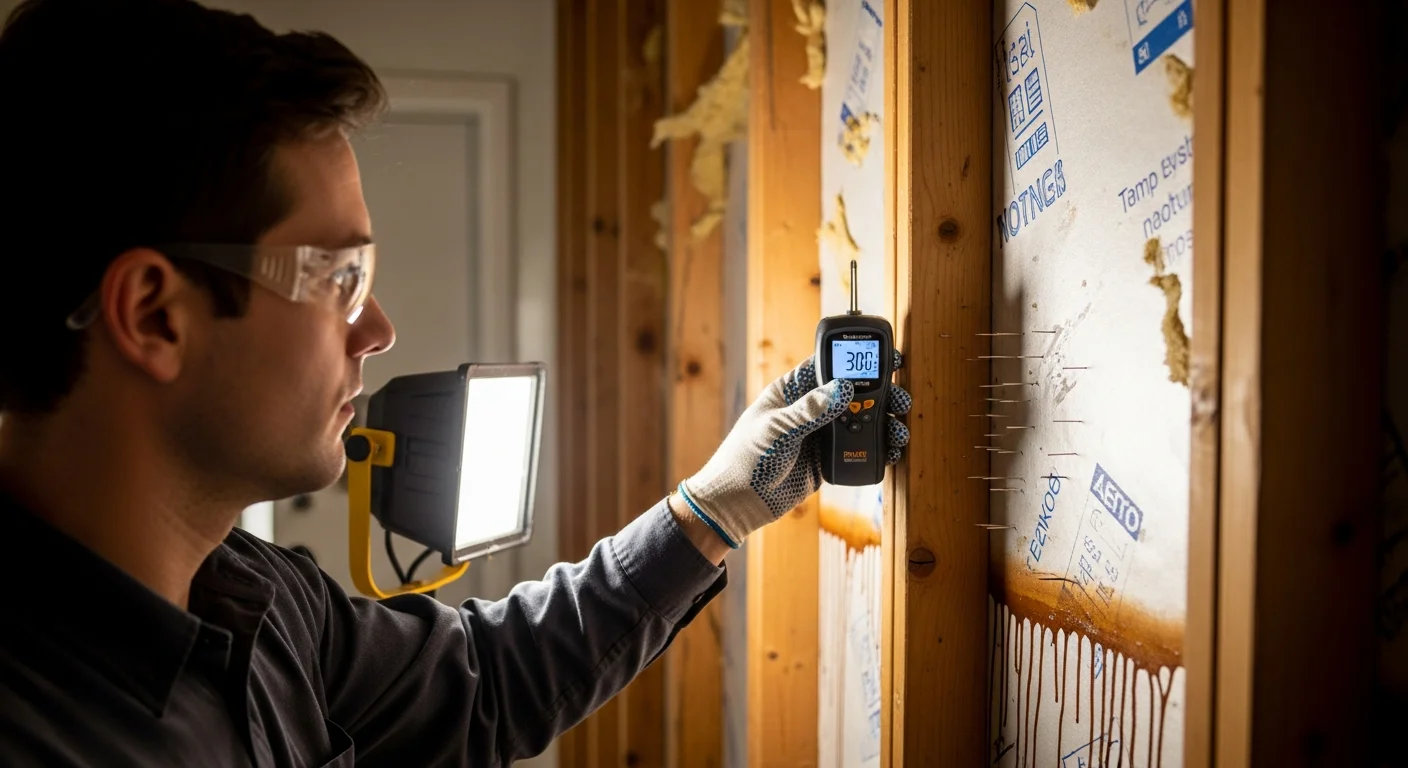
While drying continues, materials that cannot be dried or sanitised are removed. This typically includes carpet and padding, drywall cut to 12–24 inches above the flood line, wet insulation, and any particleboard or OSB that has swollen.
Demolition scope is determined by moisture readings, not by visible damage. Water wicks upward through drywall and insulation well above the visible waterline. Your contractor isn't being overly aggressive — they're cutting to where the moisture stops.
This phase runs concurrently with the tail end of drying, so it doesn't usually add time to the overall schedule. Small mercy.
Phase 4: Mould Remediation — If Required (Days 10–21)
If mould has established — which can happen in as little as 24–48 hours in warm, humid conditions — remediation must be completed before reconstruction begins. This phase adds 1–3 weeks:
- Active remediation: 3–7 days (containment, HEPA vacuuming, antimicrobial treatment, material removal)
- Post-remediation clearance testing: 24–72 hours for the testing itself
- Waiting for lab results: 2–5 business days
Reconstruction cannot begin until clearance testing confirms successful remediation. Skipping this step creates liability, voids warranties, and regularly results in mould reappearing inside your brand-new walls. (Mould is patient. More patient than you. Definitely more patient than your contractor.)
The Hidden Phase: Insurance Approval (Days 7–30+)
This phase doesn't appear on most timelines because it isn't "work" in the traditional sense. But it's often the single largest source of delay.
| Insurance Step | Typical Timeline |
|---|---|
| Adjuster scheduled after claim filing | 3–14 days |
| Adjuster issues scope and estimate | 5–10 days after inspection |
| Supplements filed (additional damage found) | Add 2–4 weeks per supplement |
| Post-storm high-claim period | Add 2–6 weeks to all of the above |
| Insurance issues payment | 5–15 business days after approval |
Reconstruction typically cannot begin until insurance has approved the scope and issued at least a partial payment. A homeowner who files their claim on Day 1, has the adjuster visit on Day 10, receives the scope on Day 20, and gets payment on Day 35 has lost over a month before reconstruction even starts.
This is why filing your claim immediately — not after drying, not after you've had time to think about it — matters so much. Every day you delay filing is a day added to the back end of the project. (The irony of water damage is that the fastest-moving part is the water itself. Everything after that moves at insurance speed.)
Phase 5: Reconstruction (Weeks 3–16+)
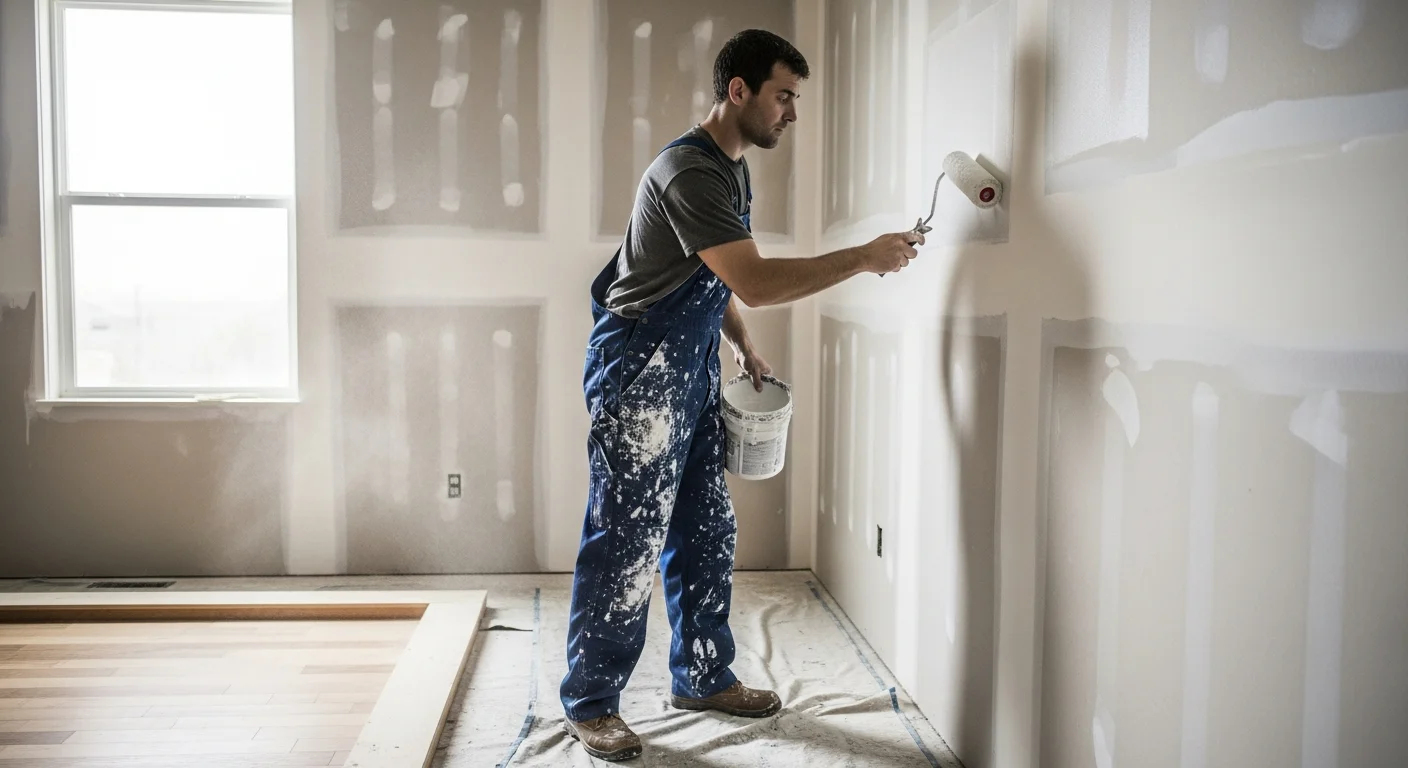
Reconstruction involves replacing everything removed during mitigation: insulation, drywall, paint, flooring, trim, fixtures, and any cabinetry or countertops that were damaged.
| Reconstruction Scope | Typical Timeline | Common Delay Factors |
|---|---|---|
| Single room, drywall + flooring | 1–3 weeks | Paint colour matching |
| 2–3 rooms, standard finishes | 3–6 weeks | Flooring material availability |
| Kitchen or bathroom involved | 4–8 weeks | Cabinet lead times (4–10 weeks) |
| Full floor, custom finishes | 6–16 weeks | Material matching, permit delays, subcontractor scheduling |
| Structural repairs needed | Add 2–4 weeks | Engineering review, permits |
Material availability is the wildcard nobody plans for. Standard drywall, paint, and basic flooring are available immediately. Specific hardwood species, matched tile from a discontinued line, and custom cabinetry can take 4–10 weeks to deliver. If matching existing materials is important — and for insurance "matching" provisions, it usually is — build lead times into your planning from Day 1.
Total Timeline: Realistic Expectations
| Event Severity | Total Timeline (Start to Move-In) | What's Involved |
|---|---|---|
| Minor | 2–4 weeks | Small area, fast response, no mould, simple finishes |
| Moderate | 6–10 weeks | 1–3 rooms, standard materials, clean insurance approval |
| Significant | 10–20 weeks | Multiple rooms, mould remediation, kitchen/bath, insurance supplements |
| Major | 16–36 weeks | Structural damage, sewage, large area, custom materials, engineering |
These timelines assume reasonably prompt insurance processing and material availability. Post-storm events in disaster-declared areas can extend every phase due to contractor demand, material shortages, and adjuster backlogs.
What Causes the Biggest Delays
Knowing where delays hide lets you work around them:
- Insurance adjuster scheduling: File your claim on Day 1. Not Day 5. Not "after we see what happens."
- Supplement approvals: When your contractor discovers damage behind walls that wasn't in the original scope, the insurer needs to approve the additional work. Each supplement cycle takes 2–4 weeks.
- Material lead times: Order materials the moment the scope is approved. Don't wait for the payment to arrive.
- Contractor availability: After widespread storm events, qualified contractors are booked weeks out. Get on a schedule early.
- Permit processing: Electrical, plumbing, and structural permits can take 1–3 weeks depending on your municipality. Your contractor should file these immediately.
Can You Live at Home During Restoration?
It depends on the scope:
| Phase | Liveable? | Reality Check |
|---|---|---|
| Drying (3–7 days) | Sometimes | Commercial equipment is loud (70+ dB) and runs 24/7. Humidity fluctuations. Uncomfortable. |
| Demolition | Sometimes | Dust, noise, exposed studs. Functional if damage is limited to one area. |
| Mould remediation | Usually not | Containment zones, air scrubbers, chemical treatments — not habitable. |
| Reconstruction | Often yes | If limited to one area. Full-home reconstruction: usually not. |
For significant events where displacement is necessary, your homeowners insurance's Additional Living Expenses (ALE) provision covers temporary housing, meals, and related costs. File for ALE on Day 1 and track every receipt. (Living in a hotel while your house is rebuilt is not a vacation. It's an insurance-funded exercise in patience. But at least the hotel has working plumbing.)
Frequently Asked Questions
How long does water damage restoration take on average?
Total restoration — from emergency extraction through completed reconstruction — takes 6–10 weeks for moderate events. Emergency extraction is same-day. Professional drying: 3–7 days. Mould remediation (if needed): 1–3 weeks. Insurance approval: 2–5 weeks. Reconstruction: 2–8 weeks depending on scope. Each phase gates the next, creating a sequential timeline.
What is the fastest water damage can be fully restored?
A truly minor event — small area, clean water, fast response, no mould — can be fully restored in 2–3 weeks: a few days of drying, clean insurance approval, and 1–2 weeks of simple reconstruction. This is the best-case scenario and requires everything to go right. Moderate events realistically take 6–10 weeks. Major events: 4–9 months.
What causes delays in water damage restoration?
The five biggest delay factors: insurance adjuster scheduling (especially after widespread storms), supplement approvals for additional damage, material lead times for matching or specialty products, contractor availability in high-demand periods, and permit processing for electrical or structural work. Filing your claim immediately and ordering materials as soon as scope is approved are the two most effective ways to shorten the timeline.
Can I live in my home during water damage restoration?
Sometimes. During drying, commercial equipment noise (70+ dB, 24/7) and humidity make it uncomfortable. During mould remediation, the home is typically not habitable. Reconstruction is often compatible with continued occupancy if limited to one area. For major events, temporary displacement is necessary. Your homeowners insurance ALE provision covers temporary housing costs.
How long does the drying phase take?
Structural drying takes 3–7 days for most moderate events with professional commercial equipment. Deeply saturated framing or crawl spaces: 7–10 days. Hardwood flooring being dried in place: 7–14 days. High-humidity climates add 2–3 days. Drying is verified with pin moisture meter readings against IICRC target levels before being declared complete.
The honest answer to "how long does this take?" is "longer than you want, shorter than you fear." The timeline feels slow because each phase waits for the previous one to finish, and insurance operates on its own calendar regardless of how eager you are to have your living room back. File early, push for prompt adjuster visits, order materials before the cheque clears, and remind yourself that the drying equipment running at 3 AM is saving you from a mould bill that would add another month. Patience isn't your strong suit right now. That's understandable. The moisture meter doesn't care about your feelings — but it's looking out for your walls.