
How much does home reconstruction cost after water damage? Single-room reconstruction (drywall + flooring + paint): $8,000–$20,000. Multi-room events with kitchen or bathroom involvement: $25,000–$60,000. Whole-floor or basement reconstruction: $40,000–$100,000+. Reconstruction typically costs $10–$37 per square foot and is often more expensive than the mitigation work that preceded it.
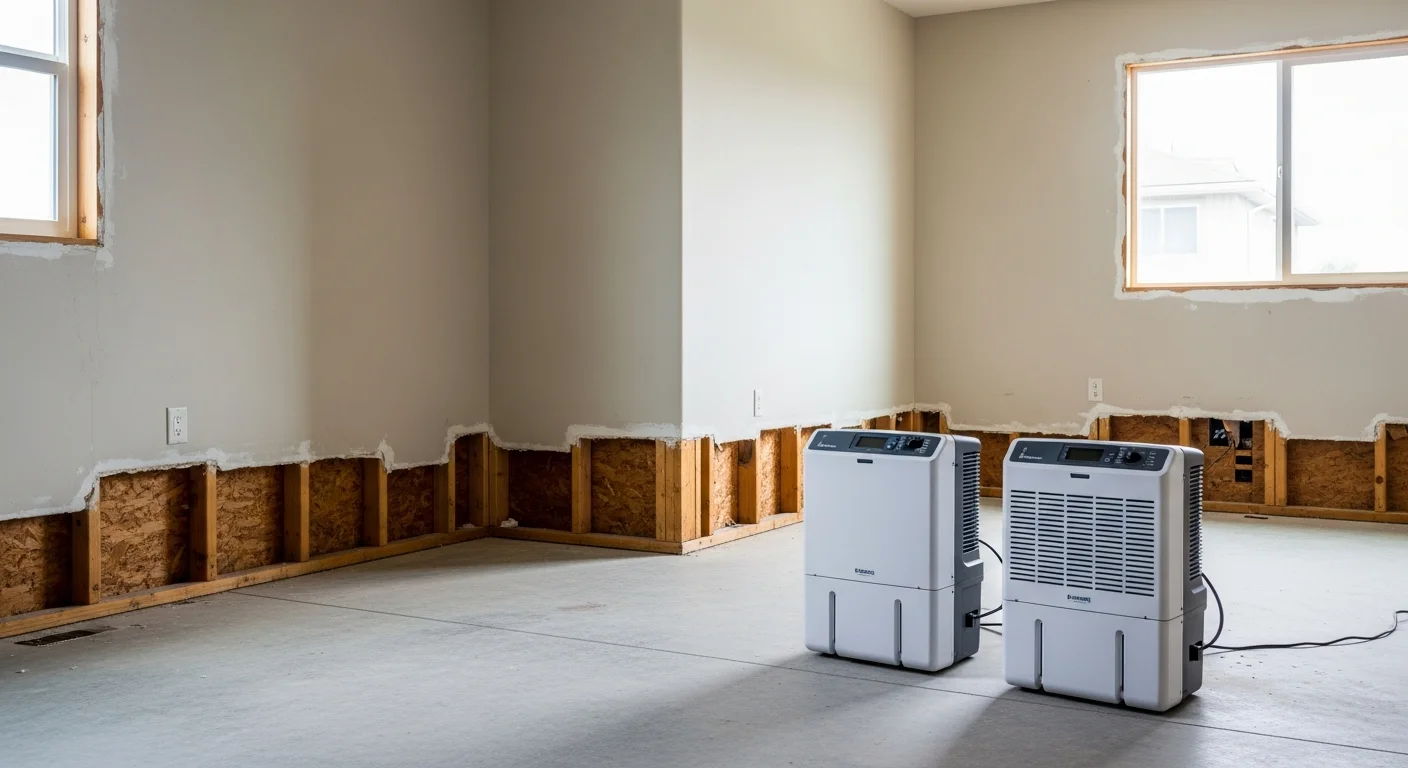
Here is the moment that catches most homeowners off guard: the restoration company finishes drying, removes their equipment, and presents you with a perfectly dry, perfectly stripped shell of a home. No drywall. No flooring. No insulation. Just studs, subfloor, and the faint smell of industrial-grade dehumidifier.
"So... this is done?" you ask.
"The mitigation is done," they say. "Now you need a general contractor."
This is the point where most homeowners learn that water damage restoration has two entirely separate phases — and two entirely separate bills. Mitigation (extraction, drying, demolition) is Phase 1. Reconstruction (putting everything back) is Phase 2. Phase 2 is almost always more expensive than Phase 1, and it's the phase nobody told you about when you were standing in three inches of water calling your insurance company at midnight.
Mitigation vs. Reconstruction: The Two Bills
Understanding this distinction is critical because it affects your insurance claim, your contractor selection, and your timeline:
| Phase | What's Included | Who Does It | Typical Cost |
|---|---|---|---|
| Mitigation | Water extraction, drying, demolition of damaged materials, antimicrobial treatment | Restoration company (IICRC-certified) | $3–$7.50/sq ft |
| Reconstruction | Insulation, drywall, paint, flooring, trim, fixtures, cabinets | General contractor or full-service restoration company | $10–$37/sq ft |
Some restoration companies handle both phases in-house. Others specialise in mitigation only and hand off to a general contractor. Either arrangement works — but if using separate contractors, ensure a clear, written scope delineation between the two. You do not want to discover mid-project that neither contractor planned to reinstall your bathroom vanity.
Reconstruction Cost by Component
Here's what each piece of the rebuild actually costs in 2026:
| Component | Unit | Typical Cost Range |
|---|---|---|
| Insulation (batt) | Per sq ft | $1.50–$3.50 |
| Drywall (hang, tape, float, finish) | Per sq ft | $3.50–$6.50 |
| Interior paint | Per room | $400–$1,200 |
| Carpet + pad (installed) | Per sq ft | $4–$10 |
| Hardwood flooring (installed) | Per sq ft | $8–$18 |
| Luxury vinyl plank (installed) | Per sq ft | $5–$12 |
| Tile flooring (installed) | Per sq ft | $7–$20 |
| Base trim and moulding | Per linear ft | $4–$12 |
| Kitchen cabinets (replacement) | Full set | $5,000–$25,000 |
| Bathroom vanity and fixtures | Per bathroom | $1,500–$6,000 |
| Countertops (replacement) | Per linear ft | $40–$200 |
| Electrical (outlets, fixtures) | Per outlet/fixture | $75–$250 |
Total Reconstruction Cost by Scope
What you'll actually pay depends on how much was destroyed:
| Damage Scope | What Needs Rebuilding | Total Cost Range | Timeline |
|---|---|---|---|
| Single room (bedroom, office) | Drywall, insulation, flooring, paint, trim | $8,000–$20,000 | 1–3 weeks |
| Multiple rooms | All of above across 2–4 rooms | $15,000–$40,000 | 3–6 weeks |
| Kitchen or bathroom involved | Cabinets, countertops, fixtures, flooring, drywall | $25,000–$60,000 | 4–8 weeks |
| Full floor or basement | Complete finish reconstruction across entire level | $40,000–$100,000+ | 2–4 months |
The kitchen and bathroom numbers surprise people. A dishwasher leak that went undetected for a week can mean removing and replacing all lower cabinets, countertops, flooring across the kitchen and into the adjacent dining room, and drywall in two rooms. What started as "the dishwasher leaked" becomes a $35,000 reconstruction project. (The dishwasher itself was fine, by the way. It's always the hose.)
The Matching Problem: When Partial Replacement Gets Complicated
Here's a scenario that generates more adjuster disputes than almost any other: the water damage required replacing hardwood flooring in one room, but the replacement wood doesn't match the existing flooring in adjacent rooms. The colour is slightly different. The grain pattern is off. The age difference is visible at the transition.
Many insurance policies include matching provisions — if the replacement can't reasonably match the existing material (due to age, discontinued product, or colour variance), the policy may cover replacing flooring throughout the affected area to maintain a uniform appearance.
This also applies to:
- Paint: Repainting an entire room rather than just the replaced drywall section, because colour matching aged paint is nearly impossible
- Tile: Replacing all tile in a bathroom if the original is discontinued
- Cabinets: Replacing the full set if matching individual units to a discontinued line isn't possible
Ask your adjuster specifically about matching provisions. If they don't bring it up, you should. The difference between replacing one room of flooring and three rooms of flooring is significant — and if your policy covers matching, you shouldn't be paying the difference. (Your policy almost certainly covers matching. Your adjuster almost certainly won't mention it first.)
Managing Reconstruction: What Most Guides Skip
Get Multiple Bids (You Have Time Now)
Unlike emergency mitigation where you call immediately and accept whoever arrives first, reconstruction is planned work with a defined scope. Get at least two bids from licensed general contractors who have physically reviewed the space. Reconstruction pricing varies 20–40% between contractors for identical scope — and unlike mitigation, you're not in an emergency. Use that leverage.
Wait for the Drying Clearance
This is non-negotiable. A general contractor who wants to start hanging drywall before the restoration company has cleared the structure is either uninformed or in a hurry that will cost you money later. Mould remediation inside a newly finished wall costs more than the original water damage repair. Trust me on this one. Actually, don't trust me — trust the moisture meter.
Understand Permits
Reconstruction involving electrical, plumbing, or structural work typically requires permits. Your contractor should pull any necessary permits. Never agree to skip permits to save money — unpermitted work creates problems at sale and may void insurance coverage for future losses in the affected area. The $500 permit fee is insurance against a $50,000 problem.
Collect the Depreciation Holdback
If your policy is Replacement Cost Value (RCV), your insurer initially pays the depreciated value (ACV) and holds back the remaining depreciation until reconstruction is completed and documented. After repairs are done, submit:
- Final contractor invoices
- Completion photos
- Certificate of completion or final inspection report
The insurer then releases the holdback — which can be 20–40% of the total settlement. This step is frequently overlooked, leaving thousands of dollars of insurance money unclaimed. On a $40,000 reconstruction, the holdback could be $8,000–$16,000. That's not a rounding error. That's a used car.
Upgrade Opportunities: The Silver Lining of Destruction
Since you're rebuilding anyway, this is the one time upgrades are both practical and partially offset by insurance:
- LVP instead of carpet: Luxury vinyl plank is more water-resistant than carpet and often similar in cost. Your insurance pays for carpet replacement; you pay the small difference for a material that won't be destroyed by the next water event.
- Moisture-resistant drywall: Green board or purple board in bathrooms, kitchens, and basements adds $0.50–$1.00/sq ft but significantly reduces damage in future water events.
- Smart water leak detectors: While the walls are open, installing leak sensors near supply lines costs $50–$200 per unit and can prevent the next disaster entirely.
- Improved insulation: Upgrading from R-13 to R-19 during reconstruction costs marginally more and improves energy efficiency permanently.
Your insurance pays to restore your home to pre-loss condition. You pay the incremental difference for upgrades. This is the most cost-effective time to make improvements, because the labour for opening walls and installing materials is already happening.
Frequently Asked Questions
How much does reconstruction after water damage cost?
Home reconstruction after water damage typically costs $10–$37 per square foot depending on the scope and finish level. Single-room reconstruction: $8,000–$20,000. Multi-room events: $15,000–$40,000. Kitchen or bathroom involvement: $25,000–$60,000. Full-floor reconstruction: $40,000–$100,000+. Reconstruction is a separate phase from mitigation and is typically more expensive.
Is reconstruction after water damage covered by insurance?
Yes — if the original water damage event was covered by your homeowners policy, reconstruction to restore your home to pre-loss condition is also covered. With RCV policies, the insurer withholds a depreciation amount until repairs are completed and documented. Submit contractor invoices and completion photos to release this holdback, which can be 20–40% of the total settlement.
Do I need a separate contractor for reconstruction?
Some restoration companies handle both mitigation and reconstruction in-house. Others specialise in mitigation only and hand off to a general contractor. Either approach works, but ensure clear written scope delineation if using separate contractors. Get at least two bids for reconstruction — unlike emergency mitigation, this is planned work where competitive bidding saves money.
How long does reconstruction take after water damage?
Single-room reconstruction: 1–3 weeks. Multi-room: 3–6 weeks. Kitchen or bathroom: 4–8 weeks. Full-floor or extensive reconstruction: 2–4 months. These timelines assume materials are available and permits are obtained promptly. Post-storm reconstruction can extend significantly due to contractor demand and supply constraints.
Can I upgrade materials during reconstruction?
Yes — your insurance pays to restore to pre-loss condition, and you pay the incremental cost of any upgrades. Common upgrades include LVP instead of carpet, moisture-resistant drywall, and smart leak detectors. Since walls are already open and labour is already happening, this is the most cost-effective time to make water-resistant improvements.
The drying is done. The restoration crew has left. You're standing in what used to be your living room and is currently a construction site with excellent ventilation. The hard part — the emergency, the panic, the dehumidifiers running 24/7 — is over. What remains is construction, which is slower, louder, and dustier, but at least it's moving forward. Get your bids, claim your depreciation holdback, and maybe consider the waterproof flooring this time. Your future self will appreciate the upgrade.