
What are the three categories of water damage? Category 1 (clean water) comes from sanitary sources like burst supply lines and is least dangerous. Category 2 (gray water) contains chemical or biological contaminants from appliances and sink drains. Category 3 (black water) includes sewage, floodwater, and groundwater — full pathogen content, professional remediation only. Time also escalates the category: clean water sitting 48+ hours becomes Category 2 or 3.
Water damage isn't one problem — it's three. The water that came out of your dishwasher and the water that came out of the sewer line are not the same substance, even if both ended up on your kitchen floor. The IICRC (Institute of Inspection, Cleaning and Restoration Certification) classifies water damage into three categories based on contamination, and the category decides what gets cleaned, what gets thrown out, who's allowed to do the work, and how much your insurance is going to argue about it.
Here's the full breakdown — sources for each tier, the cleanup rules that apply, the time-based escalation that catches homeowners out, and how the category affects your claim.
The Three Categories at a Glance
| Category | Common Name | Contamination | DIY Possible? |
|---|---|---|---|
| Category 1 | Clean water | None at source | Sometimes (small, fresh, hard surfaces) |
| Category 2 | Gray water | Chemical or biological contaminants | Generally no |
| Category 3 | Black water | Pathogens, sewage, full contamination | Never. Biohazard remediation only. |
The category is set by the source, but it changes with time. A Category 1 spill that sits ignored over a long weekend is no longer Category 1 by Monday — bacterial growth reclassifies it. (Yes, your basement flood gets a promotion. Not the kind anyone wanted.)
Category 1: Clean Water
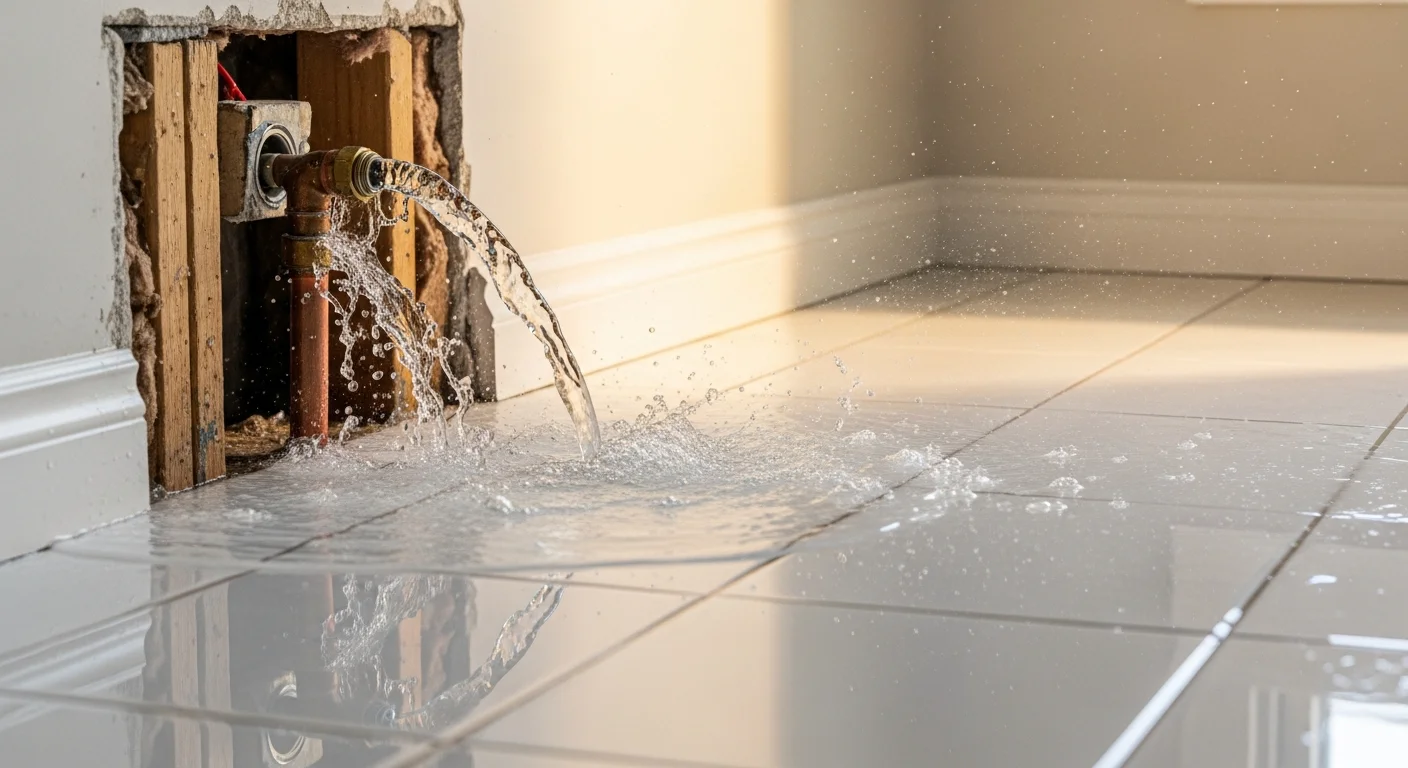
The lowest contamination tier. The water itself poses no immediate health threat at the moment it leaves the source. It's literally water that, in a different context, you might drink.
Common sources of Category 1 water
- Broken water supply pipes (the usual suspect)
- Overflowing sinks or bathtubs without chemical contamination
- Refrigerator ice maker line failures
- Hot water heater bottom rupture (if recent)
- Melting ice or snow tracked indoors
- Rainwater entering through a roof leak (before it touches contaminated surfaces)
- Toilet TANK overflow (not the bowl — that's a different category)
Cleanup considerations
- Small, shallow Category 1 spills on hard surfaces can be DIY if addressed within 24 hours
- Larger areas, porous materials (drywall, carpet pad), or 24+ hour delays push it into professional territory
- The 24–48 hour window matters — mold establishes on porous wet materials within that timeframe even with Category 1 water
- Professional cleanup is strongly recommended for any Category 1 event affecting more than 10 square feet
Category 2: Gray Water
Significant contamination — chemical, biological, or both. Not enough to cause severe illness on contact, but enough to make exposure unpleasant and prolonged exposure problematic. The middle tier is where most homeowner judgment errors happen, because gray water often LOOKS like clean water.
Common sources of Category 2 water
- Dishwasher overflow (food residue + detergent + biofilm = chemical and biological contamination)
- Washing machine overflow (detergent, body soil, fabric debris)
- Sump pump discharge during failure events
- Aquarium water (more contaminated than people think — fish waste, bacteria, parasites)
- Air conditioning condensate that's been sitting in pans
- Toilet BOWL overflow with urine but no fecal content
- Seawater (saline content + biological contaminants from ocean)
- Punctured waterbed (rare in 2026, but yes)
Cleanup considerations
- Requires PPE — gloves, eye protection, N95 respirator at minimum
- Can degrade to Category 3 within 48 hours if untreated, especially if it contacts further contamination
- Professional cleanup is strongly recommended for any size beyond a small contained spill
- Antimicrobial treatment is required during the drying phase, not just standard disinfection
- Porous materials (drywall, carpet pad, insulation) that contacted Category 2 water typically need to be removed and replaced — surface cleaning doesn't reach the contamination throughout the material
Category 3: Black Water
The most contaminated tier. Pathogens throughout, biohazard-level handling required, and there is no DIY scenario for Category 3. None. We've heard the arguments. They're wrong.
Common sources of Category 3 water
- Sewage backups containing fecal content
- Toilet bowl overflows with fecal content
- Floodwater from rivers, streams, or storm surge (any natural body of water)
- Groundwater rising through foundations
- Hurricane and storm flood waters
- Any water that has contacted a Category 3 source, even briefly
- Water mixed with toxic chemicals or substances
- Long-stagnant Category 1 or 2 water (72+ hours)
Cleanup requirements
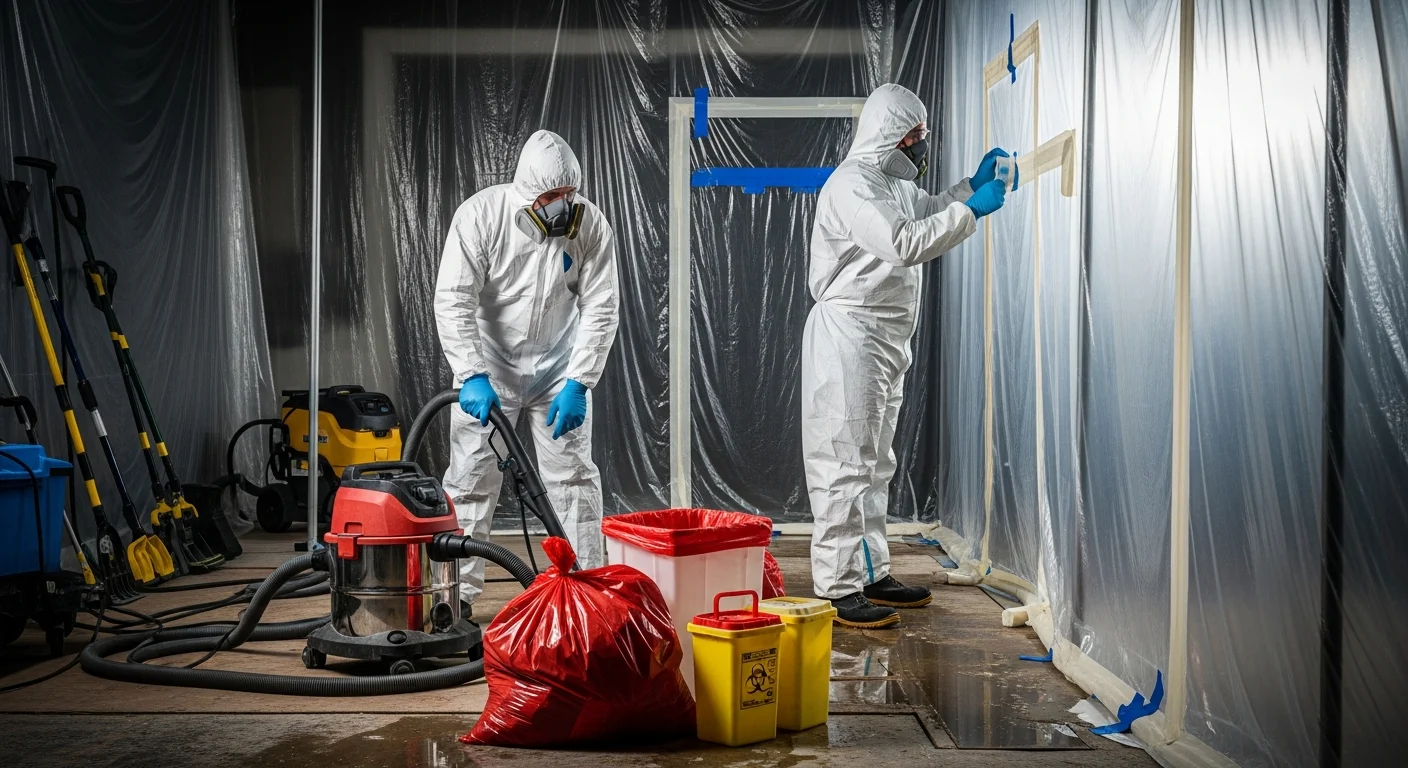
- Biohazard-level PPE required (Tyvek suits, full-face respirators with cartridges, sealed boots)
- Specialized decontamination procedures and EPA-registered antimicrobials
- Containment infrastructure (negative air, sealed barriers) to prevent cross-contamination
- All porous materials that contacted Category 3 water must be removed and disposed of as biohazard waste — drywall, carpet, padding, insulation, upholstered furniture, mattresses
- Licensed biohazard remediation company required (regular water restoration credentials are not the same)
- Local building codes may require specific disposal procedures and post-remediation clearance testing
How Categories Escalate Over Time
This is the part most homeowners miss. The category isn't fixed at the moment of the event — it changes with time, contamination contact, and material involvement.
| Starting Category | Becomes | Why |
|---|---|---|
| Category 1 | Category 2 | After 24–48 hours of standing — bacterial growth reclassifies it |
| Category 1 | Category 3 | After 48–72 hours of standing, OR after contacting any other contamination source (sewage line, soil, mold colony) |
| Category 2 | Category 3 | After 24–48 hours untreated, OR after contacting sewage / additional contamination |
| Any Category | Category 3 | If significant mold colonization develops in the affected area |
This is why response speed matters at least as much as response thoroughness. A burst pipe addressed within 4 hours stays Category 1 and gets cleaned with relatively low cost. The same burst pipe addressed Monday after a Friday-evening discovery is Category 3, with a 5–10× cost multiplier.
Need Professional Water Damage Help?
A professional assessment determines the current water category, the appropriate remediation approach, and what your insurance is likely to cover.
Get Free Estimates →How Water Category Affects Your Insurance Claim
The water category classification directly affects how your claim is processed and what restoration approach your insurer will approve.
- Category 1 from a covered peril (burst pipe, appliance failure) is the most straightforward to claim. Standard homeowners covers it.
- Category 2 situations can become contested. An insurer may argue that damage from a slow leak (which started as Category 1 and became Category 2 due to neglect) results from "lack of maintenance" rather than a sudden event. A restoration contractor experienced with insurance claims can document the timeline and conditions accurately to support coverage.
- Category 3 from sewage backup typically requires a specific water/sewer backup endorsement on top of your standard policy. Without it, sewage damage is denied. The endorsement runs $50–$250/year and is one of the better cost-to-coverage ratios in personal insurance.
- Category 3 from external flooding (rivers, storm surge, surface water) is excluded from standard homeowners entirely. NFIP or private flood insurance is required.
The escalation rule matters here too: a Category 1 event that became Category 3 because nobody addressed it for 5 days can be argued by the insurer as your maintenance failure, not a covered peril. Document the discovery date and the response timeline aggressively.
Frequently Asked Questions
Can I clean up Category 2 water damage myself?
Generally not recommended. Category 2 water contains chemical and biological contaminants that require proper PPE, antimicrobial treatment, and often the removal and replacement of porous materials. If you attempt DIY on a small contained Category 2 spill, use full PPE (gloves, eye protection, N95 respirator) and dispose of cleaning materials as contaminated waste. For anything beyond a single-room appliance overflow caught immediately, professional cleanup is the safer call.
How long does Category 3 water remediation take?
Typical timeline: 1–3 weeks for full remediation including containment setup, removal of contaminated materials, antimicrobial treatment, structural drying, and clearance testing. Reconstruction (drywall, paint, flooring, cabinetry replacement) typically adds another 4 weeks to 3 months. Sewage-affected jobs often run longer due to the volume of porous material that has to come out and the extensive antimicrobial protocols.
Is toilet overflow always Category 3?
It depends on where the water came from. Tank overflow from a toilet that hasn't been flushed (running supply line filling beyond the tank) is Category 1. Bowl overflow with urine but no fecal content is Category 2. Bowl overflow containing fecal matter, OR overflow during a sewer line backup that pushed sewage up through the toilet, is Category 3 regardless of how it looks. When in doubt, treat toilet-source water as Category 3 until proven otherwise.
Does Category 1 water become safe after drying?
Drying alone doesn't remove bacterial contamination that developed during the wet period. If Category 1 water sat for 48+ hours before drying began, the materials and the area need antimicrobial treatment as if the water were Category 2 — even though it started clean. Professional restoration crews routinely treat aged Category 1 events as Category 2 for safety. The water-damage industry's saying: clean water doesn't stay clean.
What's the cost difference between cleaning each category?
Approximate 2026 ranges for moderate damage: Category 1 cleanup $1,500 to $4,500. Category 2 cleanup $4,000 to $10,000 (more PPE, more material removal, antimicrobial treatment). Category 3 remediation $7,000 to $25,000+ (containment, biohazard handling, full porous material removal, clearance testing). Severe Category 3 events with whole-home contamination can exceed $50,000.
How do I know which category applies to my situation?
Start with the source: is it a sanitary supply line (Cat 1), an appliance or non-sewage drain (Cat 2), or sewage / floodwater / groundwater (Cat 3)? Then check time elapsed: more than 48 hours since the event likely escalates the category by one tier; more than 72 hours likely puts it at Cat 3 regardless of source. When uncertain, restoration professionals can determine the category accurately during their initial assessment, which is usually free.
The water category framework is one of those pieces of industry knowledge that pays for itself the first time you need it. Source decides the starting category. Time decides the escalation. Both decide what your weekend is going to look like, and what the invoice eventually says. (Marco's neighbour spent six days "monitoring" what he was sure was a small Category 1 leak. The remediation crew, on arrival, classified it Category 3 in roughly 90 seconds. He has since adopted a "call within four hours, debate later" policy.)
This post contains affiliate links. If you use them to find a contractor or product, we may earn a commission at no extra cost to you.