
How much does it cost to dry out a flooded house? The national average for water damage restoration is $3,867. However, costs range from $1,384 for a minor clean water leak to over $25,000 for severe structural flooding or sewage backups. The final bill depends almost entirely on the category of the water and how long it sat before mitigation began.
When you are standing in a puddle in your living room, you want a straight answer about price. Unfortunately, getting a straight answer out of a restoration company over the phone is impossible, because they genuinely cannot price the job until they use moisture meters to map how far the water traveled inside your walls.
However, the restoration industry uses highly standardized estimating software (usually Xactimate). This means we can accurately map out exactly how much you can expect to pay per square foot in 2026, and why the bill gets split into two very different phases.
Phase 1 vs. Phase 2: The Square Foot Breakdown
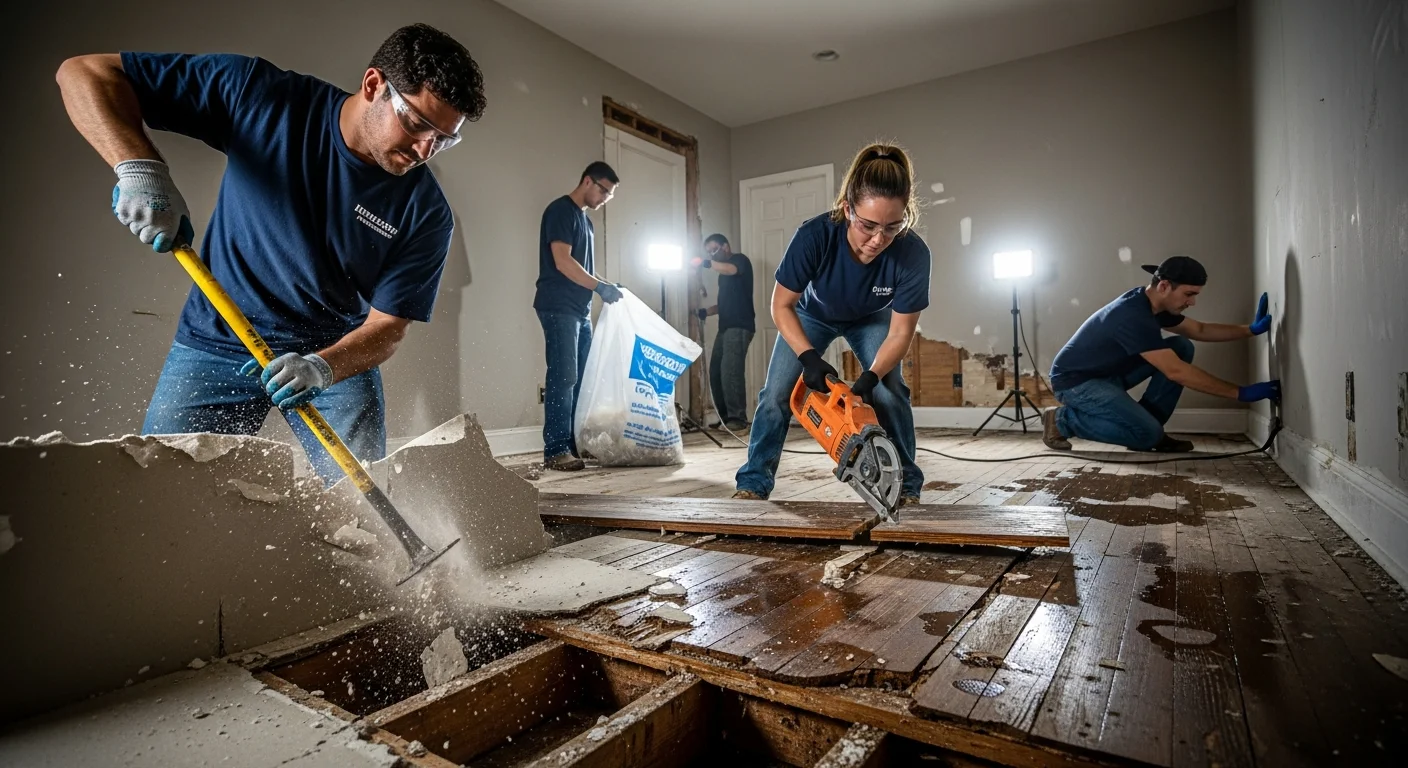
The biggest point of confusion for homeowners is that water damage restoration is billed in two distinct phases. When a contractor gives you a $4,000 estimate to "dry out" the house, that usually does not include the cost of putting the house back together.
| The Phase | What It Includes | Cost Per Square Foot |
|---|---|---|
| Mitigation (Phase 1) | Water extraction, tearing out wet drywall, applying antimicrobial spray, and running industrial dehumidifiers for 3-5 days. | $3.00 – $7.50 |
| Reconstruction (Phase 2) | Hanging new drywall, painting, installing new baseboards, and laying down new carpet or hardwood. | $10.00 – $37.00+ |
The Cost Multiplier: Categories of Water
A gallon of water from a broken kitchen faucet is much cheaper to clean up than a gallon of water from a backed-up sewer line. The industry breaks water down into three categories, and the price jumps significantly with each tier due to the protective equipment and disposal protocols required.
| Water Category | The Source | The Cost Impact |
|---|---|---|
| Category 1 (Clean) | Burst supply lines, overflowing sinks, melting ice maker lines. | Baseline Cost. Many materials (like carpet) can be dried and saved. |
| Category 2 (Gray) | Washing machine overflows, dishwasher leaks. Contains chemical/biological contaminants. | + 15% to 30%. Carpet pad must be thrown away. Heavier antimicrobial treatment required. |
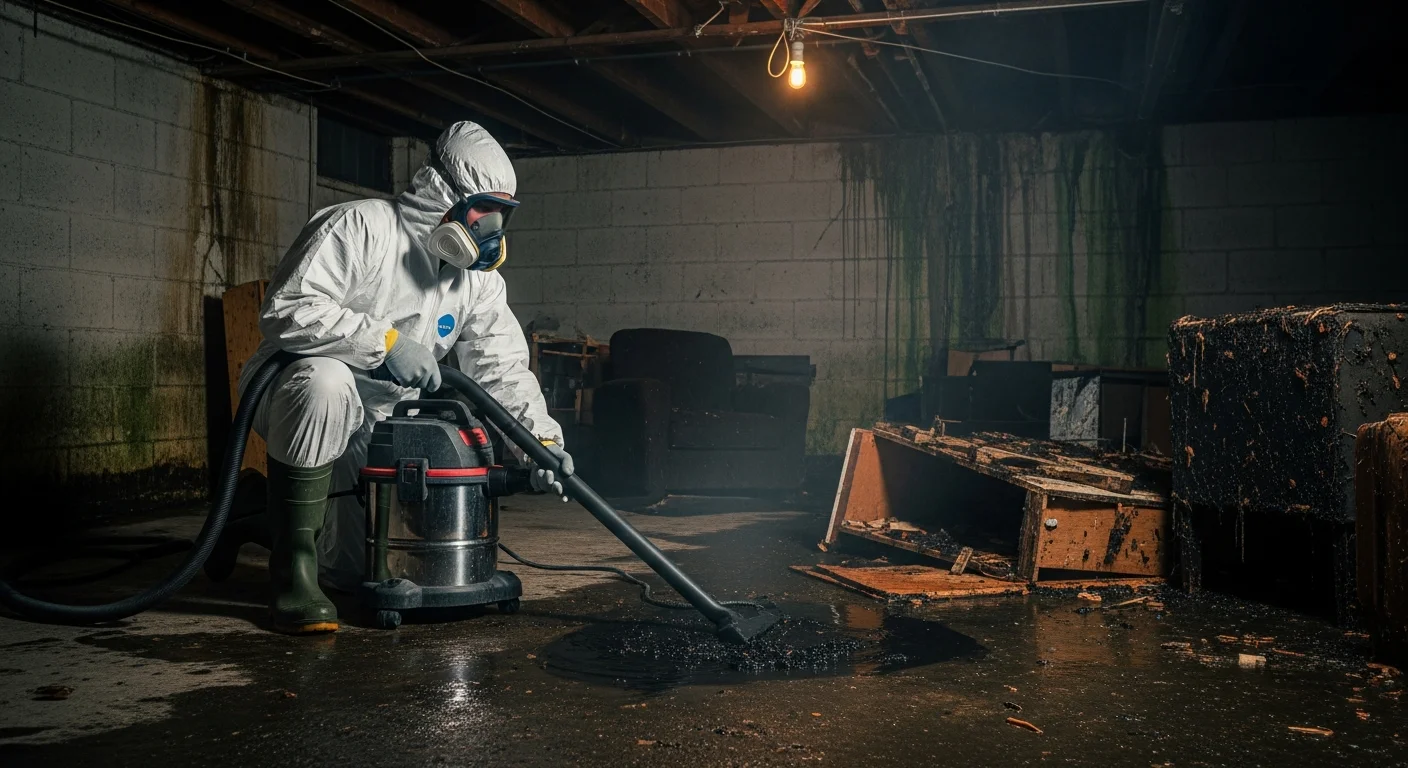
| Category 3 (Black) | Sewage backups, floodwater from rivers/storm surge. Highly toxic. | + 50% to 100%. Hazmat suits required. All porous materials (drywall, insulation) must be gutted and destroyed. |
The "Mold Window" Penalty
The single biggest factor you can control is time. Mold begins to grow on wet drywall and framing within 24 to 48 hours. If you catch a leak immediately and a crew arrives within hours, they can extract the water, deploy dehumidifiers, and dry the structure. The cost stays in the mitigation range.
If you wait three days to call someone, you are no longer dealing with a water damage job. You are dealing with a mold remediation job. That means containment barriers, negative air scrubbers, HEPA vacuuming, and massive demolition. Waiting an extra 48 hours to make a phone call can easily turn a $2,500 drying job into a $9,000 mold removal nightmare.
Frequently Asked Questions
What is the average cost to dry out a flooded house?
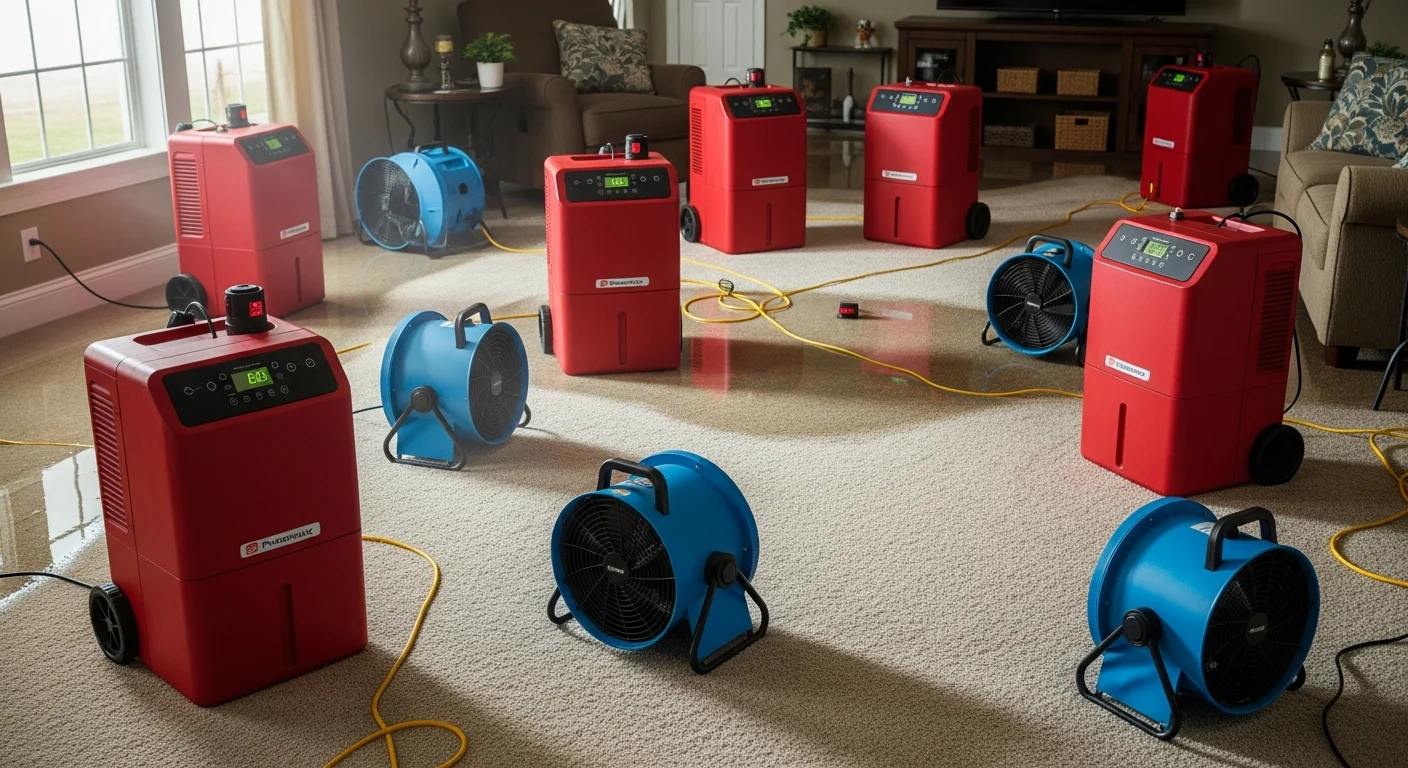
The national average for professional water damage mitigation (extraction and drying) is approximately $3,867. This covers emergency response, water removal, tearing out unsalvageable materials, and running industrial drying equipment for several days. It does not include the cost of rebuilding the damaged areas.
Does homeowners insurance cover water damage restoration?
Yes, standard homeowners insurance covers sudden and accidental water damage (like a pipe bursting or a washing machine hose rupturing). It does not cover gradual damage from a leak you ignored for months, and it strictly excludes flood damage (water rising from outside the home), which requires a separate National Flood Insurance Program (NFIP) policy.
How long does it take to dry out a flooded house?
With professional-grade equipment, a house typically takes 3 to 5 days to completely dry. Saturated hardwood floors or dense structural beams may take 7 to 10 days. An IICRC-certified technician will monitor the moisture levels daily and will only remove the equipment when the moisture content returns to the baseline dry standard.
Can I clean up water damage myself to save money?
If you spill a bucket of water on a tile floor, yes. If water saturates your carpet, runs under your baseboards, or drips through your ceiling, no. Water wicks up into drywall and insulation where you cannot see it or reach it with a residential fan. Failing to dry the structural cavities properly is the leading cause of toxic black mold infestations.
Ready to connect with a certified professional? Find restoration services near you in our directory.