
What causes a musty smell in a house? A persistent musty odor is caused by Microbial Volatile Organic Compounds (mVOCs) — gases released by actively growing mold and mildew. The most common sources are high-humidity basements, poorly ventilated crawl spaces, hidden leaks inside wall cavities, and contaminated HVAC systems (clogged condensate lines or dirty evaporator coils).
A musty smell that doesn't go away after airing out your home is not a cleaning problem. It is a moisture problem. The smell is not the issue — it's the symptom. Spraying air freshener at it is like putting a band-aid on the "check engine" light. It might make you feel better temporarily, but the underlying engine is still failing.
Finding and eliminating the moisture that sustains mold growth is the only permanent solution. Here is how to track that scent back to its source, and the specific places you should look first.
The "Old House Smell" vs. Active Mold
People often confuse a mold problem with "old house smell." While they are related, they require different solutions.
| Characteristic | Active Mold (mVOCs) | "Old House Smell" |
|---|---|---|
| The Source | Actively growing fungi releasing gases as they digest organic material. | Decades of trapped odors (smoke, pets, cooking) absorbed into porous materials. |
| The Scent | Earthy, damp, rotting wood, or wet dog. Intensifies during high humidity. | Stale, stuffy, dusty, or sharp. Fairly consistent regardless of weather. |
| The Solution | Find the water leak, remove the mold, dry the area. | Deep clean carpets/drapes, apply odor-blocking primer to walls, improve ventilation. |
The HVAC System: The Whole-House Distributor
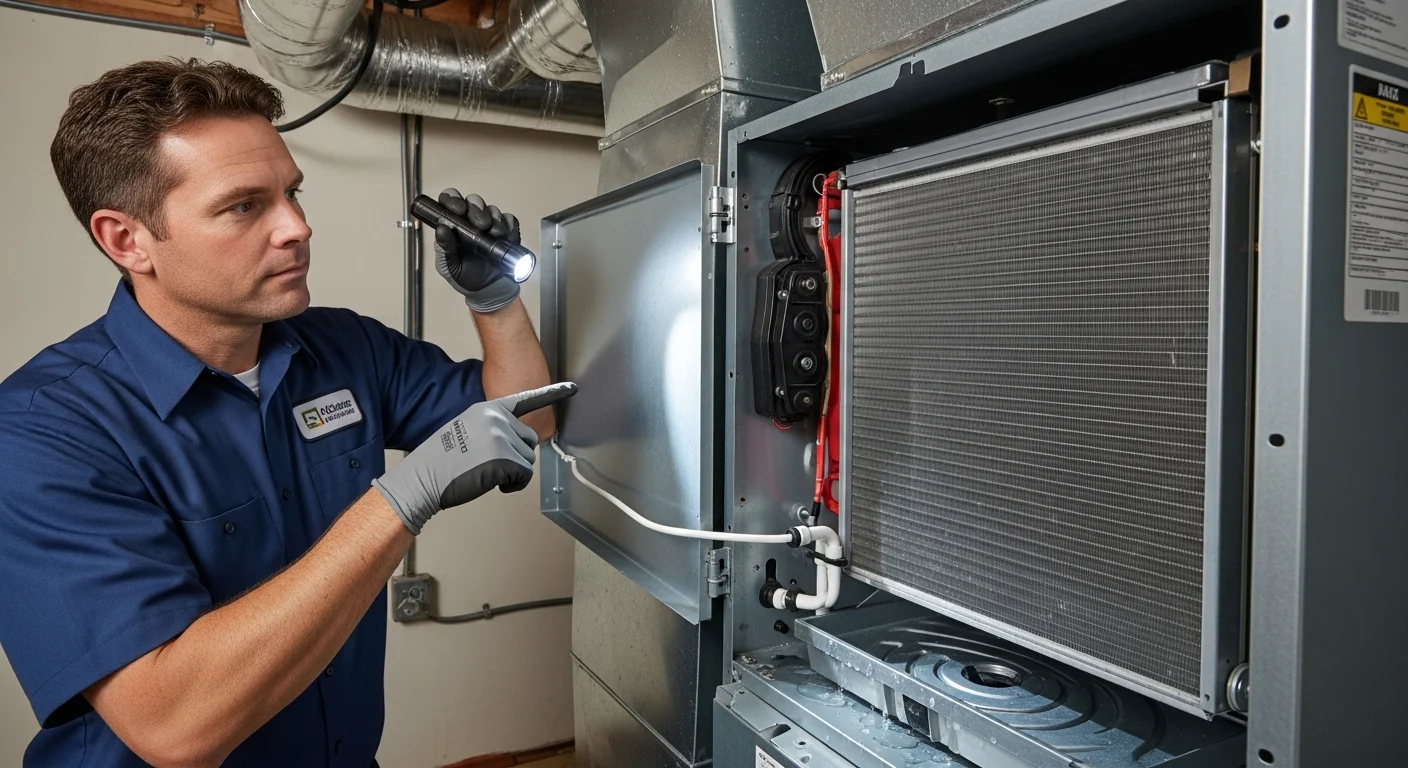
If the musty smell seems to be everywhere at once, or if it gets significantly worse when the air conditioning or heat turns on, your HVAC system is the culprit. Because the system circulates air throughout the entire building, it also acts as a highly efficient distributor for mold spores and mVOCs.
| HVAC Component | Why Mold Grows There | How to Check |
|---|---|---|
| Condensate Drain Line | The AC removes humidity, which drips into a pan and out a pipe. If clogged by algae or debris, water backs up and stagnates. | Check the PVC pipe near your indoor unit. Is the drip pan full of standing water or rust? |
| Evaporator Coils | These coils get very cold and wet with condensation. If covered in dust (mold food), they become a breeding ground. | Requires removing the access panel on the indoor air handler (usually best left to a pro). |
| Air Filters | A severely clogged filter traps dust and moisture together, creating a perfect microbial buffet. | Pull the filter. If it is dark, damp, or smells strongly of dirt, replace it immediately. |
| Ductwork | Leaky ducts pull in damp air from the attic or crawl space, distributing odors directly into your living room. | Shine a flashlight down your return vents. Look for black dust or fuzzy growth. |
(If your HVAC is the source, do not try to clean the coils with bleach. You will corrode the metal, void your warranty, and the mold will return anyway.)
Other Common Sources by Location
Basement and Crawl Space
Basements and dirt-floor crawl spaces are ground zero for whole-home odors. Ground moisture continuously evaporates through concrete floors and walls, and through bare soil. Because heat rises, the "stack effect" pulls this musty air up from the crawl space directly into your living areas.
Look for: white powdery deposits (efflorescence) on concrete walls, dark staining at the joints where walls meet the floor, and visible mold on exposed wooden floor joists above.
Bathroom Walls and Exhaust Fans
Shower steam that isn't properly vented accumulates inside wall cavities. Many older homes have exhaust fans that vent directly into the attic rather than outside — meaning you are just pumping warm moisture from one enclosed space into another. Check for the musty smell specifically when the bathroom is warm and humid after a shower to see if it localizes there.
Past Water Damage Areas
Any area that suffered water damage in the past — under a sink that had a slow drip, a ceiling under an old roof leak, or floors near an overflowing toilet — is a prime candidate. Even if the visible surface was dried, water often seeps behind baseboards and into wall cavities, fueling hidden mold growth for months.

How to Investigate Like a Pro
- Follow your nose. It sounds simple, but walk through every room slowly. The mVOC concentration is strongest closest to the source. If a specific closet smells worse than the hallway, the problem is in or behind that closet.
- Check indoor humidity. A basic digital hygrometer costs less than $20. If your indoor relative humidity is consistently above 60%, you are providing an all-you-can-eat buffet for mold spores.
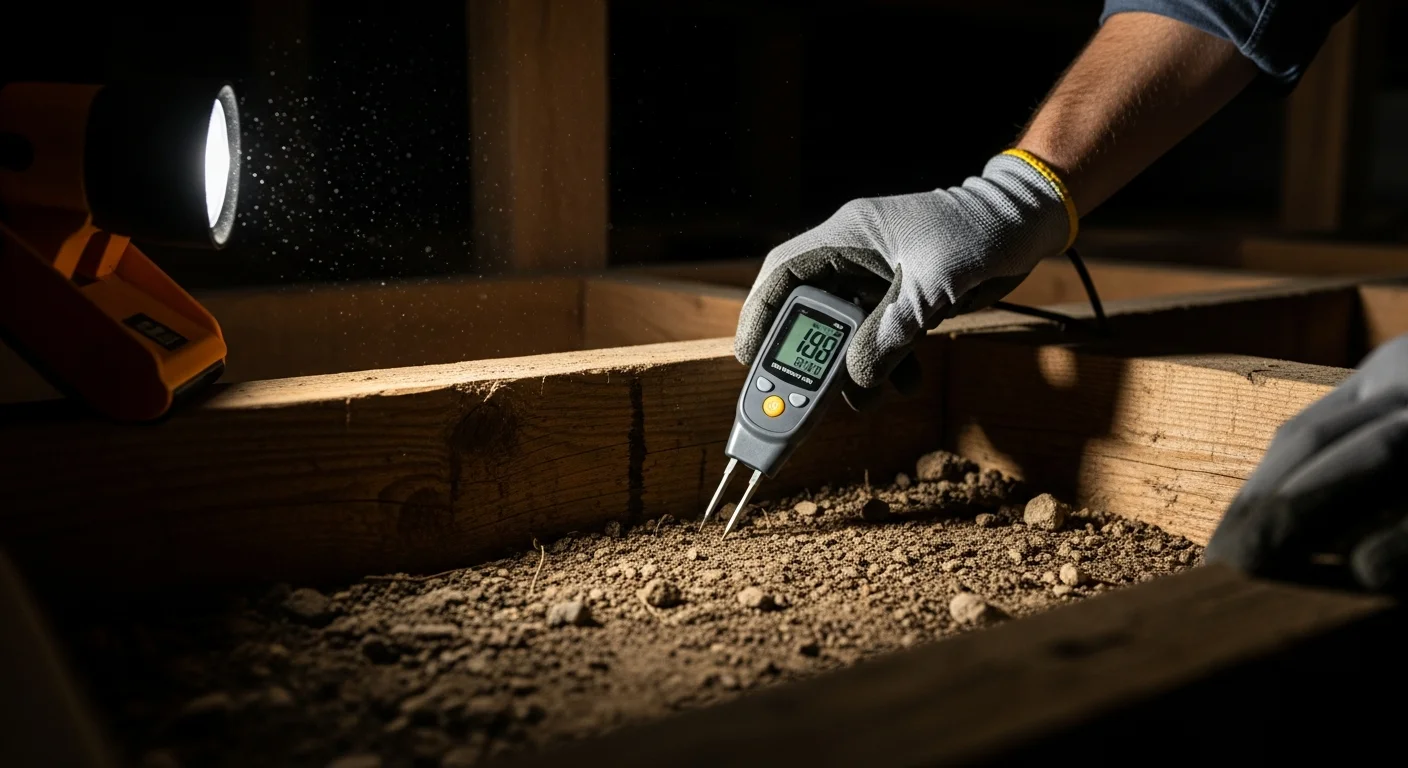
- Use a moisture meter. A consumer-grade pinless moisture meter ($30–$80) can detect elevated moisture inside walls and floors without damaging them. Readings above 1% on drywall or 16% on wood indicate trapped moisture.
- Inspect the hidden spots. Look inside bathroom exhaust fan housings, underneath the bottom shelf of sink cabinets, inside closets located on exterior walls, and behind furniture pushed tight against cold walls.
Fixing It Permanently
Eliminating a musty odor permanently requires exactly two steps. Neither step works without the other.
- Step 1: Fix the water. If you remove the mold but don't fix the clogged HVAC drain line or the leaking window seal, the mold returns within weeks.
- Step 2: Remove the mold. If you fix the leak but leave the contaminated drywall in place, the existing mold will continue releasing mVOCs into the air indefinitely.
If you've investigated accessible areas and still cannot locate the source, you likely have mold growing inside a wall cavity. A professional mold inspector equipped with thermal imaging cameras can identify cold spots (temperature differentials) that indicate hidden water pooling inside walls and ceilings.
Frequently Asked Questions
What causes a musty smell in a house?
Musty smells are caused by Microbial Volatile Organic Compounds (mVOCs), which are gases released by actively growing mold and mildew. The odor indicates a current moisture problem — not just old staleness. Common culprits include clogged HVAC condensate lines, crawl space moisture, hidden plumbing leaks inside walls, and poor bathroom ventilation.
How do I find where a musty smell is coming from?
Pay attention to when the smell is strongest. If it spikes when the AC turns on, check your HVAC filter, coils, and ductwork. If it is constant, use your nose to narrow down the room, then check under sinks, behind toilets, and inside closets on exterior walls. A moisture meter can help identify wet drywall hiding a plumbing leak.
Can a musty smell go away on its own?
No. Musty smells caused by mold do not resolve on their own because mold does not die on its own. As long as moisture is present, the mold will continue to grow and release odor compounds. Air fresheners, candles, and open windows only temporarily mask the smell. It will return until the moisture source is fixed and the mold is removed.
Is a musty smell in a house dangerous?
A persistent musty smell indicates active mold growth, which can cause respiratory irritation, sneezing, coughing, and worsened asthma symptoms in sensitive individuals. The gases themselves (mVOCs) can also cause headaches and eye irritation. Furthermore, the mold is actively digesting whatever material it is growing on, which can eventually lead to structural damage if left unaddressed.
Ready to connect with a certified professional? Find restoration services near you in our directory.