
How much does mold remediation cost? The national average for professional mold remediation is $2,300 to $2,500, with most homeowners spending between $1,200 and $3,800. Pricing typically ranges from $10 to $30 per square foot depending on the location and severity of the infestation. Small surface jobs can cost $500, while extensive whole-home remediation or HVAC involvement can exceed $10,000.
Nobody wakes up hoping to spend three grand on fungus removal. It is the definition of a grudge purchase. But when the musty smell hits your basement or you spot black spotting behind the drywall, you need accurate numbers, not vague estimates.
Here is the reality of mold remediation pricing in 2026: you are not just paying for bleach and elbow grease. You are paying for containment, liability, and the assurance that the microscopic spores won't simply relocate to your bedroom. Here is exactly how that bill breaks down.
The Per-Square-Foot Math
Most professional remediation companies quote based on square footage, though almost all have a minimum project charge (typically $500–$1,500) just to deploy the equipment.
| Job Size | Square Footage | Average Cost Range | Typical Scenario |
|---|---|---|---|
| Small | Under 10 sq. ft. | $500 – $1,500 | Surface mold on bathroom ceiling; minor under-sink leak |
| Medium | 10 – 100 sq. ft. | $1,500 – $3,800 | Flooded bathroom; localized basement corner; behind an appliance |
| Large | 100 – 300 sq. ft. | $4,000 – $10,000 | Extensive finished basement; entire attic; significant crawl space |
| Whole-Home | 300+ sq. ft. | $10,000 – $30,000+ | Prolonged flood exposure; HVAC system contamination |
Why the massive range from $10 to $30 per square foot? Because surface mold on concrete is easy. Mold that has digested its way into your load-bearing studs inside a cramped crawl space is not. The harder it is to reach, the more it costs.
Cost Breakdown by Location
Where the mold lives dictates how much demolition is required to evict it.
| Location | Average Cost | Why It Costs What It Does |
|---|---|---|
| Bathroom | $500 – $1,500 | Often surface-level due to humidity, but hidden pipe leaks require drywall/tile removal |
| Crawl Space | $1,500 – $4,000 | Tight access increases labor time; often requires removing/replacing vapor barriers and insulation |
| Attic | $1,000 – $4,000 | Requires specialized access, insulation removal, and treating complex wood trusses |
| Basement | $1,500 – $5,000+ | Finished basements require drywall demolition; unfinished concrete is cheaper to treat |
| HVAC System | $3,000 – $10,000 | Requires specialized duct-cleaning equipment and negative pressure containment; may require unit replacement |
What Exactly Are You Paying For?
If you look at a $3,500 quote and think, "I could buy a lot of bleach for that," you're missing the point of professional remediation. Bleach doesn't kill mold roots in porous materials (it actually feeds them water). A proper, IICRC-compliant remediation invoice covers six specific phases:
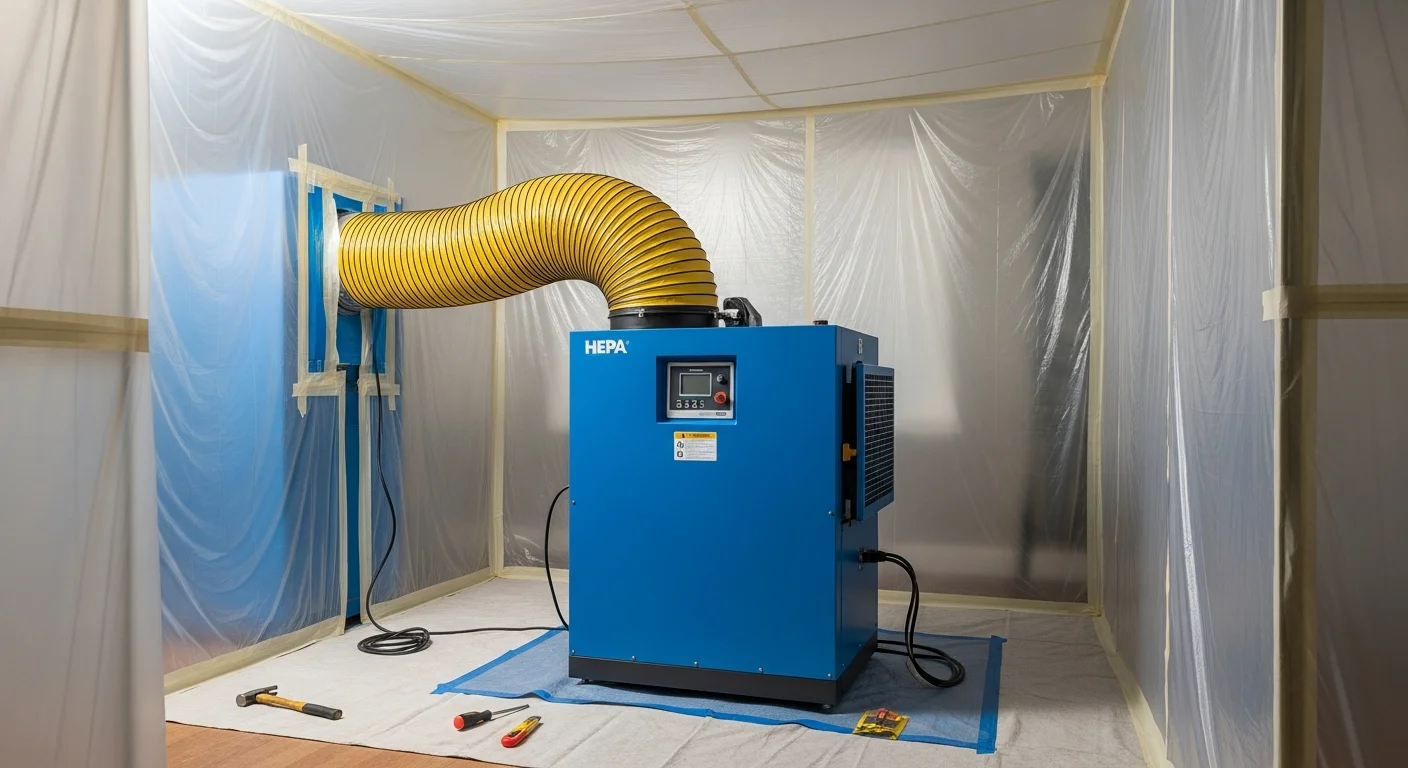
- Containment setup (15% of cost): Heavy plastic sheeting and negative air machines prevent the billions of disturbed spores from migrating into your clean living room.
- Air filtration (10% of cost): Industrial HEPA scrubbers run 24/7 to clean the air inside the containment zone.
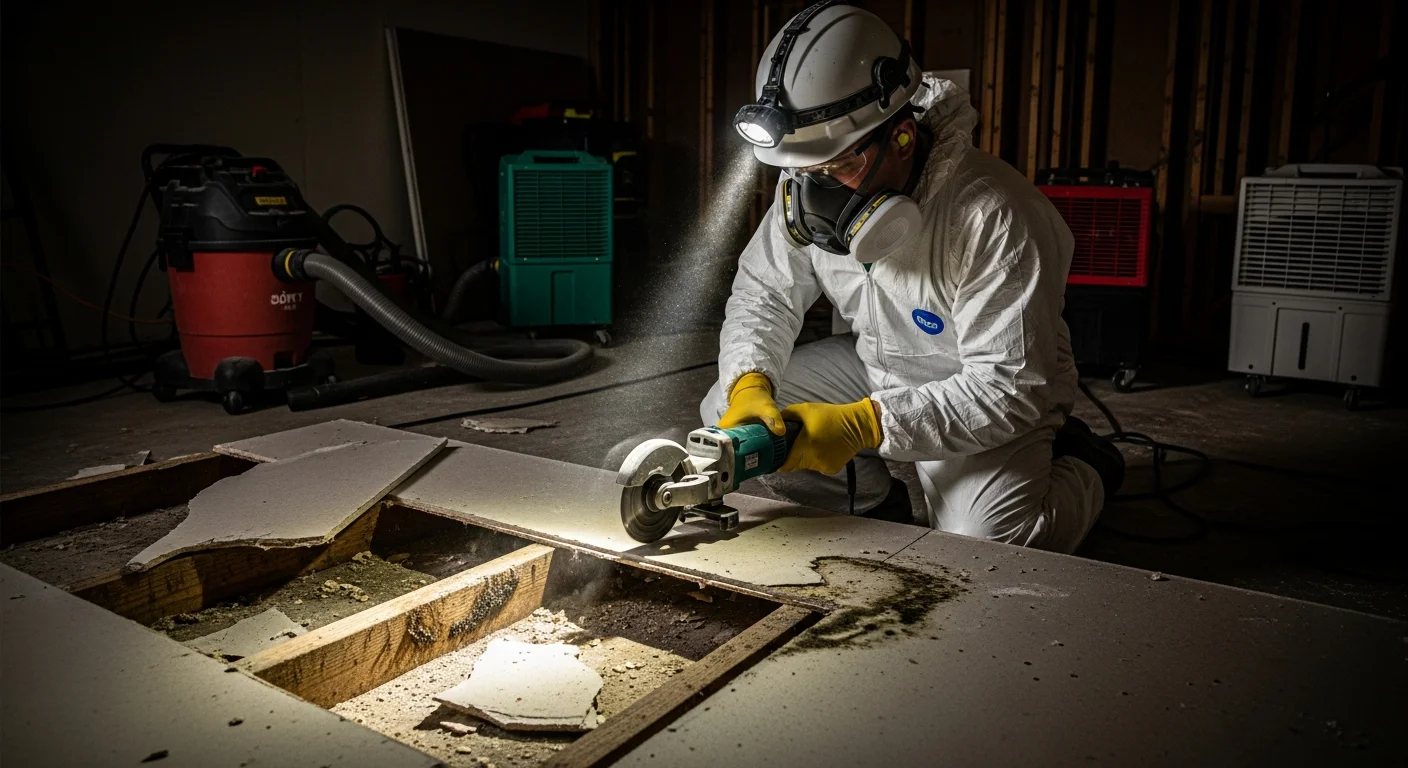
- Demolition and removal (35% of cost): Cutting out contaminated drywall, carpeting, and insulation, then double-bagging it for hazardous transport.
- Physical cleaning (20% of cost): Wire brushing, sanding, or dry-ice blasting the structural wood to remove the root system.
- Antimicrobial treatment (10% of cost): Applying EPA-registered biocides to prevent the mold from returning.
- HEPA vacuuming (10% of cost): Vacuuming every square inch of the containment area to capture dead spores (which can still cause allergic reactions).
Quotes that seem suspiciously cheap almost always skip the containment phase. A contractor without containment isn't removing your mold; they're just giving it a tour of your house.
Does Homeowners Insurance Cover This?
Insurance coverage for mold is the most misunderstood aspect of homeownership. The rule is actually quite simple: insurance covers mold if it is the direct result of a covered "sudden and accidental" peril. It does not cover mold caused by neglect.
| Scenario | Likely Covered? | Insurance Logic |
|---|---|---|
| Washing machine hose bursts, mold grows 48 hours later | Yes | The root cause (burst pipe) is a covered sudden peril |
| Tree branches break roof during storm, water causes mold | Yes | Storm damage is a covered peril |
| Slow pipe leak inside wall over six months | No | Considered a maintenance failure / long-term neglect |
| High basement humidity over the summer | No | Homeowner is responsible for environmental control |
| Flood water from a swollen river | No | Standard policies exclude ground flooding (requires separate flood insurance) |
The Two Hidden Costs You Must Budget For
Your remediation quote is not your total project cost. There are two additional expenses you must prepare for:
1. Fixing the Source
Mold is a symptom. Water is the disease. Remediation companies remove the mold, but they do not fix the leaking roof, replace the failed sump pump, or regrade your landscaping. If you spend $4,000 removing mold and $0 fixing the water source, you will be spending another $4,000 next year. (Mold doesn't do payment plans, but it loves repeat customers.)
2. Reconstruction
Remediation is destructive. The crew will cut away your drywall, rip up your carpet, and tear out your vanity. Their job ends when the mold is gone and the framing is treated. Putting the drywall, paint, and carpet back together is a separate "reconstruction" phase, which is billed separately (often adding 30–50% to the total project cost).
Never Skip the Clearance Test
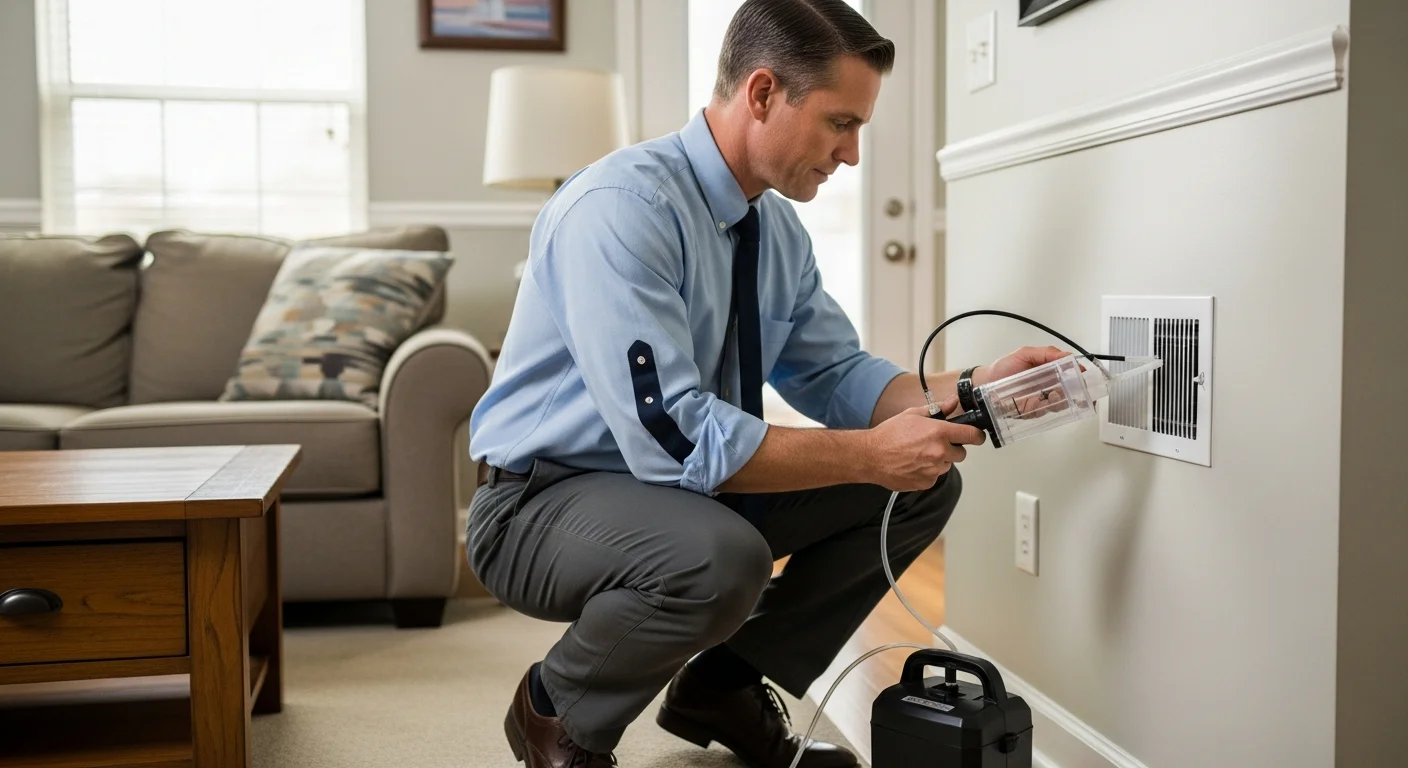
Before the plastic containment comes down, you need a post-remediation clearance test. This is conducted by an independent industrial hygienist (not the company that did the remediation) and typically costs $200–$500.
This test provides documented, legal proof that the spore counts have returned to normal, safe levels. If you sell your home, the buyer's inspector will ask for this document. If a contractor tells you clearance testing is "a waste of money," they are usually afraid their work won't pass. Pay for the test. It's the only way to know you got what you paid for.
Frequently Asked Questions
What does mold remediation cost on average?
The national average for professional mold remediation is $2,300 to $2,500, with most homeowners spending between $1,200 and $3,800. Pricing typically ranges from $10 to $30 per square foot. Small, localized infestations cost $500–$1,500, while whole-home remediation or HVAC involvement can exceed $10,000.
Does homeowners insurance cover mold remediation?
Yes, but only if the mold is the direct result of a "sudden and accidental" covered peril, such as a burst pipe or storm damage. Standard policies generally exclude mold caused by long-term maintenance neglect, slow leaks, high humidity, or ground flooding. Always check your specific policy limits, as many cap mold payouts at $5,000 or $10,000.
Can I remove mold myself to save money?
The EPA suggests that homeowners can handle small mold patches covering less than 10 square feet on non-porous surfaces. However, for mold inside wall cavities, mold affecting HVAC systems, or infestations spanning more than 10 square feet, professional remediation is strongly recommended. Improper DIY removal often releases millions of spores, spreading the contamination to other rooms.
Why is mold remediation so expensive?
You are paying for specialized liability, equipment, and labor. Proper remediation requires industrial HEPA air scrubbers, negative air pressure containment, hazardous waste disposal, EPA-registered antimicrobials, and intensive demolition work performed by technicians in full protective gear. You're not paying for cleaning; you're paying for surgical extraction of a biohazard.
How long does mold remediation take?
Small remediation projects typically take 1 to 3 days. Moderate projects take 3 to 7 days. Large or complex infestations requiring extensive material removal can take 1 to 3 weeks. After the active work is done, post-remediation clearance testing requires an additional 24 to 72 hours before containment can be removed and reconstruction can begin.
Spending thousands on mold remediation isn't fun, but spending it twice because you hired the cheapest guy who skipped containment is worse. Hire certified professionals, fix the underlying moisture source, and always demand a third-party clearance test. It's the only way to ensure the mold — and the anxiety that comes with it — is gone for good.