
Does water damage renovation in a pre-1978 home require lead paint precautions? Yes. Any renovation that disturbs painted surfaces in homes built before 1978 is subject to the EPA's RRP (Renovation, Repair, and Painting) Rule. Contractors must be EPA-certified, use containment and wet methods, and clean with HEPA vacuums. Lead paint testing costs $250–$700. Abatement adds $4–$45/sq ft depending on method. Skipping these precautions is both illegal and dangerous.
Water damage restoration frequently involves demolition — removing drywall, sanding surfaces, scraping paint. In most homes, this is messy but straightforward. In homes built before 1978, it's a federal compliance issue. Because the paint you're about to scrape, sand, and demolish might contain lead. And lead dust, once airborne, does not politely stay in the work area.
This isn't a topic most homeowners think about while standing in a flooded living room. But if your home was built before 1978 — and approximately 24 million homes in the US were — it needs to be part of the conversation before any demolition begins. Not after. Before. (The lead doesn't care about your timeline. But the EPA does.)
Lead Paint in Older Homes: Why Water Damage Makes It Worse
The Consumer Product Safety Commission banned lead-based paint for residential use in 1978. Homes built before that date may contain lead paint. The older the home, the higher the probability:
| Home Built | Probability of Lead Paint | Typical Lead Content |
|---|---|---|
| Before 1940 | 87% | High — lead was the dominant residential paint ingredient |
| 1940–1959 | 69% | Moderate to high |
| 1960–1977 | 24% | Lower but still significant |
| 1978 or later | ~0% | Banned for residential use |
Intact, firmly adhered lead paint in good condition presents minimal risk. The hazard arises when paint is disturbed — and water damage disturbs paint in two ways:
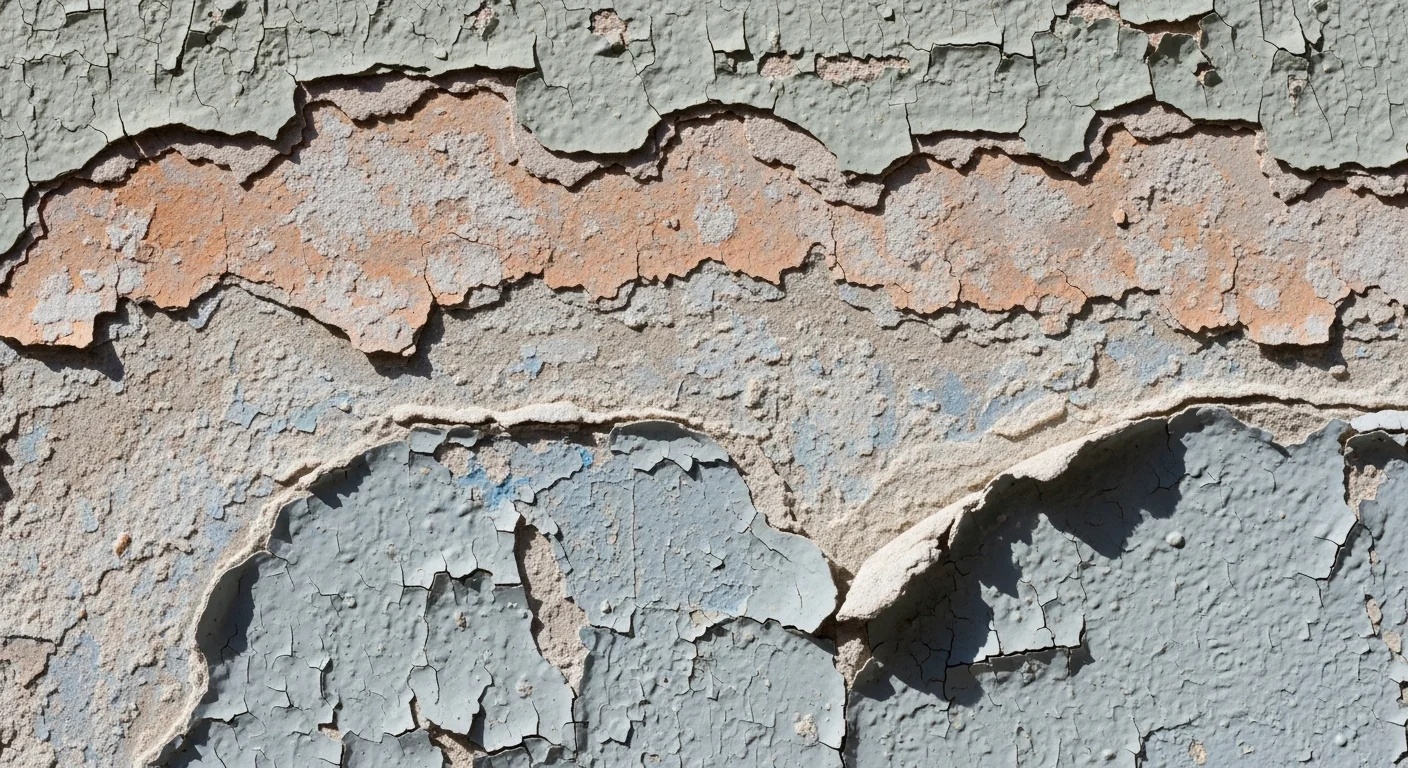
- Paint failure from moisture: Water causes bubbling, peeling, and adhesion failure. Water-damaged paint flakes more readily, creating accessible lead paint chips and dust even before demolition begins.
- Demolition during restoration: Removing water-damaged drywall, sanding surfaces for repainting, and scraping deteriorated paint all generate lead dust if the original paint contains lead.
Water damage in a pre-1978 home creates a one-two punch: the water damages the paint, and the restoration work to fix the water damage disturbs the lead-containing paint further. Both steps generate lead exposure risks that don't exist in newer homes.
The EPA's RRP Rule: What It Requires
The EPA's Renovation, Repair, and Painting (RRP) Rule applies to any renovation work that disturbs painted surfaces in homes built before 1978. This includes water damage restoration.
| Requirement | What It Means in Practice | Why It Matters |
|---|---|---|
| Firm certification | The renovation company must be EPA RRP-certified | Uncertified firms performing this work face fines up to $37,500 per day per violation |
| Trained workers | Individual workers performing the work must complete EPA-approved lead-safe training | Proper technique prevents dust spread — training isn't optional |
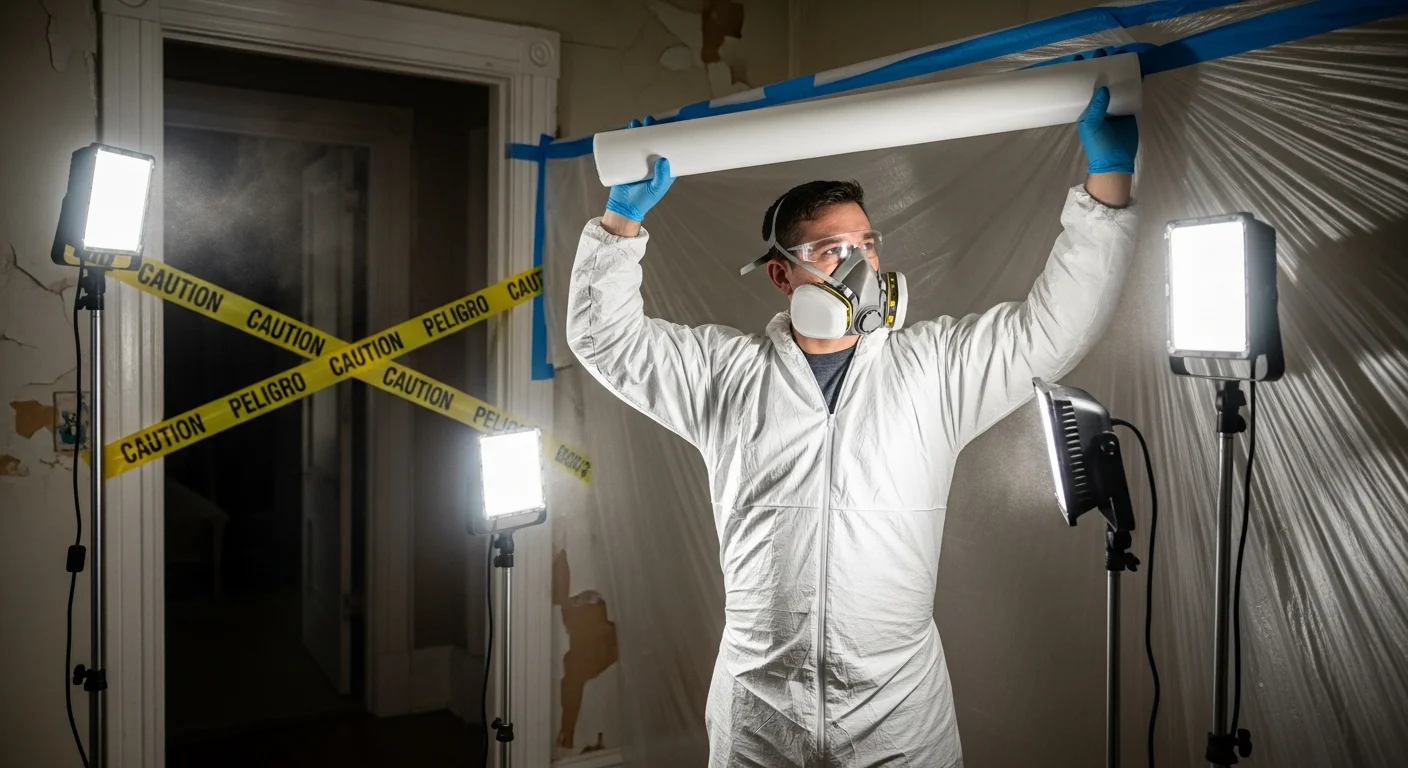
| Containment | Plastic sheeting must seal the work area to prevent lead dust from migrating | Lead dust travels through air currents and on shoes to every room in the house |
| Wet methods | Misting surfaces before and during demolition suppresses dust generation | Dry scraping and sanding generate orders of magnitude more airborne lead |
| HEPA vacuuming | Cleanup must use HEPA-filtered vacuums — standard vacuums spread lead dust | Regular vacuum filters are too coarse to capture lead particles |
| Proper disposal | Waste containing lead paint must be disposed of as hazardous material | Can't go in the regular dumpster — requires proper manifesting |
| Cleaning verification | Post-renovation cleaning verification before containment is removed | Confirms the area is safe for re-occupancy |
When requesting quotes from water damage restoration contractors for work in pre-1978 homes, ask specifically: "Is your firm EPA RRP-certified?" and "Are your workers trained in lead-safe practices?" If the answer to either is no, you need a different contractor. An unlicensed contractor who skips these requirements creates lead contamination throughout your home that is more expensive to remediate than the original water damage. (This is not the kind of renovation upgrade anyone wants.)
Testing for Lead Paint
Testing is the only way to confirm whether lead paint is present. Guessing is not a testing method.
| Testing Method | How It Works | Cost | Accuracy | Best For |
|---|---|---|---|---|
| EPA-approved home test kits | Chemical swab that changes colour on contact with lead | $10–$30 | Moderate — false negatives possible | Quick screening before deciding to hire a professional |
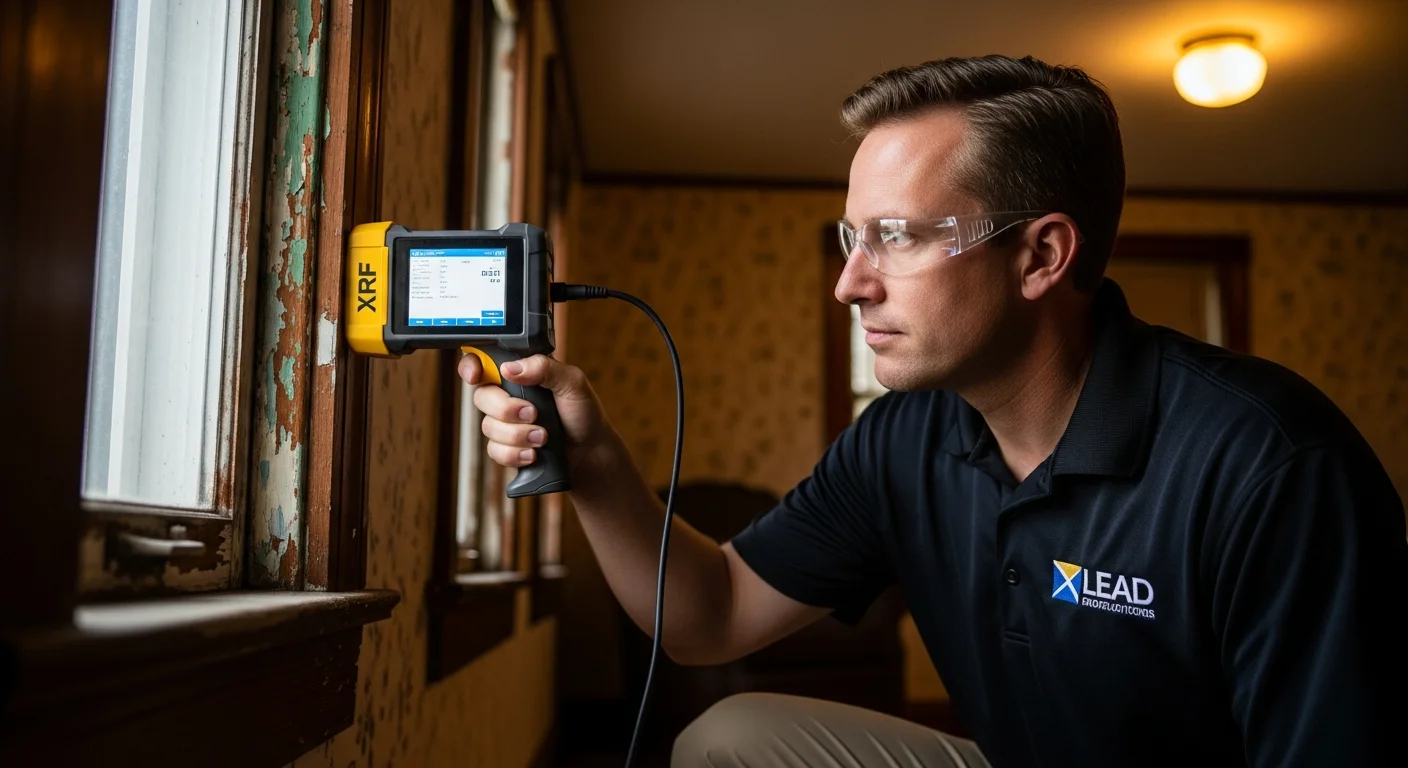
| XRF analyzer (professional) | Handheld X-ray device reads lead content through paint layers without damage | $250–$700 (whole home) | High — non-destructive, quantitative results | Comprehensive testing before major renovation |
| Paint chip lab analysis | Chips sent to certified lab for chemical analysis | $200–$600 | High — definitive results | Confirming specific surfaces, documentation for insurance |
| Full risk assessment | Comprehensive evaluation including dust wipes, soil, water | $500–$1,500 | Highest — full hazard profile | Homes with children, significant renovation scope |
For significant water damage restoration in a pre-1978 home, professional XRF testing is the appropriate choice. It's non-destructive, provides quantitative results surface-by-surface, and generates documentation you'll need for insurance and for future home sale disclosure requirements.
Abatement Options and Costs
If lead paint is confirmed, there are four approaches to managing it during water damage restoration:
| Method | What It Involves | Cost per Sq Ft | When to Use |
|---|---|---|---|
| Encapsulation | Sealing lead paint under a specialised coating | $4–$10 | Paint is intact, surfaces not being disturbed or removed |
| Enclosure | Covering lead-painted surfaces with new material (drywall over existing) | $8–$13 | Surfaces structurally sound, lead paint doesn't need removal |
| Manual removal | Wet scraping, chemical strippers, or specialised tools | $8–$45 | Surfaces being demolished or replaced during restoration |
| Component replacement | Removing and replacing entire components (windows, doors, trim) | Varies by component | Old components being replaced anyway as part of reconstruction |
For water damage restoration specifically, component replacement is often the most practical approach. You're already removing water-damaged drywall, trim, and potentially windows. Replacing lead-painted components that are being demolished eliminates the lead hazard as part of the reconstruction scope — often at little or no additional cost beyond the standard restoration work.
| Typical Scope | Lead Abatement Cost (Additional) |
|---|---|
| Single room — drywall replacement with lead paint | $1,500–$4,000 |
| Multiple rooms — drywall + trim + windows | $4,000–$12,000 |
| Whole-floor — comprehensive abatement + restoration | $8,000–$30,000+ |
Insurance Coverage for Lead Paint in Water Damage Claims
This is where things get complicated — and where many homeowners lose money they're entitled to:
- Lead paint abatement as part of covered restoration: If lead paint removal is necessary to complete a covered water damage restoration (i.e., you can't remove the water-damaged drywall without disturbing lead paint), the abatement cost may be included in your claim. This is policy-specific.
- Code upgrade coverage: Some policies include ordinance or law coverage that pays for building code compliance upgrades required during reconstruction — including lead paint compliance. Check your declarations page.
- What's typically NOT covered: Pre-existing lead paint conditions that aren't directly related to the water damage event. Your insurer covers restoring your home to pre-loss condition — they don't cover remediating a hazard that existed before the water event.
Discuss lead paint with your adjuster when the claim is filed, before work begins. If your restoration contractor identifies lead paint during demolition and you haven't discussed it with your adjuster first, getting the additional cost approved becomes significantly harder. Surprises in insurance claims are never welcome. Documented, pre-discussed complications are manageable.
What Happens When Contractors Skip the Rules
This section exists because it happens more often than it should:
- Contractor performs demolition without testing or containment — lead dust spreads throughout the home via air currents and HVAC system
- Lead dust settles on every surface — floors, countertops, toys, food preparation areas, bedding
- Children are exposed to lead-contaminated dust — lead exposure in children causes irreversible neurological damage at any level
- Professional lead dust remediation costs $3,000–$15,000+ — to clean the contamination the contractor created
- EPA fines for the contractor — up to $37,500 per day per violation
- Homeowner liability — if you sell the home, you must disclose known lead paint hazards under federal law
The cost of proper RRP compliance during a water damage restoration is typically $1,000–$3,000 in additional precautions. The cost of cleaning up after a contractor who skipped it is $3,000–$15,000+ in lead dust remediation, plus the health cost to your family. This is the kind of math where the cheaper option is objectively expensive. (My Year 7 maths teacher would call this "a word problem that solves itself.")
Frequently Asked Questions
Does water damage renovation disturb lead paint?
Yes — drywall removal, sanding, scraping, and demolition in homes with lead paint disturb lead-containing surfaces and generate hazardous lead dust. Water damage specifically worsens the risk because moisture causes paint to bubble, peel, and flake, increasing dust generation during demolition. Any renovation affecting painted surfaces in pre-1978 homes is subject to the EPA's RRP Rule.
What is the RRP Rule?
The EPA's Renovation, Repair, and Painting Rule requires firms performing renovation in pre-1978 homes to be EPA-certified and use lead-safe work practices: plastic sheeting containment, wet methods for dust suppression, HEPA vacuuming for cleanup, and proper hazardous waste disposal. Violations carry fines up to $37,500 per day. The rule applies to water damage restoration when work disturbs painted surfaces.
How much does lead paint testing cost?
EPA-approved home test kits: $10–$30 (moderate accuracy). Professional XRF testing (whole home): $250–$700 (high accuracy, non-destructive). Paint chip lab analysis: $200–$600. Full risk assessment including dust wipes and soil: $500–$1,500. For significant water damage renovation in pre-1978 homes, professional XRF testing is the appropriate choice.
How much does lead paint abatement cost?
Encapsulation: $4–$10/sq ft. Enclosure: $8–$13/sq ft. Manual removal: $8–$45/sq ft. For water damage restoration specifically, single-room abatement typically adds $1,500–$4,000 to the project cost. Multi-room: $4,000–$12,000. Whole-floor comprehensive: $8,000–$30,000+. Component replacement during reconstruction is often the most cost-effective approach.
Does insurance cover lead paint abatement during water damage restoration?
Possibly — if lead paint removal is necessary to complete a covered water damage restoration, the cost may be included in your claim. Some policies include ordinance/law coverage for code compliance upgrades. Pre-existing lead conditions unrelated to the water event are typically not covered. Discuss lead paint with your adjuster before work begins — documented, pre-discussed complications are manageable; surprises are not.
Your pre-1978 home has character, history, and probably lead paint. The water damage is the immediate problem. The lead paint is the complication that turns a standard restoration into a compliance exercise. Get the home tested before demolition begins. Hire an RRP-certified contractor. Include the lead discussion in your insurance claim from Day 1. The rules exist because lead poisoning in children is irreversible — and because a $300 test and $1,000 in containment costs less than the alternative by every possible measure.