
How do you get rid of flood smell in a house? Remove all contaminated porous materials (carpet, padding, drywall, insulation), clean and treat structural surfaces with EPA-registered antimicrobials, address mould if present, then use professional odour treatments — thermal fogging, ozone, or hydroxyl generators — to neutralise embedded odour compounds. Air fresheners and candles address none of this. The smell goes away when the source goes away.
Let's be honest about what we're dealing with here. The smell after a flood is not "musty." Musty is a forgotten cupboard. Post-flood smell is a layered, aggressive, biological assault on your nostrils that makes you seriously question whether you want to live in this house ever again.
The good news: it's fixable. The less good news: it's fixable by removing the things that smell, not by spraying things that smell different on top of them. If your current strategy involves Febreze, baking soda, and hope — I respect the effort, but let's talk about what actually works.
Understanding What You're Smelling
Post-flood odour isn't a single smell. It's a cocktail — and not the kind you'd order:
| Odour Source | What It Smells Like | Why It's There | How to Eliminate It |
|---|---|---|---|
| Bacterial decomposition | Rotten, sulfurous | Organic matter in floodwater decomposes on contact with air | Remove contaminated materials, antimicrobial treatment |
| Mould growth (MVOCs) | Musty, earthy | Mould colonises wet surfaces within 24–48 hours | Mould remediation + source moisture elimination |
| Sewage compounds | Sewage (unmistakable) | Floodwater often carries sewage from overwhelmed systems | Remove all contacted porous materials, disinfect hard surfaces |
| Wet porous materials | Damp, stale | Carpet, drywall, insulation, wood produce odour when saturated | Remove and replace — cannot be dried back to odourless |
| Chemical contamination | Chemical, petroleum | Floodwater picks up chemicals from urban surfaces, garages, stored products | Professional assessment + targeted treatment |
Each source requires a different treatment approach. Generic deodourisers address none of them. This is why your house still smells after you cleaned the floors three times and ran every fan you own — you treated the symptoms, not the disease.
Phase 1: Remove Everything That Smells (This Is Most of the Work)
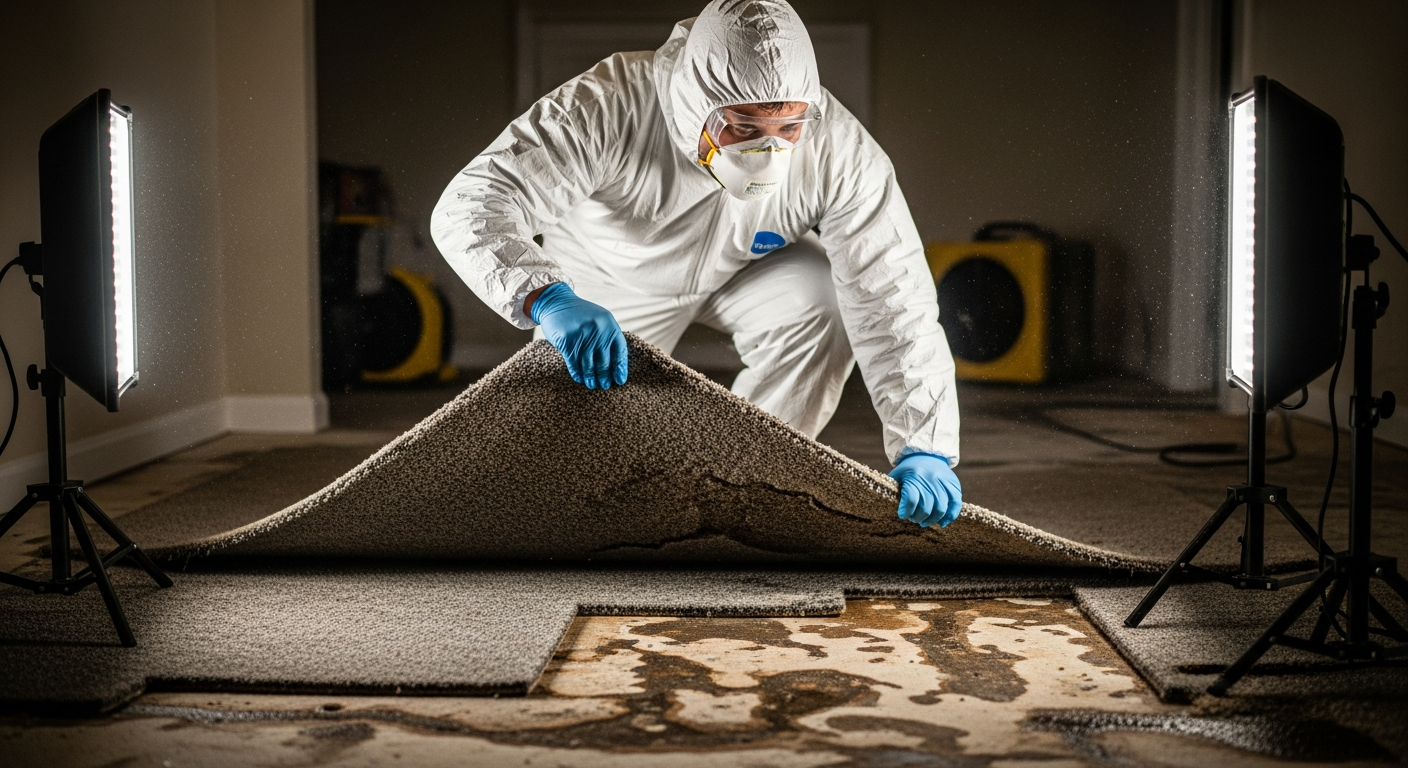
The most effective thing you can do for flood odour is remove the materials causing it. This isn't subtle and it isn't pretty.
Materials that must be removed after flood contamination:
- Carpet and padding: Always. No exceptions. Flood-saturated carpet cannot be effectively deodourised because contamination penetrates the entire depth of the pad and backing.
- Drywall: Cut to 12–24 inches above the visible waterline (water wicks higher than you think)
- Insulation: All insulation that contacted floodwater — it's a contamination sponge
- Particleboard or MDF: Swells, delaminates, and holds contamination permanently
- Upholstered furniture: If it contacted contaminated floodwater, it's gone. I'm sorry about the sofa.
After removing contaminated porous materials, the structural surfaces — concrete floors, wood framing, masonry — can be cleaned and treated. These non-porous or semi-porous surfaces respond well to thorough cleaning and antimicrobial treatment.
Phase 2: Structural Cleaning and Antimicrobial Treatment
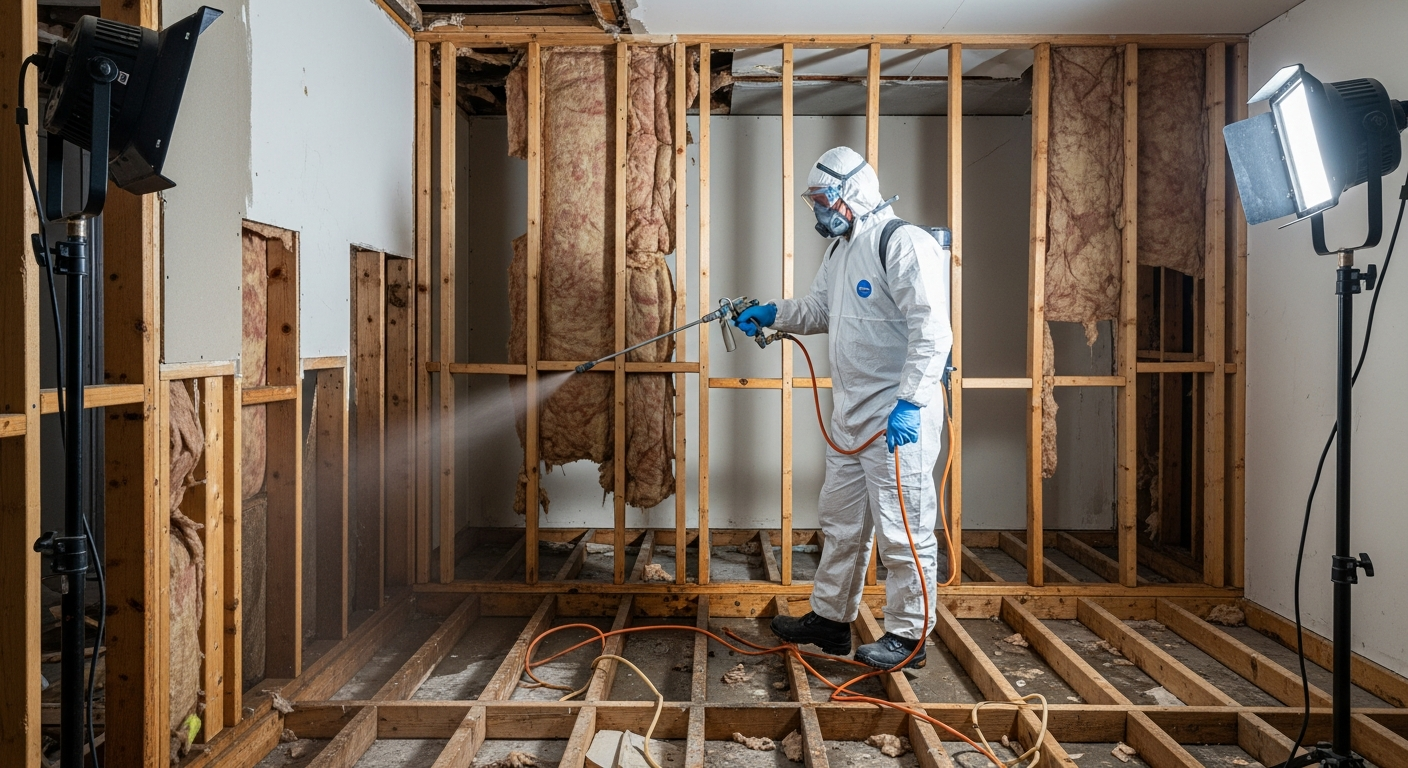
After contaminated materials are removed, remaining structural surfaces need cleaning and antimicrobial treatment:
- Remove all visible debris and organic matter from surfaces — soil, silt, plant debris
- Scrub surfaces with an appropriate cleaner to remove organic residue (not just rinsing — scrubbing)
- Apply an EPA-registered antimicrobial with appropriate dwell time (follow product directions exactly)
- Allow surfaces to dry completely — antimicrobials need airflow and time
- Apply a second treatment if odour persists after the first application dries
Professional restoration companies use commercial-grade antimicrobials not available at retail. These penetrate deeper into wood grain and concrete pores than consumer products. The price difference between a professional antimicrobial treatment and a bottle of Lysol is about $200. The effectiveness difference is about 200%.
Phase 3: Professional Odour Treatment
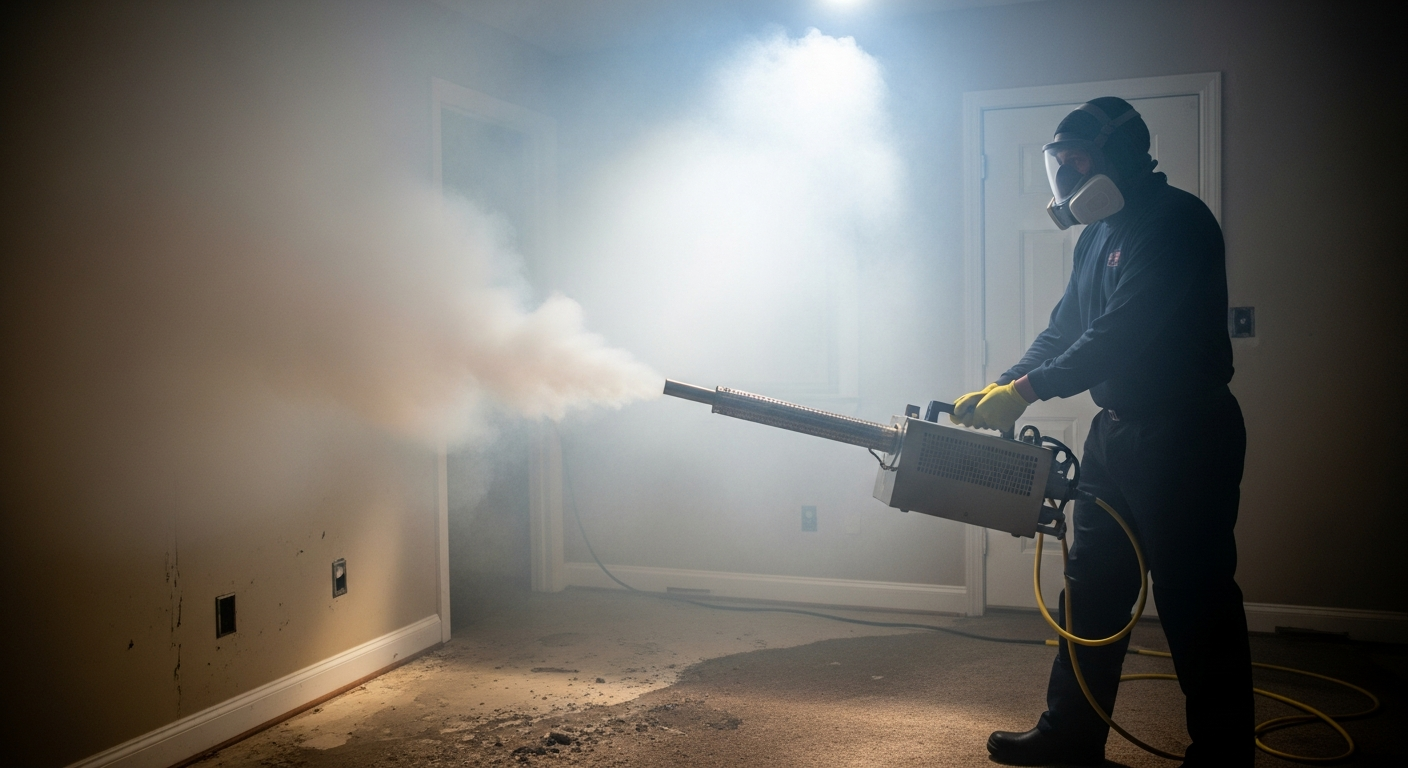
After contaminated materials are out and surfaces are cleaned, remaining odour compounds embedded in structural materials, HVAC systems, and enclosed spaces need professional treatment. Here's what works and what doesn't:
What Works
| Treatment | How It Works | Best For | Typical Cost |
|---|---|---|---|
| Thermal fogging | Vaporises deodourising agent into fine fog that penetrates porous materials and wall cavities | Embedded odour in wood framing, enclosed spaces, ductwork | $200–$600 per treatment |
| Ozone treatment | High-concentration ozone (O3) breaks down odour molecules at the chemical level | Enclosed spaces, HVAC systems, deep-set contamination | $300–$1,000 per treatment |
| Hydroxyl generators | Creates hydroxyl radicals that oxidise odour compounds — safe for occupied spaces | Ongoing treatment during and after remediation | $150–$400 per day of use |
| HEPA air scrubbing | Captures mould spores, particulates, and some VOCs from air | Complement to other treatments, not standalone | $75–$200 per day |
What Doesn't Work
| Method | Why It Fails |
|---|---|
| Air fresheners and sprays | Mask odour temporarily — source remains, smell returns within hours |
| Baking soda | Absorbs mild surface odour only — useless for embedded contamination |
| Vinegar | Mild antimicrobial on hard surfaces but cannot penetrate porous materials or wall cavities |
| Consumer ozone machines | Too low-output to reach effective concentrations — and dangerous without proper safety protocols |
| Essential oil diffusers | Expensive air freshener that makes your house smell like lavender and sewage simultaneously |
The HVAC Problem Nobody Thinks About
Your HVAC system circulates air throughout the entire home. If flood odour enters your ductwork — and if water reached your floor vents, it did — the system continuously redistributes contaminated air to every room, including rooms that were never flooded.
After any significant flooding:
- Do not run the HVAC system until ductwork has been inspected
- Have ductwork professionally cleaned — not the $49 Groupon special, but actual NADCA-certified duct cleaning with antimicrobial treatment
- Replace the air filter (this is obvious but people forget)
- Consider UV light installation in the air handler for ongoing antimicrobial protection ($200–$500 installed)
The most frustrating version of flood odour is the kind that keeps coming back after you've cleaned everything. You've removed the carpet, scrubbed the floors, treated the walls — and every time the heat kicks on, there it is again. That's your ductwork telling you it wasn't included in the cleanup. (HVAC contamination is the "have you checked if it's plugged in?" of persistent flood odour.)
DIY vs. Professional: When to Call
| Scenario | DIY Appropriate? | Professional Needed? |
|---|---|---|
| Small area, clean water, dried within 24 hours | Yes — clean, dry, monitor for odour | Only if odour persists after thorough drying |
| Moderate flooding, clean water, multiple rooms | Material removal: possibly. Odour treatment: no. | Yes — for antimicrobial treatment and equipment |
| Any flooding with contaminated (grey or black) water | No | Yes — safety risk from pathogens |
| Flooding with visible mould growth | No | Yes — mould remediation required before odour treatment |
| Odour persists after your own cleanup | Your cleanup was a good start, but... | Yes — hidden contamination or HVAC involvement likely |
The honest threshold: if the flood involved anything other than clean water from a known source (like a supply line), or if it sat for more than 24 hours before drying began, professional remediation is the appropriate response. DIY surface cleaning treats the parts you can see and reach. Professional remediation treats the parts you can't — which is where the smell lives.
Timeline: When Does the Smell Actually Go Away?
| Stage | Odour Level | Timeline |
|---|---|---|
| Contaminated materials removed | Immediate significant improvement (50–70% reduction) | Day 1–3 |
| Antimicrobial treatment applied + surfaces dried | Further improvement (70–85% reduction) | Day 3–7 |
| Professional odour treatment (fogging/ozone) | Near-normal (85–95% reduction) | Day 7–14 |
| Full structural drying + trace compound dissipation | Normal (100% — no detectable odour) | 2–4 weeks after treatment |
If odour persists beyond 2–4 weeks after thorough professional remediation, it indicates one of three things: incomplete material removal (something contaminated is still in the structure), a missed moisture source sustaining mould growth, or HVAC contamination that wasn't addressed. All three require investigation, not more air freshener.
Frequently Asked Questions
What causes the smell after flooding?
Post-flood odour has multiple simultaneous sources: bacterial decomposition of organic matter in floodwater (sulfur compounds), mould growth producing MVOCs within 24–48 hours, sewage contamination leaving persistent compounds in porous materials, and chemical contamination from floodwater that crossed urban surfaces. Each source requires a different treatment — which is why generic deodorisers fail.
How long does flood smell last?
Without remediation: months to years, especially if contaminated materials remain in the structure. With professional remediation: significant improvement within days of material removal, near-normal within 1–2 weeks of professional odour treatment, and full normalisation within 2–4 weeks. Persistent odour after professional treatment indicates incomplete remediation or an unaddressed moisture/HVAC source.
Can I get rid of flood smell myself?
For minor, clean-water flooding that dried within 24 hours: possibly, with thorough cleaning and drying. For contaminated water, sewage involvement, visible mould, or any flooding that sat for more than 24 hours: professional remediation is appropriate. DIY surface cleaning addresses visible contamination while leaving embedded odour sources in structural materials, wall cavities, and HVAC systems untouched.
Is flood smell dangerous?
The odour itself is a VOC mixture that can cause headaches, nausea, and respiratory irritation. More concerning are its sources: sewage contamination (pathogenic bacteria and viruses), mould growth (mycotoxins and spores), and chemical contamination. The presence of flood odour is an indicator of conditions that warrant professional assessment — the smell is the warning, not the danger itself.
How much does professional flood odour removal cost?
Professional flood odour treatment typically costs $500–$2,000+ depending on the area size and treatment methods used. This usually includes antimicrobial treatment ($200–$500), thermal fogging or ozone treatment ($200–$1,000), and HEPA air scrubbing ($75–$200/day). This is separate from material removal and replacement costs, which are part of the overall restoration budget.
The smell after a flood is your house telling you something is still wrong. Masking it with air freshener is the olfactory equivalent of putting a sticker over a check-engine light — technically the light is covered, but the engine is still unhappy. Remove the contaminated materials. Treat the structure. Clean the ducts. Let the professionals fog whatever's left. In three weeks, your home should smell like nothing at all — which, after what you've been through, will smell absolutely brilliant.