
What should you do when a frozen pipe bursts? Shut off the main water supply immediately, turn off electricity to affected areas, open faucets to drain remaining pressure, photograph all damage before touching anything, call your insurance company, then call a certified restoration company. Every minute of delay increases damage — a single burst pipe can release 400+ gallons per hour.
If you're reading this while water is actively spraying inside your home, skip to the numbered steps below. Go. Now. The witty observations can wait.
If you're reading this after the initial panic, or — even better — before it happens, here's what you need to know: a frozen pipe burst is a race against time, and the first 30 minutes determine whether you're looking at a $3,000 repair or a $30,000 renovation. The pipe itself is a $400–$1,250 plumbing fix. The water damage from the 45 minutes you spent looking for the shut-off valve? That's the expensive part.
Minutes 0–5: Stop the Water
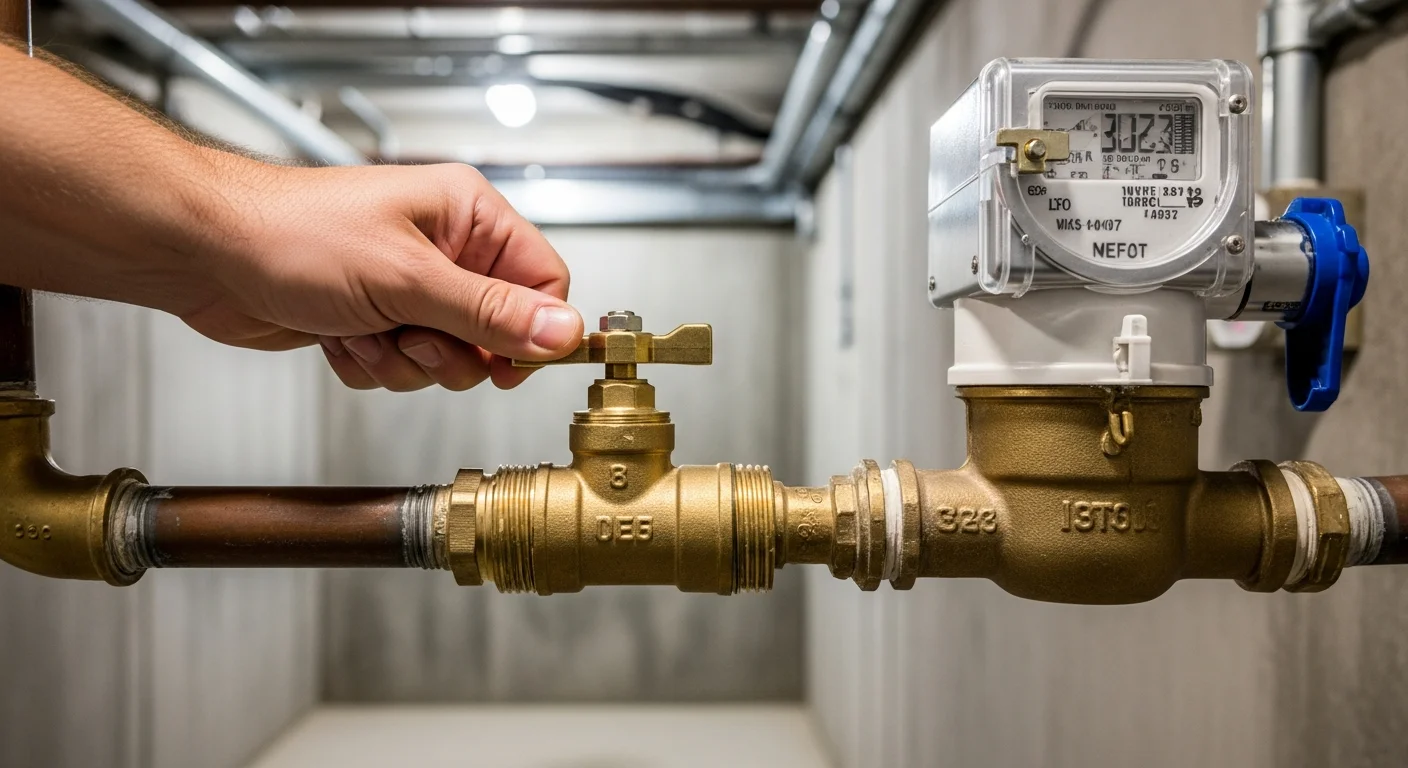
This is your single most important action. Every second the water runs increases damage exponentially. Find your main shut-off valve and turn it clockwise to close.
Common valve locations:
- Basement or crawl space: Where the main water line enters the house (most common)
- Utility room: Near the water heater or water meter
- Kitchen: Under the sink in some older homes
- Exterior: In a utility box near the foundation or at the street meter
If you cannot find the shut-off or it won't budge (and they do seize up — the one time you need them is inevitably the one time they haven't been turned in a decade), call your water utility company. They can shut off water at the street meter, usually within 30 minutes.
If water is in contact with or near electrical outlets, appliances, or wiring, shut off the circuit breaker to those areas before entering. If the breaker panel itself is in a flooded area, do not touch it — call your utility company to disconnect power at the meter. This is not the time for bravery. This is the time for the utility company's phone number.
After the main supply is off, open cold and hot water faucets throughout the house and flush toilets. This drains remaining water from the pipes and relieves pressure, reducing additional water release from the burst point. You'll be surprised how much water is still in the system after the main valve is closed.
Minutes 5–15: Document and Protect
Before moving anything or beginning any cleanup, photograph and video the damage extensively. Capture:
- The burst pipe location (if visible and accessible)
- Water level marks on walls
- All affected rooms — wide shots and close-ups
- Damaged belongings and furniture
- Any structural damage visible
Enable timestamps on your photos. This documentation is the foundation of your insurance claim. Your adjuster wasn't there when it happened — your photos are the next best thing. (Think of it as the one time over-photographing your home is not only acceptable but financially prudent.)
Quickly move electronics, furniture, and irreplaceable items to dry upper floors or unaffected rooms. Document what was moved and where. Do not discard any damaged items until your insurance adjuster has seen them — even items that look destroyed may have recoverable value for insurance purposes.
Report the claim immediately. A frozen pipe burst is covered under standard homeowners insurance as sudden and accidental water damage. Tell them the date, approximate time, and what you've observed. Ask two specific questions:
- "Is emergency mitigation authorised, and do I need to wait for an adjuster?"
- "What documentation do you need from me and the restoration company?"
Most insurers authorise emergency mitigation immediately because delays increase total claim costs — which costs them more money. Alignment of incentives is a beautiful thing.
Minutes 15–30: Begin Emergency Response
Professional water damage restoration must begin within 24–48 hours to prevent mould growth. Contact an IICRC-certified restoration company immediately — they bring industrial extraction equipment, commercial-grade dehumidifiers, moisture meters, and thermal imaging cameras that consumer equipment cannot match.
During extreme cold events, restoration companies and plumbers are in high demand. Call early. The difference between calling at 7 AM and noon during a cold snap can be the difference between same-day response and a 36-hour wait.
If water is several inches deep and professionals are hours away, a wet/dry shop vac removes standing water from hard floors. Do not use a regular household vacuum — you'll destroy the motor and potentially electrocute yourself. Do not attempt to dry walls or subfloor materials yourself — consumer fans are insufficient and can push moisture deeper into wall cavities.
The burst pipe needs to be repaired before water service can be restored. Call a licensed plumber and describe the location of the break as specifically as you can. Plumbing repair for a burst pipe typically costs $400–$1,250, with the average around $500. Emergency call-out fees add $100–$300.
Here's the uncomfortable truth: the plumbing repair is the cheapest part of the whole disaster. The water damage restoration that follows is where the real cost lives.
What a Burst Pipe Actually Costs (Beyond the Plumber)
The pipe repair is $400–$1,250. The water damage? That depends entirely on how long the water ran:
| Scenario | Typical Duration | Water Damage Cost |
|---|---|---|
| Caught immediately, water off in 5 minutes | 5 min | $1,000–$3,000 |
| Discovered within an hour | 1 hour | $3,000–$8,000 |
| Away from home, running for hours | 4–8 hours | $8,000–$25,000 |
| Vacant property, running for days | 24+ hours | $15,000–$50,000+ |
That last row is the one that haunts insurance adjusters. A pipe that bursts in a vacant vacation home during a cold snap and runs for three days before anyone notices can cause $50,000–$100,000+ in damage. One pipe. One weekend. (This is also why insurers include that "maintain adequate heat" clause in your policy. They've seen the math.)
Why Pipes Burst Where They Do
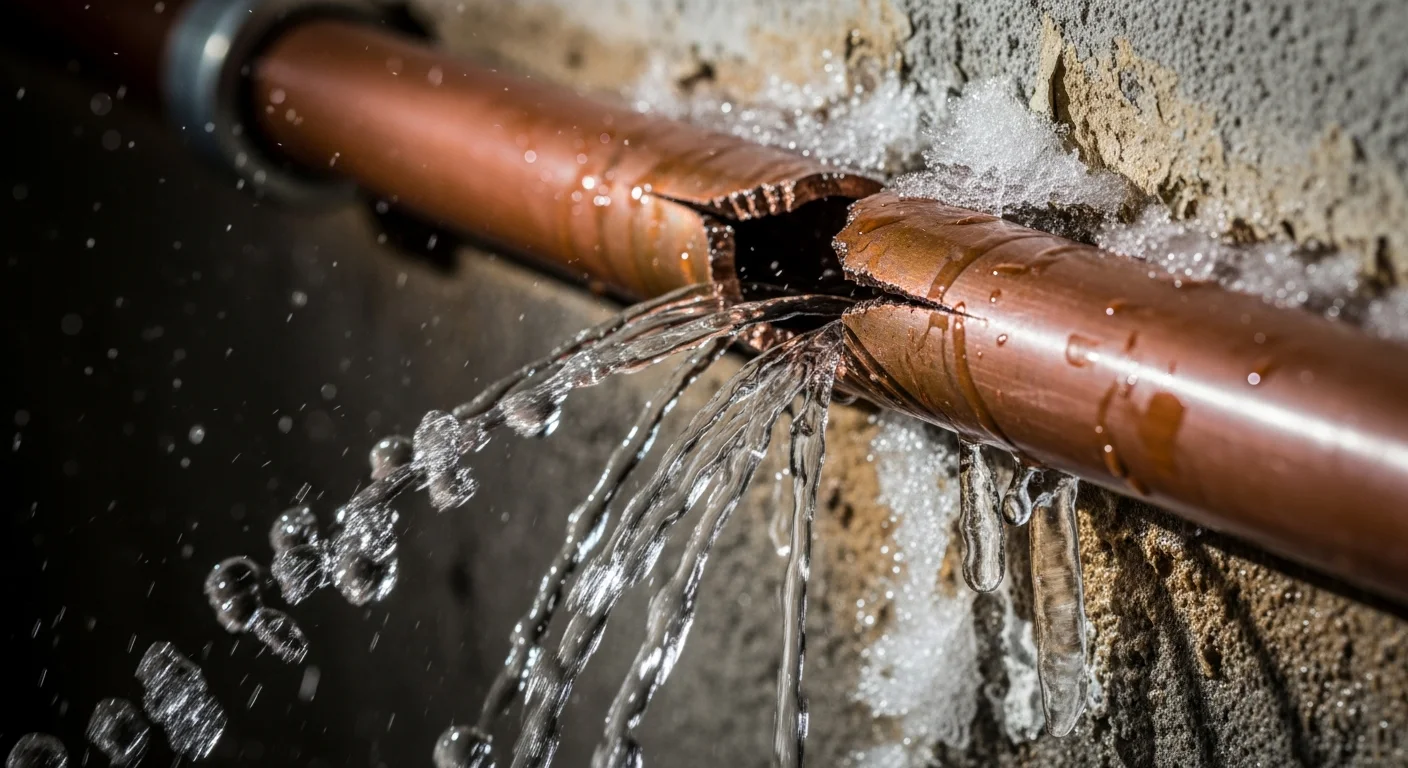
Understanding the mechanics helps you prevent the next one. A pipe doesn't burst at the frozen section — it bursts downstream from the ice blockage, where water pressure builds with nowhere to go.
The most vulnerable pipes in your home:
- Exterior walls: Pipes running through outside walls with insufficient insulation
- Unheated spaces: Garage, crawl space, attic, unfinished basement
- Hose bibs: Outdoor faucets connected to indoor supply lines
- Kitchen and bathroom supply lines on exterior walls — especially if cabinet doors are kept closed (blocking warm air from reaching the pipes)
Copper pipes fail faster than PEX when frozen because copper is rigid. PEX has some flex, which allows it to expand slightly before failing. If you're replumbing after a burst, PEX in vulnerable areas is a worthwhile upgrade. (It's also significantly cheaper to install. Sometimes the upgrade and the savings are the same thing.)
Preventing Frozen Pipes (The $50 Guide to Avoiding a $30,000 Problem)
Prevention costs almost nothing compared to the alternative:
- Keep thermostat at a minimum of 55°F — even in unoccupied homes during cold weather. Some insurers require this to maintain coverage.
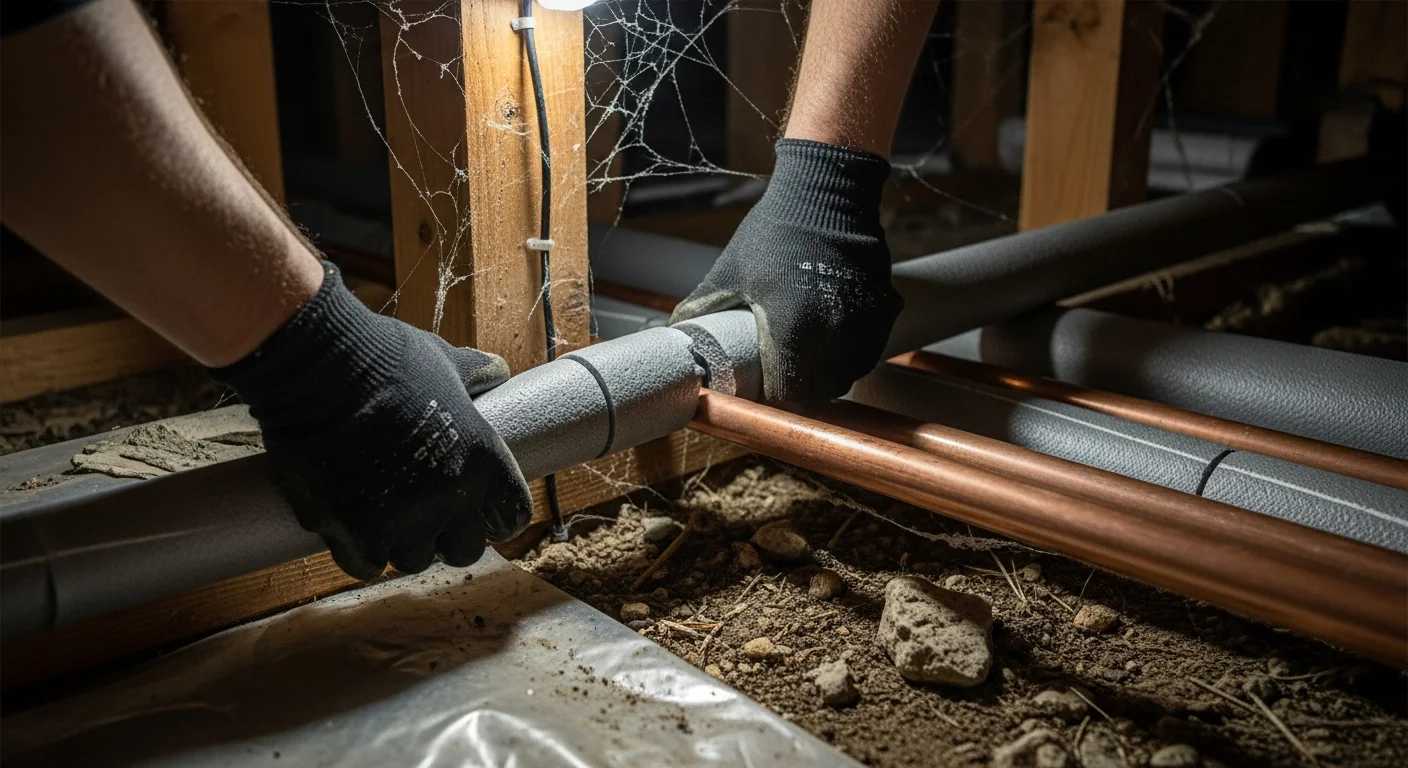
- Insulate exposed pipes in unheated areas. Foam pipe insulation costs $2–$4 per 6-foot section at any hardware store. Protecting 20 feet of vulnerable pipe costs less than a takeaway pizza.
- Let faucets drip during extreme cold events. Even a slow drip prevents pressure buildup in a freezing pipe. Yes, it wastes a little water. No, it doesn't cost as much as a burst pipe.
- Open cabinet doors under kitchen and bathroom sinks on exterior walls to let warm air reach the pipes.
- Know where your main shut-off is and confirm it operates freely every autumn — not during a 3 AM emergency in January.
- Disconnect and drain outdoor hose bibs before the first freeze of the season.
- Consider a smart water leak detector — devices like Flo by Moen or Phyn can detect unusual water flow and automatically shut off the supply. Cost: $200–$500. Value: priceless at 2 AM when you're 300 miles away.
Insurance: What's Covered and What Gets Your Claim Denied
Frozen pipe bursts are generally covered under standard homeowners insurance as sudden and accidental water damage. However, there are conditions that can void your claim:
| Situation | Covered? | Notes |
|---|---|---|
| Pipe bursts while you're home, you respond quickly | Yes | Standard covered peril |
| Pipe bursts while you're on vacation, house was heated | Yes | Covered; response delay is expected |
| Pipe bursts in unheated vacant home | Often denied | Many policies require maintaining adequate heat |
| Known plumbing issues never repaired | May be denied | Insurer may argue "lack of maintenance" |
| Gradual leak vs sudden burst | Gradual: No / Sudden: Yes | Insurance covers sudden events, not slow deterioration |
The "maintain adequate heat" clause is the one that catches people. If you're leaving your home for winter travel, keep the thermostat at 55°F minimum, and consider having someone check the property every few days. Your insurer will ask whether the home was heated. Have an answer.
Frequently Asked Questions
How do I shut off water to my home quickly?
Your main water shut-off valve is typically where the main supply line enters the house — usually in the basement, crawl space, or utility room near the water meter. Turn it clockwise (right) to close. If it won't turn or you can't find it, call your water utility company to shut off at the street meter. Find and label your shut-off valve before you need it in an emergency.
Does homeowners insurance cover a burst pipe?
Yes — a frozen pipe burst is generally covered under standard homeowners insurance as sudden and accidental water damage. However, coverage may be denied if the home was left unheated during freezing weather or if the insurer determines the damage resulted from lack of maintenance. Maintain adequate heat (55°F minimum) in all properties during cold weather to keep coverage valid.
How much does a burst pipe cost to repair?
The plumbing repair itself costs $400–$1,250, with an average around $500. Emergency call-out fees add $100–$300. However, the water damage restoration that follows is typically far more expensive: $3,000–$25,000+ depending on how long the water ran before being shut off. The plumbing repair is the small number. The restoration is the big one.
How long does it take for a pipe to burst when frozen?
A pipe can begin to burst within hours of the water inside freezing, depending on pipe material, water pressure, and temperature. Copper pipes fail faster than PEX. The burst often occurs not at the frozen section but at a weak point downstream where pressure builds behind the ice blockage. Temperatures below 20°F (-6°C) for sustained periods create the highest risk.
Can I thaw a frozen pipe myself?
You can carefully thaw accessible frozen pipes using a hair dryer, heating pad, or warm towels — working from the faucet end toward the frozen section. Never use an open flame or propane torch. Do not attempt to thaw pipes inside walls — call a plumber. If the pipe has already burst, shut off the water first before attempting anything else.
The difference between a minor inconvenience and a major renovation is about 30 minutes and one valve. Learn where your shut-off is before you need it. Buy the $3 pipe insulation before January. And if the worst happens anyway, remember: photograph first, panic second, and call the people with the industrial pumps third. In that order. Your future self — and your insurance claim — will thank you.