
How much does flood damage restoration cost? Minor flooding under 2 inches of clean water costs $3,000–$8,000. Moderate flooding (2–12 inches) runs $8,000–$25,000. Major flooding over 12 inches costs $20,000–$60,000+. Contaminated floodwater (storm surge, sewage) adds 40–80% to base costs. Full reconstruction after a major flood averages $40,000–$150,000+.
Flooding is the disaster that keeps giving. The water arrives uninvited, stays longer than anyone wants, and leaves behind a renovation bill that makes your original mortgage look reasonable. If you're currently staring at a waterline on your wall and wondering whether to cry or call your insurance company, I'd recommend the second one first. (The first one is also valid. Just do it on dry ground.)
Flood restoration costs more than other water damage for reasons that become painfully clear once you understand what floodwater actually contains. Spoiler: it's not just water. Let's walk through what each phase costs, what drives those numbers, and the single most important insurance fact most homeowners learn too late.
Why Flood Restoration Costs More Than Regular Water Damage
A burst pipe is inconvenient. A flood is a different category of problem entirely — literally. Floodwater is classified as Category 2 or Category 3 water because even "clean-looking" surface water runoff carries sewage, chemicals, pesticides, and pathogens after travelling across urban ground.
This classification triggers requirements that don't apply to a simple pipe leak:
- Complete removal of all porous materials that contacted floodwater — carpet, padding, drywall, insulation. No exceptions.
- Full antimicrobial treatment of every surface that was submerged
- Biohazard PPE for technicians (Tyvek suits, respirators, face shields)
- Air quality testing before and after remediation
- Longer drying times — flooding saturates materials far deeper than a pipe leak, requiring more equipment running for more days
The volume difference matters too. A burst pipe might release 50–200 gallons before you shut it off. A flood delivers thousands. Your walls don't just get wet — they get saturated to the studs, which means drying takes 5–7 days instead of 3–4. More equipment, more days, more cost.
Flood Restoration Costs by Phase
Flood cleanup isn't one job — it's five jobs that happen in sequence. Here's what each costs:
| Phase | What's Involved | Typical Cost |
|---|---|---|
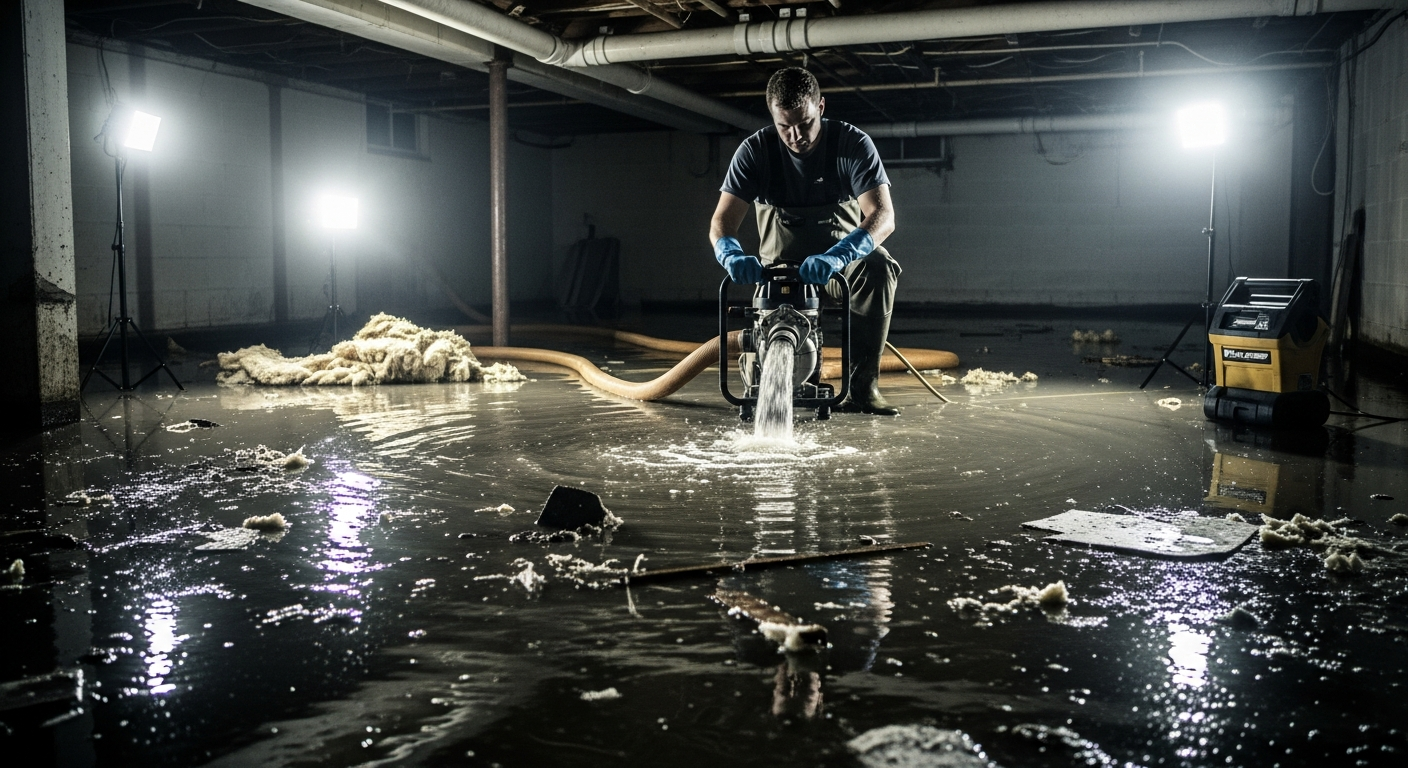
| 1. Emergency water extraction | Industrial pumps remove standing water | $500–$2,500 |
| 2. Demolition and material removal | Removing carpet, drywall, insulation to above flood line | $2,000–$10,000 |
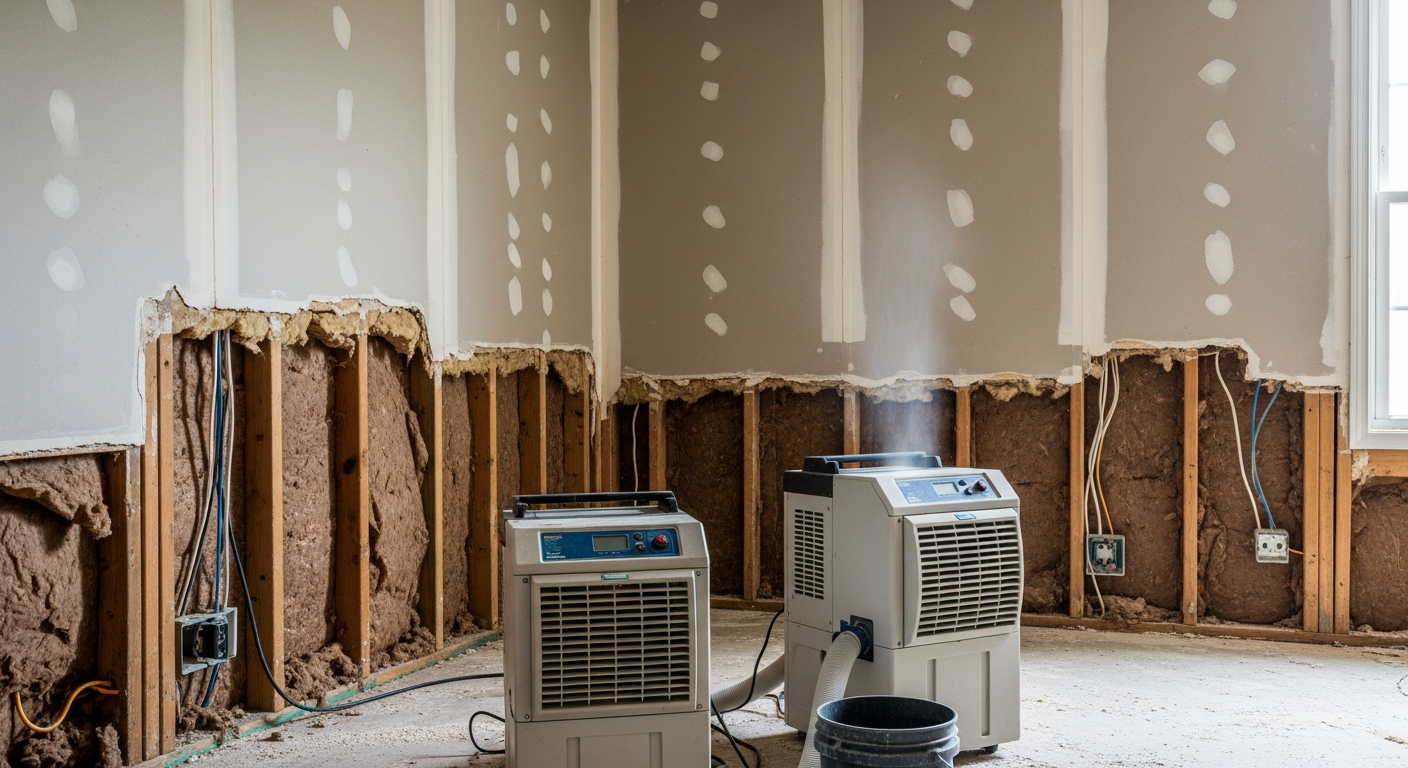
| 3. Structural drying | Commercial air movers + LGR dehumidifiers, 3–7 days | $1,500–$6,000 |
| 4. Antimicrobial treatment | EPA-registered disinfectants on all affected surfaces | $500–$2,500 |
| 5. Reconstruction | New drywall, insulation, flooring, trim, paint | $15,000–$40,000 |
Phases 1–4 (mitigation) typically total $4,500–$21,000. Phase 5 (reconstruction) adds $15,000–$40,000+ depending on finishes and square footage. Total project cost: $20,000–$60,000 is common for a significant basement or first-floor flood.
Cost by Flood Depth (The Number That Matters Most)
Water depth is the single biggest cost driver because it determines how much material must be demolished and replaced:
| Flood Depth | What Gets Demolished | Total Cost Range | Timeline |
|---|---|---|---|
| Under 2 inches | Flooring, baseboards, lower insulation | $3,000–$8,000 | 2–4 weeks |
| 2–12 inches | Flooring, drywall to 24" above flood line, all insulation, electrical outlets | $8,000–$25,000 | 4–8 weeks |
| 12–36 inches | All of above plus cabinets, appliances, HVAC if ground-level | $20,000–$60,000 | 6–12 weeks |
| Over 36 inches | Potential structural compromise, full gut to studs | $40,000–$150,000+ | 3–6 months |
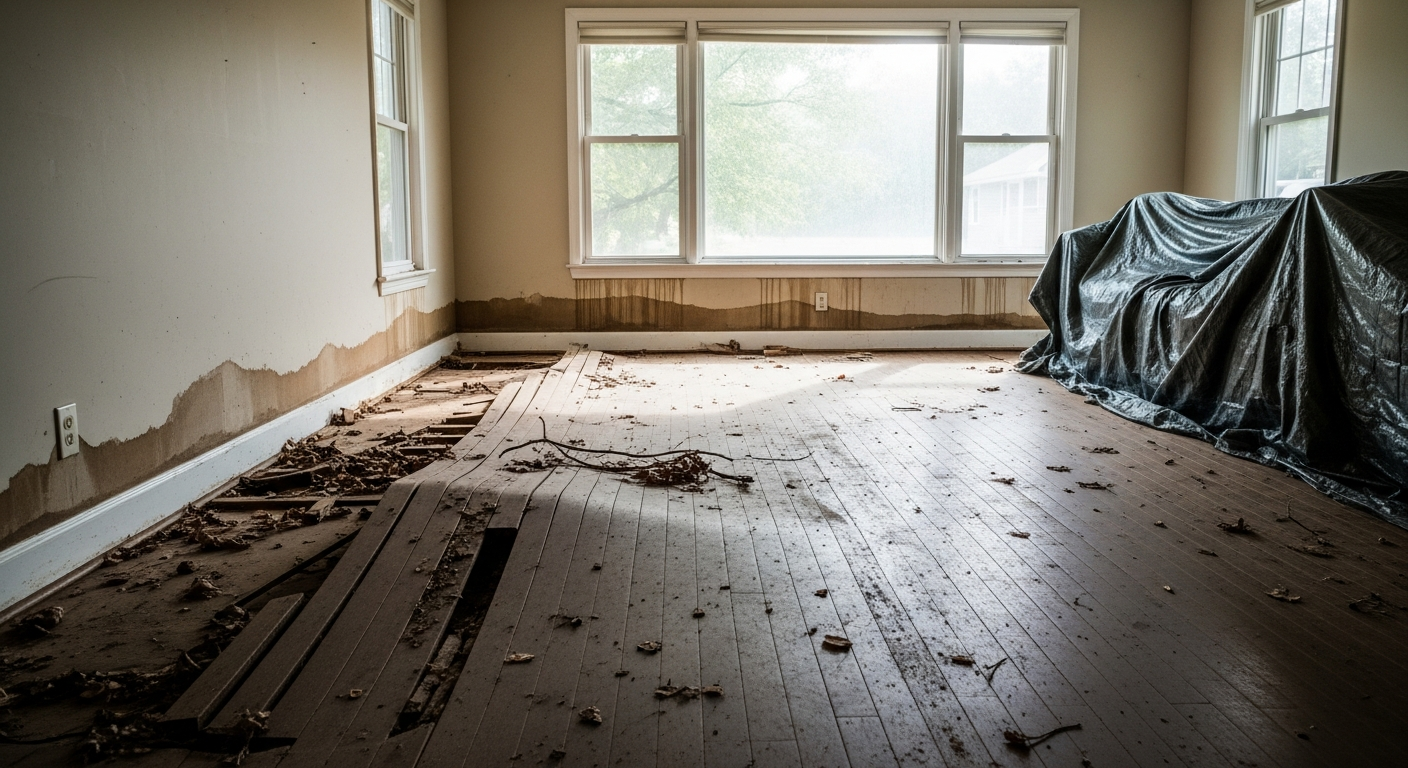
Here's the detail most cost guides skip: drywall removal goes to 12–24 inches above the high-water mark, not to the waterline itself. Water wicks upward through drywall like a sponge. Your flood may have been 12 inches deep, but the moisture in your walls climbed to 24–30 inches. Your contractor isn't being greedy — they're cutting to where the moisture stops. (It's one of the few times in life where "cutting above the line" is the responsible choice.)
The Contamination Premium: Why Dirty Water Costs More
Not all floods are created equal. The contamination level changes the cost dramatically:
| Water Category | Source Examples | Cost per Sq Ft (Mitigation) | Premium vs Clean Water |
|---|---|---|---|
| Category 1 (Clean) | Rain intrusion through roof, supply line break | $3–$4/sq ft | Baseline |
| Category 2 (Grey) | Surface runoff, appliance overflow with detergents | $4–$6.50/sq ft | +30–60% |
| Category 3 (Black) | Sewage backup, storm surge, standing floodwater | $7–$7.50+/sq ft | +75–100% |
Most natural flooding is Category 2 or 3 by the time it enters your home. Even if the flood source was "just rainwater," once it's crossed your lawn, your driveway, and your neighbour's fertiliser — it's no longer clean. Storm surge is always Category 3. Sewer backups are always Category 3. And Category 3 means biohazard protocols, which means higher costs across every phase.
Insurance: The Most Expensive Lesson Homeowners Learn Too Late
Here is the single most important sentence in this article: standard homeowners insurance does not cover flood damage.
I'll say it again because it's the kind of fact that costs people $30,000 to learn the hard way: your homeowners policy covers a burst pipe, a leaking water heater, an overflowing bathtub. It does not cover water that enters your home from the outside — rain, rising rivers, storm surge, surface water runoff. That requires a separate flood insurance policy.
Your options:
| Coverage Type | Structure Limit | Contents Limit | Avg Annual Cost |
|---|---|---|---|
| NFIP (National Flood Insurance Program) | $250,000 | $100,000 | $700–$1,500/yr |
| Private flood insurance | Higher limits available | Higher limits available | Varies — often competitive |
If your flood damage involves both flood (exterior water) and wind damage (storm that also damaged your roof or windows), you may file claims under both your flood policy and your homeowners policy. Documenting which damage came from which source is critical — and a public adjuster can be worth their fee on these dual-claim situations.
What Can Be Saved vs. What Must Go
After a flood, the question everyone asks: "Can we save any of it?" Here's the honest answer:
| Material | Can It Be Saved? | Notes |
|---|---|---|
| Concrete floors/walls | Yes — clean and treat | Non-porous, responds well to antimicrobial treatment |
| Tile flooring | Usually yes | Tile survives; grout may need resealing |
| Hardwood flooring | Sometimes | Must be dried within 24–48 hrs; warping often irreversible |
| Carpet and padding | No (Cat 2/3) | Porous, absorbs contaminants — always replaced after flooding |
| Drywall | No (below flood line) | Absorbs water and contaminants; removed 12–24" above waterline |
| Insulation | No | Fibreglass and cellulose absorb water and contamination permanently |
| Particleboard/OSB | No | Swells irreversibly when wet |
| Structural lumber | Yes — dry and treat | Solid wood framing dries successfully with professional equipment |
The 24–48 hour window is real. Materials dried within this timeframe have a significantly higher chance of being salvageable. After 48 hours, mould colonisation begins, and "can we save it" turns into "we should have started yesterday." (That's restoration industry speak for "every hour you wait costs money.")
Mould: The Cost That Arrives After the Flood Leaves
Mould is the tax you pay for waiting. If flood-damaged materials aren't dried or removed within 48 hours, mould begins establishing in wall cavities, under flooring, and inside insulation. Mould remediation after flooding adds $2,000–$10,000+ to the total project cost depending on how far it's spread.
This is why the mitigation phase matters so much. A restoration company that starts extraction and drying on day one saves you thousands in mould remediation that would become necessary by day five. Speed isn't just about convenience — it's about cost control.
Frequently Asked Questions
How much does flood damage restoration cost?
Flood damage restoration costs depend on water depth, contamination level, and area affected. Minor flooding under 2 inches: $3,000–$8,000. Moderate flooding (2–12 inches): $8,000–$25,000. Major flooding over 12 inches: $20,000–$60,000+. Storm surge or sewage-contaminated flooding adds 40–80% to clean water costs. Full reconstruction after major flooding ranges from $40,000–$150,000+.
Does homeowners insurance cover flood damage?
No — standard homeowners insurance does not cover flooding from external water sources. Flood coverage requires a separate flood insurance policy through the NFIP ($250,000 structure / $100,000 contents limits) or a private flood insurer. If your flood involved both exterior water and wind damage, you may have claims under both your flood policy and your homeowners policy — document the source of each damaged area carefully.
What materials must be replaced after flooding?
Porous materials that contacted floodwater must be removed: carpet, padding, drywall (cut 12–24 inches above the flood line), insulation, and particleboard/OSB. Non-porous materials — concrete, tile, metal, solid wood framing — can typically be cleaned, dried, and treated with antimicrobials. Hardwood flooring is salvageable only if professional drying begins within 24–48 hours.
How long does flood cleanup and restoration take?
Emergency water extraction: 4–12 hours. Professional drying: 3–7 days with commercial equipment. Demolition and material removal: 1–3 days. Reconstruction: 2–8 weeks depending on scope. Total timeline from flood event to completed restoration: 4–12 weeks is typical for a significant residential flood. Delays in starting mitigation extend the timeline and increase mould risk.
How is flood damage different from water damage for insurance purposes?
Insurance distinguishes "water damage" (internal sources like burst pipes, covered by homeowners insurance) from "flood damage" (external water sources like rain, rising rivers, storm surge, which requires separate flood insurance). This distinction matters enormously — a sewer backup may be covered by a homeowners endorsement, while surface water entering through your door is a flood claim. The source of the water determines which policy pays.
If your home just flooded and you're reading this while wearing rubber boots indoors, here's your priority list: stop the water if you can, photograph everything, call a restoration company, then call your insurance. If you don't have flood insurance — and statistically, most people reading this don't — that conversation with your agent is going to be short and expensive. Consider this your reminder to buy it before the next storm, not after.