
What can I clean up myself after a fire? Mostly not much. Safe DIY: salvaging undamaged items from cleared areas, documenting damage for insurance, retrieving important valuables, light surface cleaning of minor soot in unaffected rooms — all with N95/P100 respirator and proper PPE. Professional-only: structural assessment, soot removal from walls and ceilings, HVAC cleaning, electrical components, water damage from firefighting, and any deep smoke deodorization.
The instinct after a fire is to start fixing things. (You walk in. The kitchen is a mess. You're a competent person. You have paper towels.) The instinct is wrong, and the reasoning is chemistry, not effort. Fire residue isn't dirt — it's a toxic mixture of partially combusted materials that includes carcinogens, that off-gasses for weeks, and that requires specific protocols to clean without permanently damaging surfaces or your respiratory system. Here's the honest line between safe DIY and professional-only territory after a house fire.
What You Can Safely DIY After Fire Damage
The honest list is short:
- Salvage usable items from cleared areas — undamaged furniture, sealed containers, items in rooms not affected by smoke, anything in glass-fronted display cases that wasn't penetrated
- Open windows for ventilation once professionals have cleared the structure (and weather permits)
- Light surface cleaning of minor soot in areas with very limited smoke exposure — distant rooms with light deposit, glass surfaces, hard non-porous items where dry-cleaning sponges work
- Document everything photographically before any cleanup begins — wide shots, close-ups, every room, every damaged item
- Retrieve important valuables and documents — passports, deeds, jewelry, photographs (handle by edges only), anything irreplaceable
- Handle insurance documentation paperwork — claim filing, inventory lists, communication with adjusters
What You Should NOT Touch
The longer list — and the one that matters more:
- Structural elements — load-bearing walls, floors, ceilings affected by fire. Heat compromises wood and steel in ways that aren't visible. Get a structural engineer's clearance before working in affected areas.
- Electrical systems — any wiring, outlets, electrical panels that were near the fire. Insulation degrades from heat without showing it; arcing risks persist even after power is off.
- Water damage from firefighting — hundreds of gallons of water typically end up in the structure during suppression. The water is contaminated with soot, debris, and combustion residue, and it requires Category 2 or 3 mitigation.
- HVAC systems — smoke enters ductwork during the fire and contaminates every room the system serves. Surface cleaning of vents doesn't address ducting interior. Professional HVAC cleaning is required.
- Heavy soot on walls and ceilings — different smoke types require different cleaning methods (dry chemical sponges for dry smoke, solvent-based products for wet smoke, enzymatic cleaners for protein smoke). Wrong technique permanently sets stains.
- Appliances — even appliances that look undamaged may have absorbed smoke or had components heat-stressed. Restoration assessors evaluate whether each is safe to use.
- Food items and consumables — anything exposed to heat, smoke, or firefighting water is contaminated. Even items in sealed pantry containers can be affected by heat through the container.
- Hazardous materials — older homes contain asbestos and lead paint. Burning plastics and synthetics release toxic compounds. Professional testing before disturbing anything.
- Anything with grease-like residue — wet smoke residue from synthetic combustion smears and is extremely difficult to remove without proper solvents.
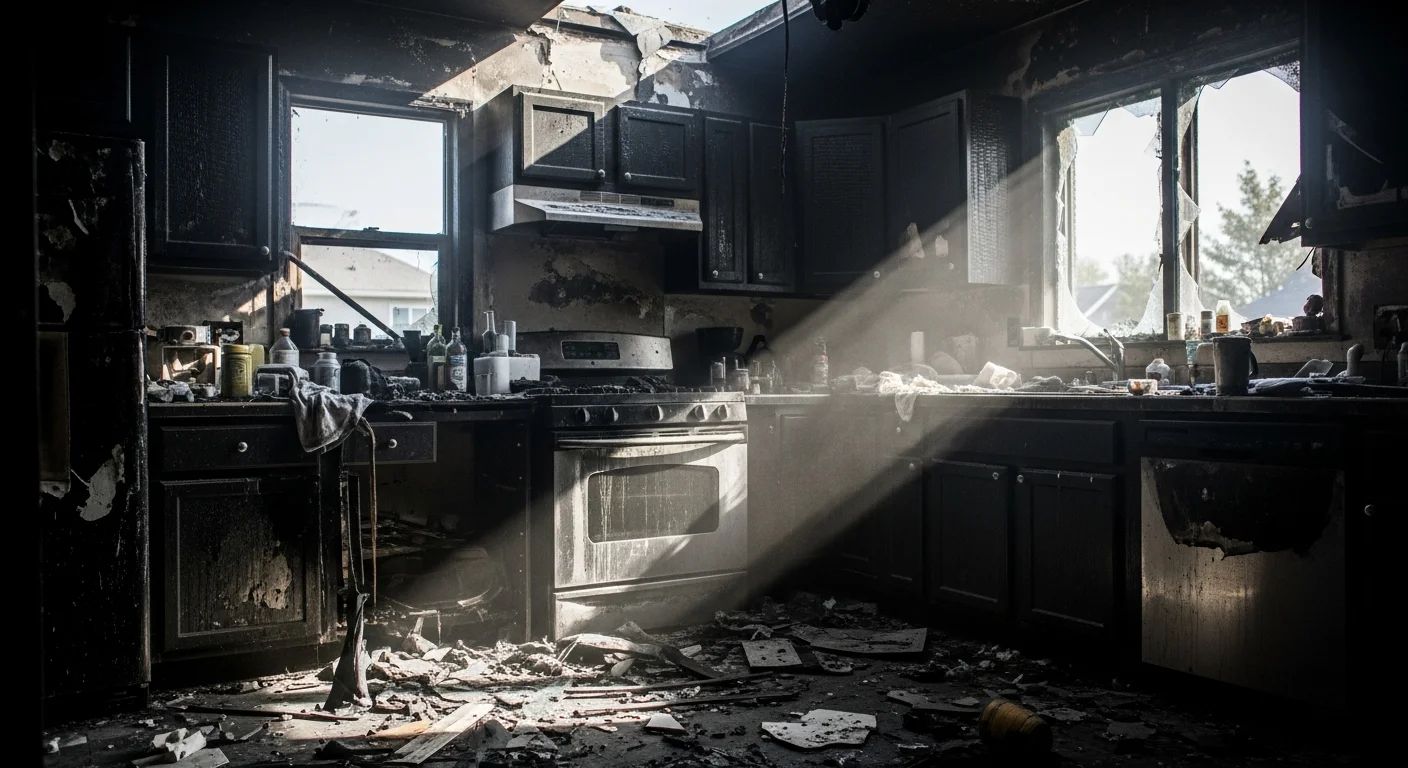
The Hidden Dangers of Fire Damage
Soot
Fine carbon particles penetrate everywhere — surfaces, fabrics, ductwork, books, electronics. On surfaces it looks like dirt. In your lungs it causes acute and chronic respiratory effects. On certain materials it etches permanently, especially if cleaning is attempted without proper protocols.
Smoke penetration
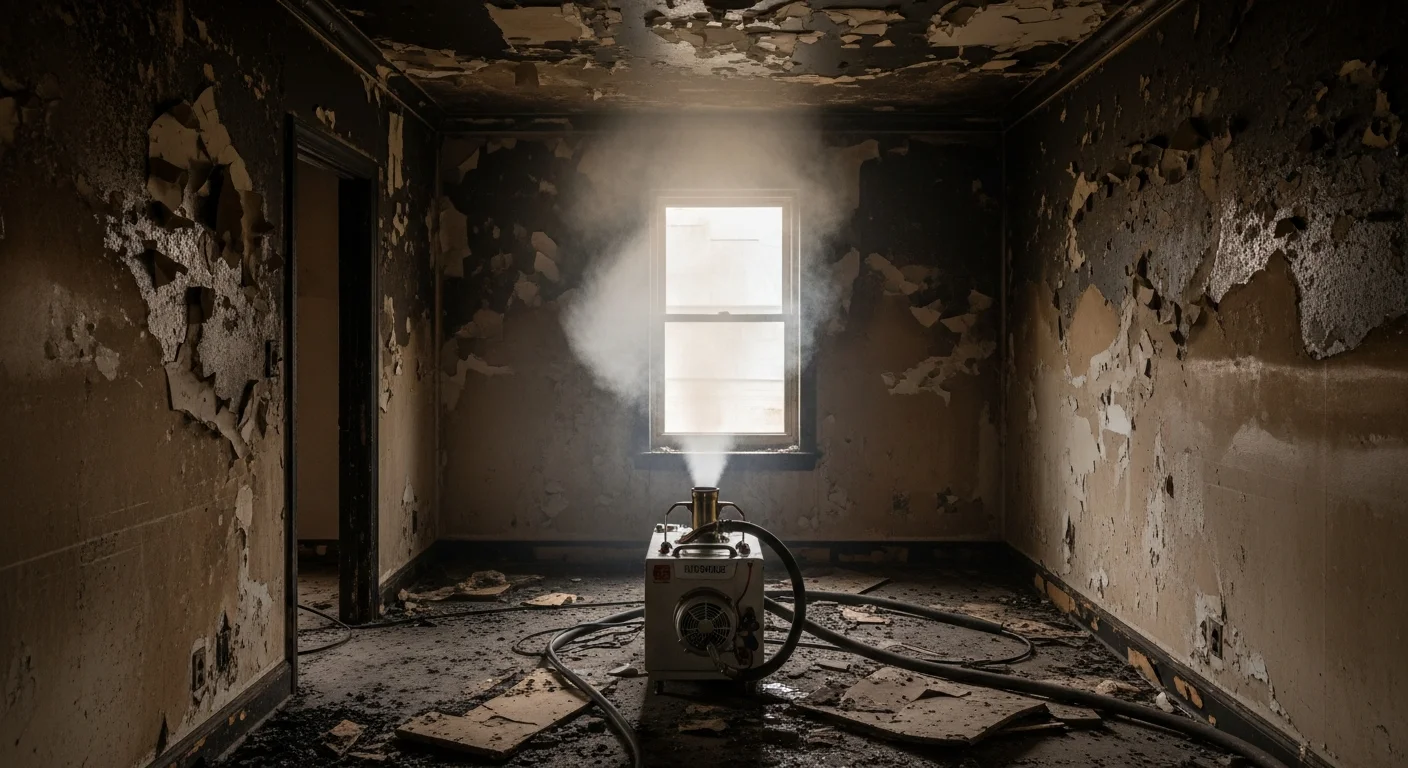
Smoke reaches places water can't — into wall cavities, into fabrics, into HVAC systems, into porous surfaces throughout the home. Surface cleaning addresses what you can see; the smoke that penetrated remains, off-gassing odor compounds for weeks. This is why professional restoration uses thermal fogging and hydroxyl generation, which neutralize odor throughout the structure rather than just on surfaces.
Structural compromise
Fire weakens structural elements without obvious visible signs. A ceiling that looks intact may be load-compromised; floor joists may have lost integrity. This is why structural assessment by a professional comes before any reconstruction work.
Toxic combustion byproducts
Modern household fires combust plastics, synthetic fabrics, treated wood, paints, insulation, and electronics. The resulting residue contains formaldehyde, benzene, acrolein, polycyclic aromatic hydrocarbons (PAHs), and other compounds — acutely toxic at high concentrations, carcinogenic with chronic exposure. This is why fire cleanup is not "just cleaning."
The Different Types of Smoke (and Why They Matter)
Not all smoke damage is the same. The smoke type determines the cleaning approach, and using the wrong approach can permanently damage surfaces.
| Smoke Type | Source | Cleaning Approach |
|---|---|---|
| Dry smoke | Wood, paper, fast/clean fires | Dry chemical sponges, dry vacuuming. Easier but still penetrates porous surfaces. |
| Wet smoke | Synthetic materials, slow/smouldering fires | Sticky, smearing residue. Requires specialized solvents. Wrong approach permanently smears. |
| Protein smoke | Cooking fires, especially overcooked food | Penetrating odor, often invisible residue. Enzymatic cleaners required. |
| Fuel/oil smoke | Furnace failures, oil tank fires, chemical fires | Most toxic; hazmat-level remediation. Never DIY. |
Identifying the smoke type accurately requires experience. The wrong cleaning method can lock stains permanently into surfaces that would otherwise have been recoverable. This is the single biggest argument against significant DIY work after a fire.
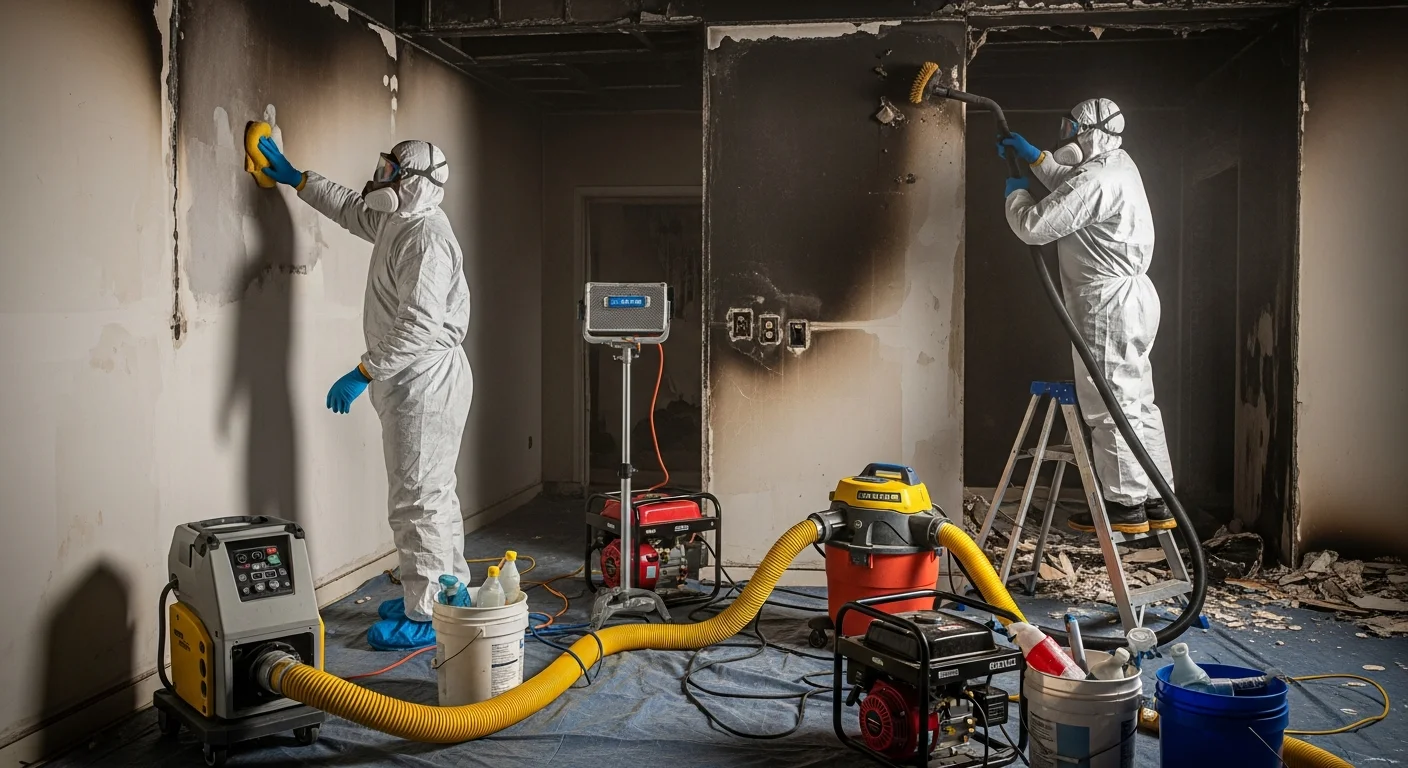
What Professional Fire Restoration Includes
The full scope of professional fire restoration:
- Structural assessment — engineers evaluate load-bearing elements before any work begins
- Emergency board-up — securing openings created by fire and firefighting against weather and unauthorized entry
- Water damage mitigation — extracting firefighting water, drying the structure (water typically comes BEFORE smoke cleaning in the sequence; wet soot smears, so the structure has to be dry first)
- Smoke type identification — determining the cleaning approach for each affected surface
- Structural cleaning — walls, ceilings, structural framing, with appropriate techniques per smoke type
- Contents cleaning and pack-out — assessing what's salvageable, packing salvageable contents to off-site cleaning facilities, documenting losses
- Thermal fogging or hydroxyl generation — neutralizing odor compounds throughout the structure including inside wall cavities
- HVAC duct cleaning — full system cleaning to remove smoke contamination from ductwork
- Corrosion treatment — special protection for metal surfaces affected by acidic smoke residue
- Demolition of unsalvageable materials — drywall, insulation, flooring that can't be restored
- Reconstruction — typically a separate scope (sometimes a separate contractor) handling drywall, paint, flooring, cabinetry replacement
- Clearance verification — air quality testing to confirm the home is safe to reoccupy
Find Certified Fire Damage Restoration Pros
Look for IICRC FSR (Fire and Smoke Restoration) certification — that's the credential that separates trained professionals from generalist contractors.
Get Free Estimates →When to Definitely Call for Professional Help
Call fire damage restoration professionals when ANY of these is true:
- The fire was anything beyond a small contained incident in one location
- Smoke odor persists after surface cleaning
- Walls, ceilings, or floors are coated with visible soot
- The HVAC system was running during the fire (smoke is now distributed throughout the home)
- Anyone in the household has respiratory issues, asthma, or compromised immune function
- You find grease-like residue anywhere in the home (wet smoke, very difficult to remove)
- Firefighting water entered the structure (almost always — it's not optional with professional firefighting)
- The fire involved synthetic materials, plastics, or anything besides natural materials
- There's any uncertainty about whether something is safe to clean or salvage
The default for any fire bigger than a contained kitchen-stove incident is professional restoration. The DIY tasks are supplementary, not substitutional.
Will Insurance Cover Professional Fire Restoration?
Standard homeowners insurance typically covers:
- Structural repairs to the dwelling
- Contents cleaning and replacement (subject to ACV or RCV terms in your policy)
- Smoke removal and deodorization
- Additional Living Expenses (ALE) if you must relocate during restoration
- Emergency board-up and securing of the property
- Reasonable mitigation expenses you incur (keep all receipts)
Document everything thoroughly from the moment the fire department clears the structure: photos, video, item-by-item inventory of damaged contents with original purchase prices where possible, all receipts. Work with your insurer to ensure proper coverage of the full scope. See our guide on maximizing insurance settlements — most principles apply equally to fire claims.
Frequently Asked Questions
Can I clean smoke damage from walls myself?
Light surface soot on painted walls in unaffected areas can sometimes be cleaned with dry chemical sponges (specifically designed for soot removal — not regular sponges). The risk: improper cleaning permanently etches or stains the surface. For any visible soot in fire-affected rooms, professional dry-cleaning methods are more effective and far less likely to make things worse. Test inconspicuously before working on visible areas.
How long does smoke smell last after a fire?
Without professional treatment: months to years. The smoke compounds penetrate porous materials throughout the structure and slowly off-gas over time. With professional thermal fogging or hydroxyl generation: typically eliminated within weeks. Surface cleaning alone doesn't reach smoke embedded in walls, fabrics, or HVAC systems — which is why DIY-only approaches usually result in lingering odor.
Can I live in my home during fire damage restoration?
Usually not for any meaningful fire damage. Smoke and soot exposure are health hazards, restoration involves toxic compounds and strong cleaning chemicals, and structural work requires the home unoccupied. Most insurers' Additional Living Expenses (ALE) coverage pays for temporary housing during restoration. For very small contained incidents (single appliance fire, single room) where the rest of the home is unaffected, partial occupation may be possible — your restoration contractor and insurance adjuster can guide that decision.
How much does fire damage restoration cost?
Typical 2026 ranges by severity: minor contained fire damage $3,000–$15,000 (smoke cleaning, contents, partial demo). Moderate fire damage $15,000–$50,000 (structural repair, contents pack-out, full smoke remediation, HVAC cleaning). Severe structural damage $50,000–$200,000+ (significant rebuild scope, contents losses, extended ALE). Wet smoke and protein smoke jobs run higher than equivalent dry smoke. See the full fire damage cost guide.
What's the first thing I should do after the fire department leaves?
Contact your insurance company same day. Get a claim number and the assigned adjuster's contact info. Ask about emergency mitigation authorization (most policies authorize immediate emergency board-up and water mitigation). Then call a certified fire damage restoration company — they'll handle emergency board-up, water extraction, and the initial assessment. Photographic documentation of everything before any work begins is critical for the claim. Save every receipt for emergency expenses.
Do I need a fire restoration company AND a general contractor?
Often yes. Fire restoration handles cleanup, smoke remediation, and contents — the specialized work. A general contractor typically handles reconstruction (drywall, paint, flooring, cabinetry replacement). Some full-service restoration companies handle both phases; many handle just restoration and partner with general contractors for the rebuild. Coordinating both is part of the project — your insurance adjuster can help structure this if you're new to it.
Safety Equipment for Any Fire Damage Cleanup
Even minor, safe-to-DIY tasks expose you to combustion residue. The basics:
- P100 Respirator — soot particles are extremely fine. N95 provides basic protection for limited exposure; P100 is recommended for any extended work in fire-affected areas.
- HEPA + Activated Carbon Air Purifier — true HEPA captures soot particles; activated carbon adsorbs smoke VOCs. Run continuously during and after any cleanup work.
- Activated Charcoal Bags — passive odor absorption for enclosed spaces. Useful in cabinets, closets, and any vehicles with smoke exposure. Not a substitute for professional deodorization but a useful adjunct.
Fire damage is one of the few home incidents where the "DIY to save money" math simply doesn't work. Wrong cleaning permanently sets stains, missed smoke contamination produces months of lingering odor, and toxic residue exposure is a health bill you can't easily quantify. Salvage what you can, document everything for the claim, retrieve the irreplaceable items, and let the FSR-certified pros handle the cleanup. (Marco's father-in-law tried to clean a smoke-damaged ceiling himself in 2014 with a sponge and a spray bottle. The yellow staining is still visible in the kitchen, where it now serves as a permanent reminder. He calls it "the educational ceiling.")
This post contains affiliate links. If you use them to find a contractor or product, we may earn a commission at no extra cost to you.