
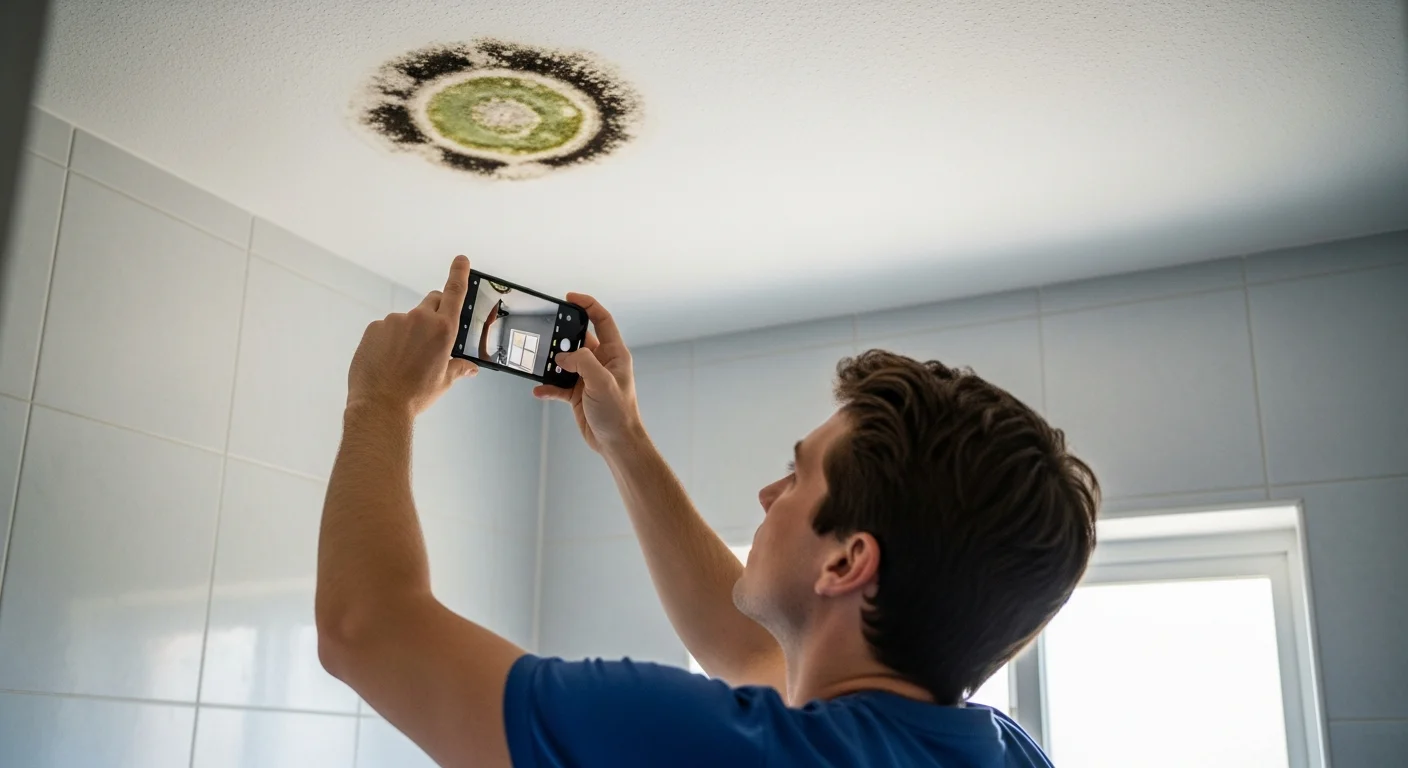
What should I do if I just found mold in my house? Don't disturb it. Don't run fans near it. Take photos for documentation. Find and fix the moisture source — mold cannot grow without it. Measure the affected area: under 10 sq ft on hard surfaces is potentially DIY, anything larger or on porous materials needs professional remediation. Anyone immunocompromised in the household? Skip DIY entirely.
Finding mold tends to happen in two ways: gradually (the bathroom corner has been getting darker for weeks and you've been doing the suburban-dad thing of mentally adding it to next weekend's list) or suddenly (you moved a piece of furniture and now you're staring at something that wasn't on this morning's agenda). Either way, the right first move isn't the obvious one. The obvious move is to clean it. The right move is to leave it alone for a minute, take some photos, and figure out where it came from. (We're a society that wants to fix things. Mold rewards patience.)
Need Mold Remediation Experts?
For mold covering more than 10 square feet, mold in HVAC systems, or any mold around vulnerable household members — call professionals before doing anything else.
Find Mold Remediation Pros →Step 1: Don't Touch It (Yes, Really)
The instinct is to clean it. Wipe, scrub, spray, get rid of it. Resist that for a minute. Disturbing mold releases millions of spores into the air — those spores travel through HVAC systems and natural air currents to every other room in the home, where they establish new colonies in any place that has enough moisture. The single most common way a small contained mold problem becomes a whole-home contamination event is "the homeowner tried to clean it before assessing the scope."
So:
- Don't wipe, scrub, or spray anything yet
- Don't run fans near the area — fans spread spores instead of killing them
- Don't touch moldy surfaces with bare hands
- Keep children and pets out of the area
- Close the door if there is one
Step 2: Find the Moisture Source
Mold appeared because something stayed wet long enough for it to grow. Without addressing the source, any cleanup is performance art — the mold returns within weeks. Common culprits, by location:
| Where the mold appeared | Most likely moisture source |
|---|---|
| Bathroom ceiling/walls | Insufficient exhaust ventilation; condensation; shower spray penetration; leak from above |
| Around windows | Failed window seals; condensation from cold-air infiltration; rainwater intrusion |
| Basement walls | Foundation seepage; high humidity; sump pump issues; failed waterproofing |
| Behind kitchen cabinets | Slow plumbing leak (sink supply, dishwasher line); appliance failure |
| Ceiling spots | Roof leak; pipe leak in floor above; HVAC condensate drain blockage |
| Around HVAC vents | Condensation from cold air on warm surfaces; ducts in humid attics; uninsulated ducting |
| Crawl space | Vapor barrier failure; standing water; inadequate ventilation |
| Inside walls (no visible source) | Slow pipe leak — needs investigation behind drywall |
Fix the moisture source FIRST, before cleanup. Otherwise the cleanup becomes a recurring chore.
Step 3: Measure the Size (This Decides Everything)
| Coverage Area | Recommended Response |
|---|---|
| Under 10 square feet | DIY possible if on non-porous surfaces, moisture source fixed, no vulnerable household members |
| 10–50 square feet | Borderline — professional assessment recommended; DIY only if conditions are clearly favourable |
| 50–100 square feet | Professional remediation strongly recommended |
| Over 100 square feet | Professional remediation required; whole-home protocols may apply |
- The mold is in your HVAC system or ductwork
- The mold extends behind walls, behind cabinets, or into wall cavities
- The mold is in a crawl space or attic
- Anyone in your household has mold allergies, asthma, immune compromise, or chronic respiratory issues
- The mold appeared after sewage backup or floodwater contact (Category 3 water)
- The same patch returned after a previous DIY cleanup
Step 4: DIY Cleanup (Only If Conditions Are Right)
If all conditions favour DIY, the protocol:
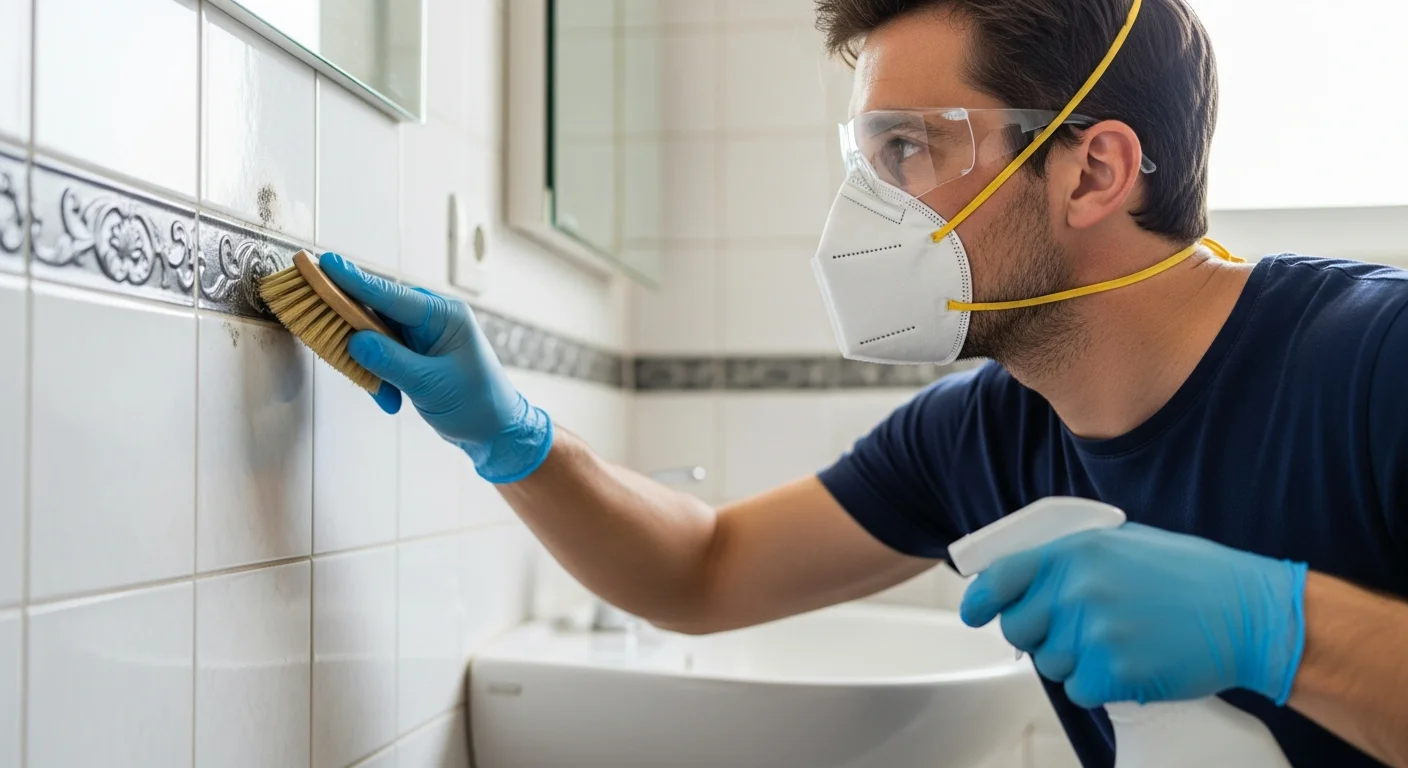
- Suit up. N95 or P100 respirator, rubber gloves, eye protection, old clothes you can wash hot or dispose of.
- Seal the area. Close interior doors. Cover HVAC vents with plastic and tape. Open the exterior window or run an exhaust fan.
- Mist before scrubbing. Light mist of water on the patch reduces airborne spore release during cleaning.
- Clean with detergent and water. Mechanical removal first — dish soap and a stiff brush, scrubbing the mold off the hard surface.
- Rinse with clean water. Wipe down to remove residue.
- Apply EPA-registered antimicrobial. Mold-specific cleaner with the dwell time on the label observed (the contact time it actually needs).
- Dry the area completely. Mold's only friend is moisture; the dryer the surface, the less likely return.
- Dispose properly. Double-bag any rags, sponges, and removed materials in plastic. Take them out of the home immediately.
Step 5: Call Professionals for Larger Mold
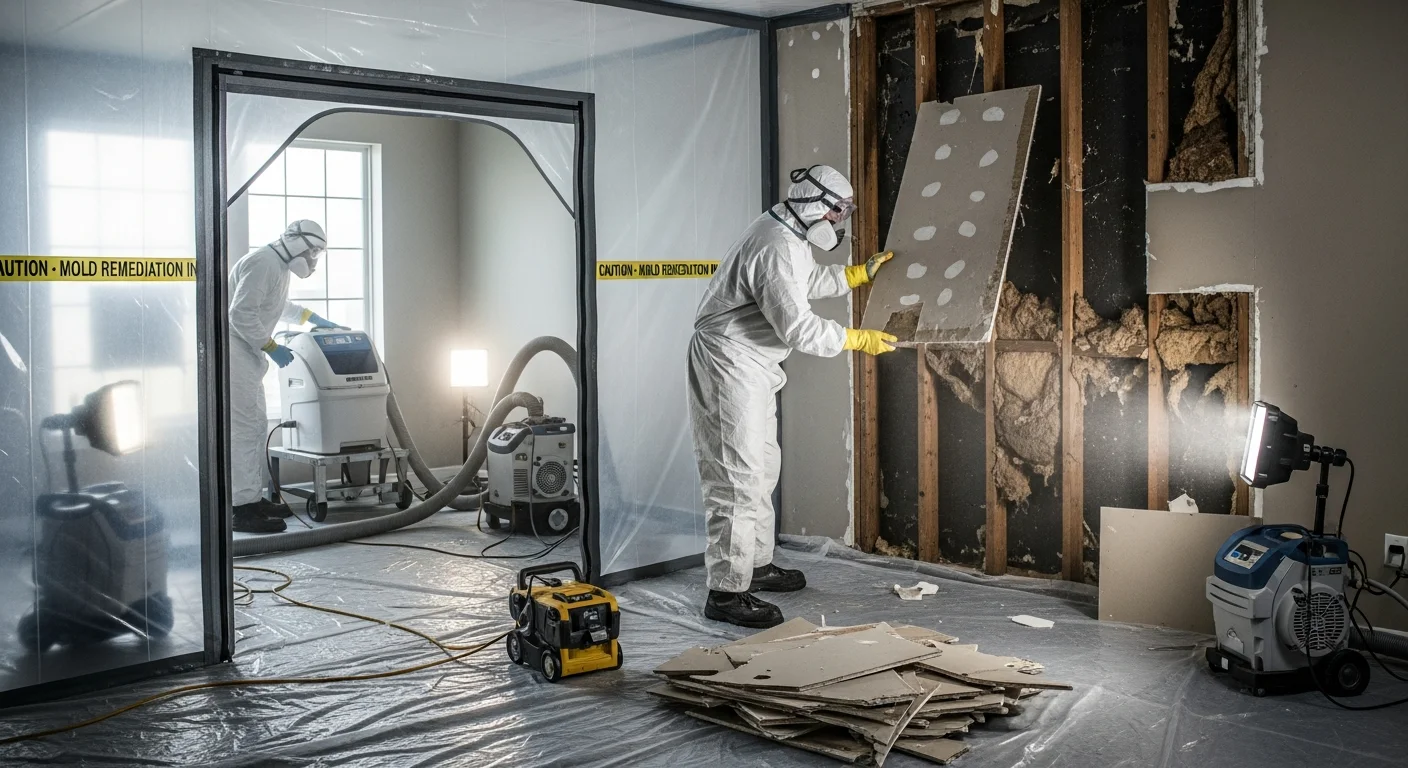
Professional mold remediation is a multi-step protocol designed to contain spores during the work, not just remove visible mold:
- Containment — plastic sheeting and physical barriers seal the affected area before any disturbance
- Negative air pressure — HEPA-filtered air scrubbers maintain lower pressure inside the work zone so spores can't escape into the rest of the home
- HEPA air filtration — running continuously to capture airborne spores
- Removal of contaminated porous materials — drywall, insulation, carpet, anything mold-colonized
- Antimicrobial treatment — EPA-registered biocides applied to remaining surfaces
- Moisture mapping — thermal imaging and meters to find any related hidden moisture
- Source correction — fixing the underlying water issue to prevent recurrence
- Clearance testing — post-remediation air sampling to verify the work succeeded before reconstruction
Look for AMRT (Applied Microbial Remediation Technician) certification from the IICRC. That's the credential that means the technicians are actually trained for this — there are plenty of "mold removal" companies that aren't.
Find AMRT-Certified Mold Remediation Experts
The certification matters. Insist on it.
Get Free Estimates →What NOT to Do (the Money-Saving List)
- Don't paint over mold. Mold grows through paint. The aesthetic improvement lasts about 4–8 weeks before it bleeds back through. The cleanup that follows is bigger than the original problem.
- Don't use bleach on porous surfaces. Surface lightening is not removal. The colony roots into the material below; bleach doesn't reach them.
- Don't ignore the moisture source. Mold returns without addressing the underlying water issue. We've seen the same patch reappear three times in two years.
- Don't use ozone generators. They produce harmful byproducts, don't address the source, and many are simply ineffective. Reputable remediators don't use them.
- Don't hire a mold inspector who also does remediation. Conflict of interest — the inspector who also wants the cleanup contract has every incentive to find more mold than is there. Hire them separately, or pick one or the other.
- Don't run your HVAC system if mold is visible at vents. The system distributes spores throughout the home. Cover vents and turn it off until inspected.
Does Insurance Cover Mold Remediation?
Mold coverage in homeowners policies is limited and conditional. The general rules:
- Mold from a sudden covered water event (burst pipe, appliance failure, covered storm), addressed promptly, is often covered — though many policies cap mold-specific coverage at $5,000–$10,000 unless you've added a mold endorsement.
- Mold from gradual leaks or maintenance failures is generally not covered.
- Mold from floodwater is excluded from standard homeowners and requires NFIP or private flood insurance.
- Mold remediation following sewage backup requires the sewer backup endorsement on most policies.
The "addressed promptly" language is doing significant work. If you discovered the leak in March and the mold in November, an insurer can argue the gradual nature of the damage falls outside the sudden-event coverage. Document the discovery date and your response timeline aggressively. See the full mold insurance guide.
Preventing the Sequel
Whichever way the cleanup goes, the actual project is moisture management. Without that, you're auditioning for the next round.
- Fix water leaks within 24–48 hours of discovery
- Run dehumidifiers in basements, bathrooms, and any chronically damp spaces
- Use bathroom and kitchen exhaust fans during AND for 15 minutes after high-moisture activities
- Keep indoor humidity below 60%, ideally 30–50% (a $15 hygrometer tells you whether you're there)
- Ensure crawl spaces are properly ventilated; in humid climates, dehumidify them
- Clean gutters and grade soil away from the foundation
- Install smart water leak detectors at washing machines, dishwashers, water heaters, and under bathroom sinks for early warning
- Inspect for hidden moisture annually — especially around windows, doors, and plumbing fixtures
Frequently Asked Questions
Is all mold dangerous?
Most household mold is allergenic rather than toxic — capable of causing allergic reactions and respiratory irritation, especially in sensitive individuals. "Black mold" (Stachybotrys chartarum) gets the press but isn't the most common species. The colour alone doesn't reliably indicate toxicity. All visible mold should be addressed, but the response should be proportional to the scope and the household's vulnerability profile, not panic-driven.
How do I test for mold?
Home test kits exist and provide preliminary information ("yes, there's mold") but rarely identify the species. Professional air quality and surface testing (lab-analyzed) is more reliable and runs $50–$300 per sample. If mold is clearly visible, testing is usually unnecessary — the mold should simply be remediated. Testing makes the most sense when you suspect mold but can't see it, or when you need clearance verification post-remediation.
How long does mold remediation take?
Small DIY cleanup (under 10 sq ft, hard surfaces): 1–3 days including drying. Professional remediation for moderate growth: 1–2 weeks for the remediation itself, plus reconstruction time. Extensive contamination (whole rooms, HVAC involvement, hidden mold): 3–4 weeks for remediation, often months for full reconstruction depending on scope.
Can I stay in my home during mold remediation?
For small contained jobs, yes — the affected area is sealed off and you avoid that part of the house during the work. For larger remediation involving HVAC contamination or whole-home spread, temporary relocation is often recommended. Your insurer's Additional Living Expenses (ALE) provision typically covers temporary housing when remediation makes the home temporarily uninhabitable.
What does professional mold remediation cost?
Typical 2026 ranges: small areas (under 10 sq ft) $500–$2,500; moderate areas (10–50 sq ft single room) $2,500–$7,500; large or whole-house remediation $7,500–$30,000+; severe contamination with HVAC and structural issues can exceed $50,000. Variables: square footage, materials affected, hidden contamination, clearance testing requirements. Full cost guide here.
The mold smells bad even after cleanup. What now?
Persistent musty odor after visible mold has been cleaned suggests hidden mold somewhere — behind a wall, in HVAC ducts, in flooring, in furniture. Surface remediation didn't address the source. Get professional assessment with thermal imaging and air sampling. The smell is information; ignoring it doesn't make the underlying problem go away.
What to Have on Hand While Waiting for Pros
If you've called professionals for a larger problem, these items reduce exposure for the household during the wait:
- HEPA Air Purifier — runs continuously to reduce airborne spore counts in occupied areas. Look for "true HEPA," not "HEPA-type" (a marketing term, not a spec).
- Home Mold Test Kit — useful only for initial screening. Confirms mold presence; does not identify species or determine remediation scope.
- N95 Respirator Masks — if anyone must enter the affected area before remediation begins. Standard dust masks do not filter mold spores effectively.
Mold is mostly a moisture problem with a costume on. Find the moisture, document the patch, leave it undisturbed, and let the size of the problem decide whether you're cleaning it on Saturday or paying someone with proper containment to do it on Tuesday. Either way, the actual project is the leak. (Marco's aunt found mold behind a bathroom mirror in 2018, scrubbed it, painted over it, and rediscovered it in 2019. Then 2020. Then early 2021. The fourth time, she finally fixed the failed shower seal that had been the source the whole time. The mirror has been mold-free since, which she now describes as "a personal victory.")
This post contains affiliate links. If you use them to find a contractor or product, we may earn a commission at no extra cost to you.