
Can I remove mold myself? For small patches (under 10 square feet) on non-porous surfaces (tile, glass, sealed grout) where the underlying moisture is fixed, yes — with proper PPE (N95 respirator, gloves, eye protection). For mold on drywall, wood, insulation, anywhere larger than 10 sq ft, hidden behind walls, or in HVAC systems, no. Disturbing mold without containment spreads spores throughout the home and is the leading cause of "small problem becomes whole-house problem."
The shower-grout black spot is the gateway drug to a complicated weekend. (You see it on a Saturday morning. It's small. You have a spray bottle and the energy of someone whose week ended well. Twelve minutes later you're committed to a project that may or may not be the right project.) The honest framework on DIY mold removal is more nuanced than the shower spot suggests — small surface mold on hard surfaces is genuinely DIY territory; almost everything else is a problem that gets bigger when you scrub it.
Here's the decision rule, the protocol if DIY is appropriate, and the spore-spreading mistakes that turn a small contained problem into an HVAC-distributed whole-home one.
When DIY Mold Removal Is Genuinely Okay
You can handle small surface mold yourself if ALL of these are true:
- The total mold coverage is under 10 square feet (the EPA threshold for professional remediation)
- The mold is on non-porous surfaces only — tile, glass, metal, hard plastic, sealed concrete
- The underlying moisture cause has been identified and fixed (otherwise you're cleaning the same patch every six weeks)
- No one in the household has mold allergies, asthma, immune compromise, or chronic respiratory issues
- You can ventilate the work area to the outside (open window, exhaust fan)
- You have proper PPE — N95 or P100 respirator, gloves, eye protection. Not a dust mask. Not a bandana.
The DIY mold cleanup protocol — in this exact order:
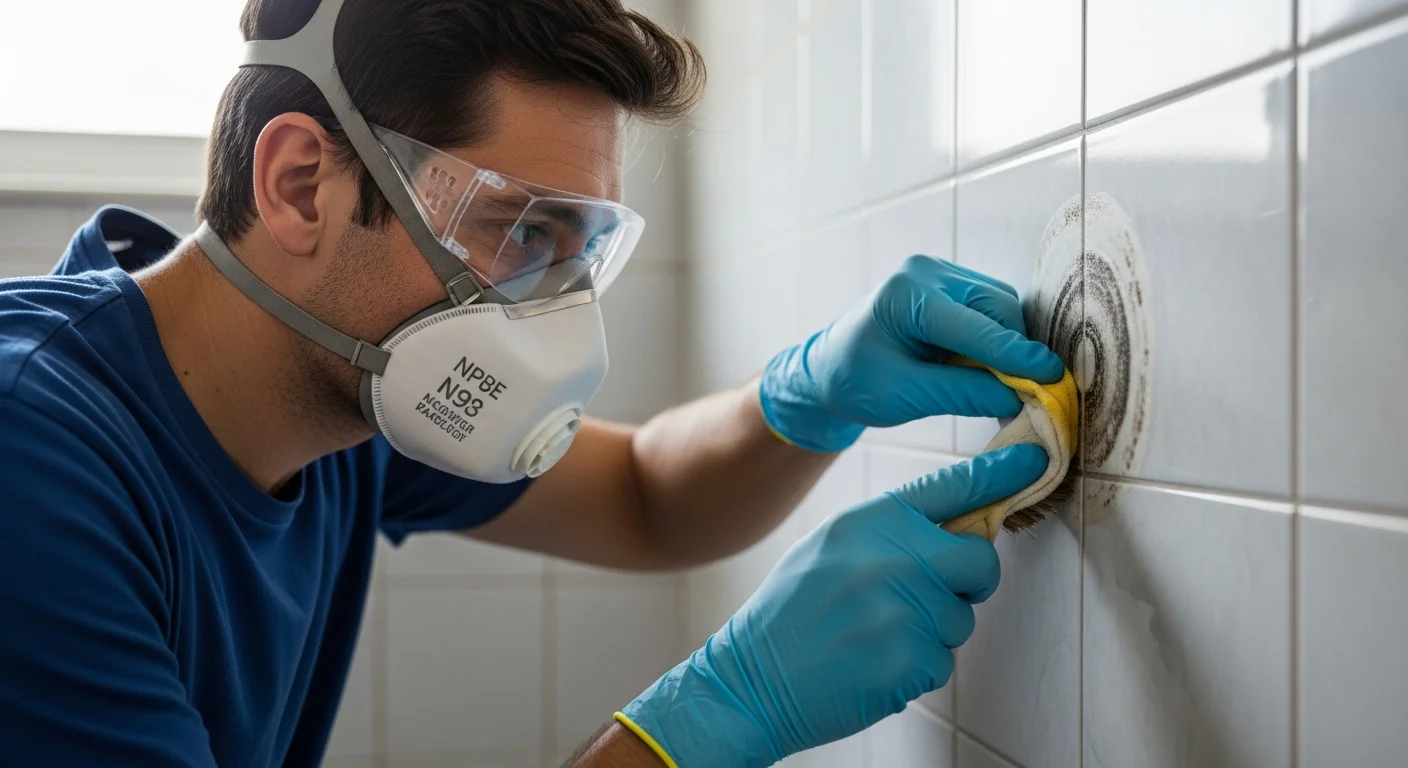
- Protect yourself first. Respirator on before you walk into the room. Gloves and eye protection on. If you touch your face during this job, do so only after washing.
- Seal the area. Close interior doors. Cover HVAC vents with plastic and tape (preventing spore distribution into the rest of the home). Open the exterior window or run the exhaust fan.
- Mist before scrubbing. A light mist of water on the mold patch reduces spore release when you start scrubbing. Dry-brushing mold is the single most efficient way to spread it everywhere.
- Clean with detergent and water first. Scrub the mold off the hard surface. The goal is mechanical removal, not chemistry magic.
- Rinse with clean water. Wipe down the surface to remove residue.
- Apply EPA-registered antimicrobial. A mold-killing product certified for the surface type. Follow the label dwell time — the contact time it needs to actually work.
- Dry the surface completely. Mold's only friend is moisture. The dryer the surface, the less likely it returns.
- Dispose of materials properly. Double-bag any rags, sponges, or removed materials in plastic. Take them out of the house immediately.
When You Need Professional Remediation
Call a certified mold remediation company when ANY of these is true:
- The mold area exceeds 10 square feet (this is the EPA-recommended threshold)
- The mold is on porous surfaces — drywall, wood, insulation, carpet, particleboard
- Mold has grown inside walls, ceilings, crawl spaces, or attic spaces
- The mold followed sewage backup or contaminated floodwater
- You can smell mold but can't find the source
- Mold returned after a previous DIY cleanup
- Anyone in the household has health symptoms (cough, congestion, rashes, headaches that improve when away from home)
- The HVAC system shows mold in the ductwork or around vents
- You're not 100% sure what the mold species is (and the patch is in a high-risk area like a bedroom or kitchen)
What Professional Mold Remediation Actually Includes
The "we just spray it and it's gone" version of mold remediation is marketing. The real version is a multi-step containment-first process that prevents the spores from going anywhere.
- Inspection and assessment — thermal imaging and moisture meters to find hidden mold and ongoing moisture sources. Lab testing of samples if species ID is required.
- Containment — plastic sheeting seals the affected area before any disturbance. The room becomes its own quarantine zone.
- Negative air pressure — HEPA-filtered air scrubbers create lower pressure inside the containment than outside, so air flows IN rather than OUT. Spores can't migrate to clean areas.
- HEPA air filtration — air scrubbers running continuously throughout the work, capturing airborne spores at 0.3 microns.
- Removal of contaminated porous materials — drywall, insulation, carpet padding, MDF, anything mold-colonized. The mold's roots go into porous materials; surface cleaning can't reach them.
- Antimicrobial treatment — EPA-registered biocides applied to all framing and remaining surfaces during the drying phase.
- Source identification and moisture correction — the leak, the humidity issue, the ventilation failure. If this isn't fixed, the mold returns.
- Clearance testing — post-remediation air sampling and surface testing to verify the mold is gone before reconstruction begins.
Find IICRC-Certified Mold Remediation Pros
Look for AMRT (Applied Microbial Remediation Technician) certification — that's the real credential.
Get Free Estimates →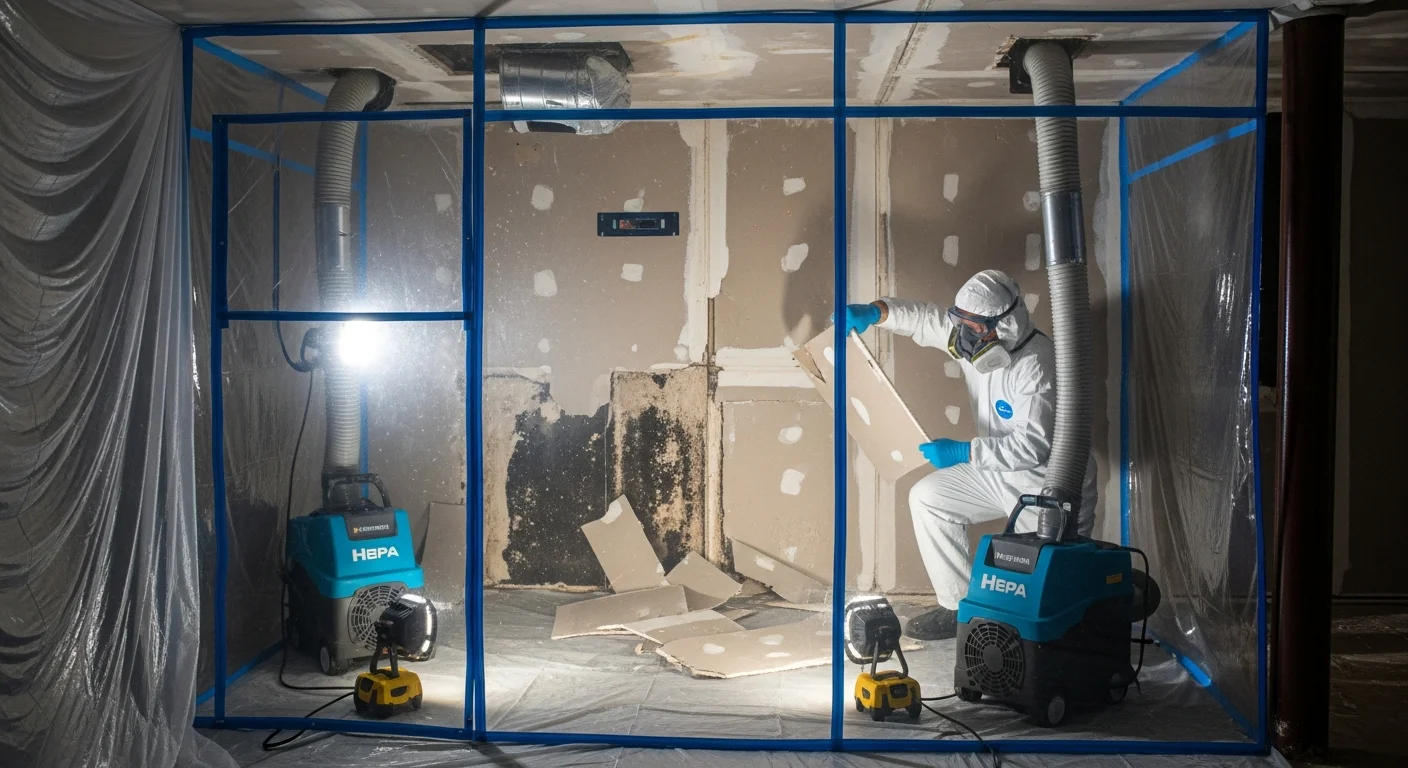
The Hidden Danger of DIY: Spreading Spores
The single most common mistake in DIY mold removal isn't a chemistry error — it's mechanical. Mold releases millions of spores when disturbed. Dry-brushing, scrubbing, or even moving items off a moldy surface without containment launches those spores into the air, where they travel through the home via natural air currents and the HVAC system.
This is the failure mode that turns a 6-square-foot bathroom mold patch into a whole-home contamination event. The original patch is "cleaned" but spores have established new colonies in the kitchen, the bedroom carpet, the basement, the attic — anywhere there's enough moisture to support them. By the time symptoms show up months later, the connection to the original DIY job is invisible.
Professional remediation begins with containment specifically because it prevents this. Plastic sheeting, negative air pressure, HEPA filtration — all of it exists to keep spores from migrating during disturbance. DIY almost never includes this infrastructure, which is why the 10-square-foot threshold matters so much: under 10 sq ft on hard surfaces, the contamination risk is low enough that careful work with PPE is reasonable. Above that, the math flips.
Why Mold Returns After DIY Cleanup
If you cleaned the same mold patch twice, this is why:
- The moisture source wasn't fixed. Mold needs moisture; without addressing the leak, the humidity, or the ventilation issue, the cleaned patch is just a clean patch waiting for the next bloom.
- Only surface cleaning happened. On porous surfaces, mold's "roots" extend into the material. Surface bleach lightens the visible patch; the colony underneath is fine and growing.
- Hidden mold was never addressed. The visible patch was the symptom; the actual colony was inside the wall cavity, invisible.
- Inadequate drying after cleanup. Residual moisture in the area feeds new growth. The treatment phase needs the area genuinely dry.
- Spore reseeding from elsewhere. If spores spread during the original cleanup, they're now growing somewhere else and reseeding the original site.
The Health Risks of Improper Cleanup
Mold exposure causes a range of effects, mostly mild but consequential for sensitive populations:
- Allergic reactions (sneezing, runny nose, itchy eyes, skin rash)
- Asthma exacerbation in people with asthma
- Respiratory symptoms (cough, wheeze, throat irritation)
- Headaches and fatigue with prolonged exposure
- More serious immune effects with heavy long-term exposure
Children, elderly people, pregnant women, and immunocompromised individuals are most vulnerable. Even small mold exposure can trigger meaningful symptoms in sensitive individuals — and disturbing mold during a DIY attempt creates exactly the high-spore-load conditions where exposure becomes problematic.
Mold Prevention Is the Real Solution (Free, Boring, Effective)
Whatever happens with the cleanup, the underlying moisture problem is the actual project. Without fixing the source, you're auditioning for the sequel.
- Fix water leaks within 24–48 hours of discovery (this is the single biggest control variable)
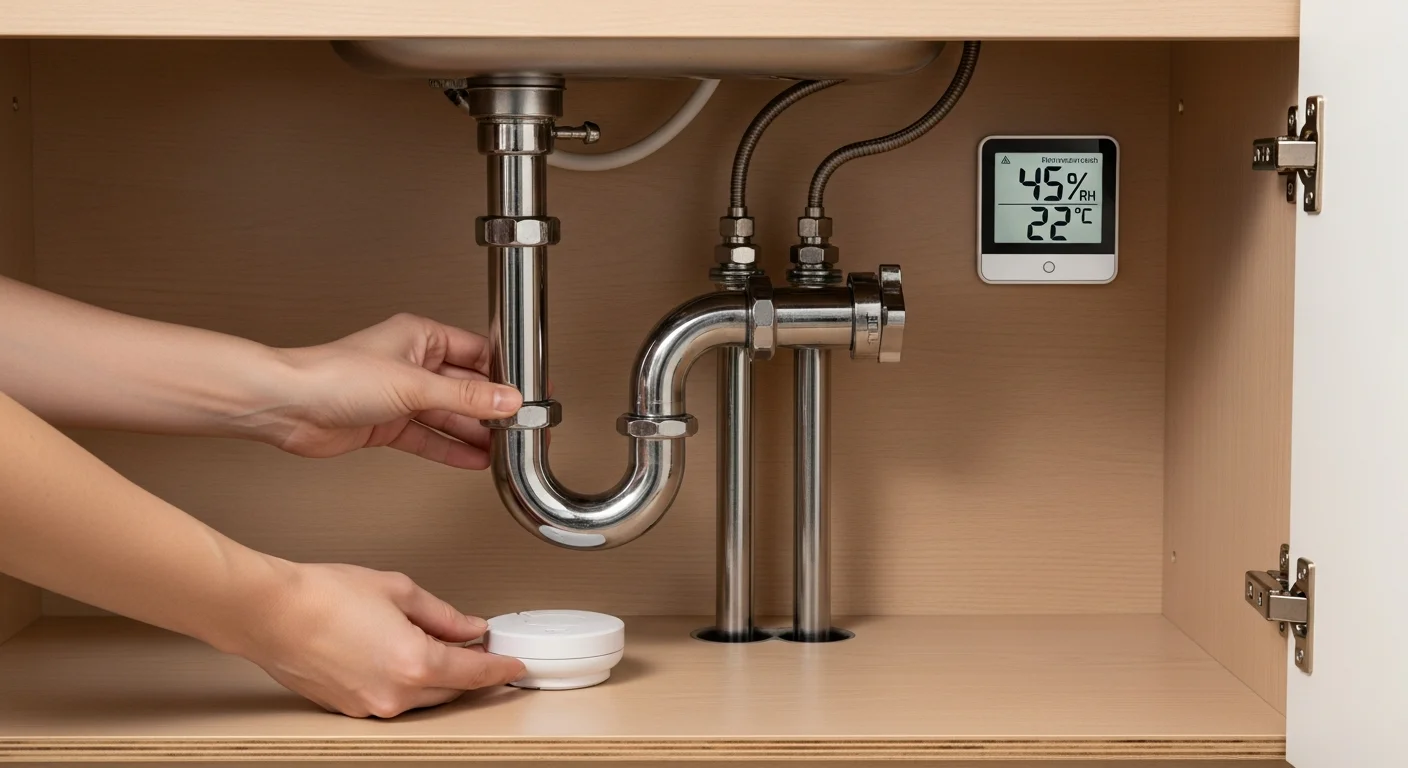
- Keep indoor humidity below 60%, ideally 30–50%. A $15 hygrometer tells you whether you're there.
- Use bathroom and kitchen exhaust fans during AND for 15 minutes after high-moisture activities (showering, cooking)
- Ventilate crawl spaces; in humid climates, dehumidify them
- Insulate cold water pipes to prevent condensation drip into wall cavities
- Clean and dry water damage within 24–48 hours of any event
- Install smart water leak detectors at washing machines, water heaters, dishwashers, and under bathroom sinks for early warning
Frequently Asked Questions
Can I remove mold from drywall myself?
Generally no. Once mold has penetrated drywall, the porous gypsum and paper backing are colonized — surface cleaning cannot reach the colony. The effective solution is removal and replacement of the affected drywall section. DIY attempts typically result in spores spreading during demolition (no containment) and the mold returning because the underlying material wasn't actually cleaned. Drywall mold is professional remediation territory.
How much does professional mold remediation cost?
Typical 2026 ranges: small areas (under 10 sq ft) $500 to $2,500. Moderate areas (10–50 sq ft, single room) $2,500 to $7,500. Large or whole-house remediation $7,500 to $30,000+. Variables include square footage affected, materials involved, HVAC contamination, and clearance testing requirements. See the full mold remediation cost guide.
Does homeowners insurance cover mold remediation?
Usually only if the mold resulted from a covered sudden water damage event (burst pipe, appliance failure) AND you addressed the original water damage promptly. Gradual leaks, ongoing maintenance issues, and floodwater (which requires NFIP) are typically excluded. Many policies cap mold coverage at $5,000 to $10,000 unless you've added a mold endorsement. See the mold insurance guide.
How long does mold remediation take?
Small areas (under 10 sq ft, single surface): 1–3 days for full remediation including drying. Moderate areas (10–50 sq ft, single room): 3–7 days. Large or whole-house jobs: 1–3 weeks for remediation, plus reconstruction time for replaced materials (drywall, insulation, flooring) which can add 2–8 weeks depending on scope.
Is bleach effective at killing mold?
On non-porous surfaces (tile, glass, sealed grout), yes — diluted bleach kills surface mold. On porous surfaces (drywall, wood, fabric), no — bleach lightens the visible colour but doesn't penetrate to reach the colony's roots, and it loses potency rapidly once mixed with water. EPA-registered mold-specific antimicrobials are designed for porous and semi-porous applications. Bleach has its place; that place is hard surfaces.
What's the difference between mold removal and mold remediation?
Mold removal is the act of physically removing visible mold. Mold remediation is the comprehensive process: containment, removal of contaminated materials, antimicrobial treatment, source identification and correction, and clearance testing. Removal is a step within remediation. Companies that offer "mold removal" without the rest are usually skipping the steps that prevent recurrence — and recurrence is where DIY economy stops being economy.
DIY Mold Supplies (For Eligible Small Jobs)
If the mold patch is under 10 square feet on a non-porous surface and the underlying moisture is fixed, here's what you actually need:
- Mold Test Kit — confirms mold presence and gives a baseline for before/after comparison. Useful for small jobs; not a substitute for professional lab testing on larger infestations.
- N95 or P100 Respirator — required for any mold cleanup. Standard dust masks do not filter mold spores. P100s offer better protection for extended work and are reusable.
- HEPA Air Purifier — run during and for 24+ hours after cleanup to capture airborne spores. Look for "true HEPA" rather than "HEPA-type" (which is a marketing label, not a filtration spec).
The mold-DIY rule reduces nicely: small + hard-surface + moisture-fixed + no-vulnerable-people equals a Saturday morning project. Anything else equals "the kind of weekend that turns into a six-figure remediation when discovered three months later." When in doubt, it's cheaper to ask a remediator for a free assessment than to find out the hard way. (Marco's father-in-law DIY'd a basement mold spot in 2019 with a wire brush and an upbeat attitude. The remediation that followed in 2020 took out three rooms, the laundry, and any remaining family disagreement over whether to call professionals.)
This post contains affiliate links. If you use them to find a contractor or product, we may earn a commission at no extra cost to you.