
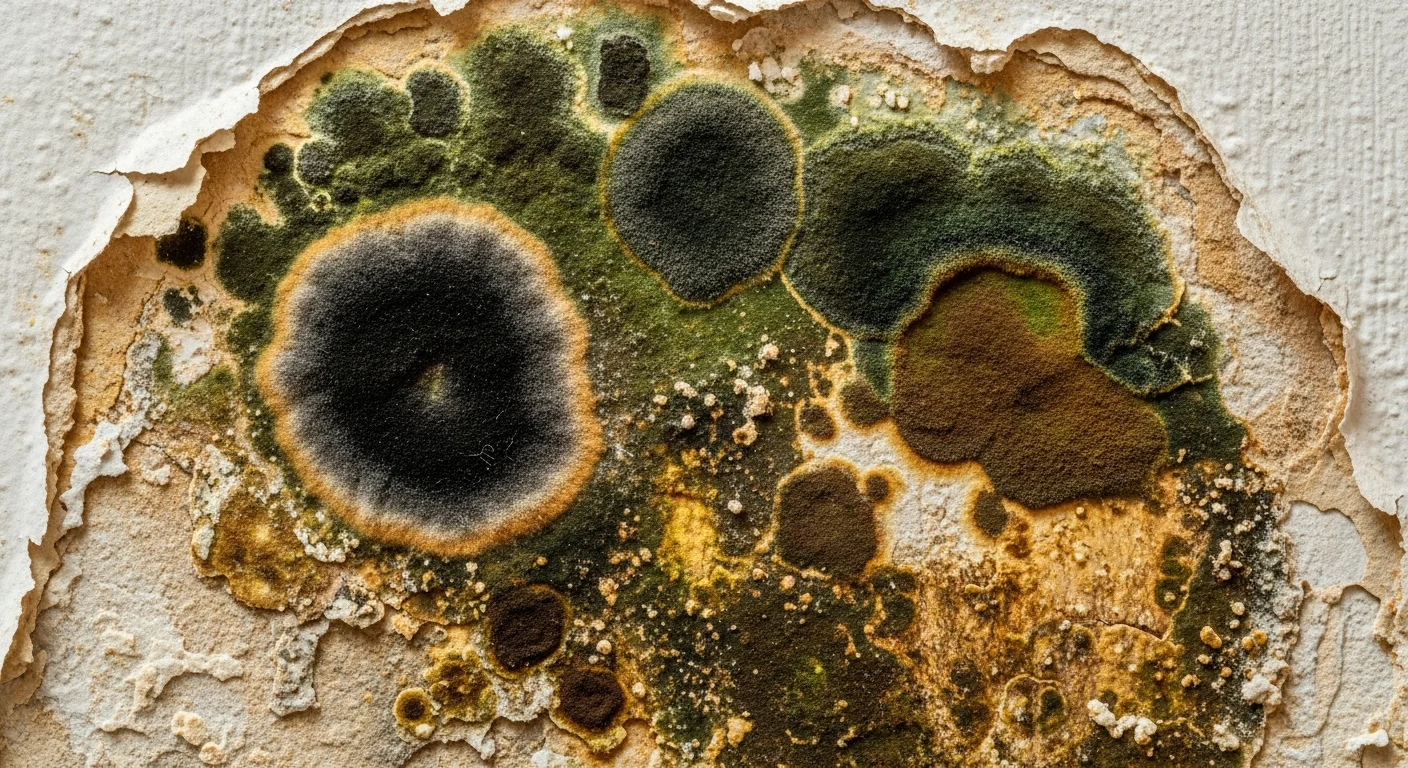
What's the difference between black mold and regular mold? "Black mold" usually refers to Stachybotrys chartarum, a slow-growing greenish-black mold that produces mycotoxins. But many common, less-dangerous molds also appear black — Cladosporium, Aspergillus, and Penicillium can all look black. You cannot identify mold species by colour alone; only laboratory testing can. Visible mold of any colour over 10 square feet warrants professional remediation.
"Black mold" is the kind of phrase that makes a homeowner walk into the bathroom, see a dark patch on the grout, and start mentally drafting their will. (We've been there. Marco's mother-in-law is convinced every grey patch on her shower wall is "the killer one.") The truth is more nuanced — there are real concerns, real precautions, and real money to spend on remediation when warranted, but the colour-alone-equals-toxic mythology costs a lot of homeowners a lot of money in unnecessary panic remediation.
Here's the science, the actual identification rules, and what to do at each level of mold severity. Let's de-escalate the bathroom in a careful, evidence-based way.
What "Black Mold" Actually Means
The term "black mold" almost always refers specifically to Stachybotrys chartarum, a greenish-black mold that grows on materials with high cellulose content — drywall paper, wood, cardboard, ceiling tiles — when those materials remain consistently damp for weeks or months. Stachybotrys is the slow-growing one. Unlike opportunistic molds that establish within 24–48 hours after a water event, Stachybotrys takes time. Its presence indicates chronic, long-term moisture, not a recent leak.
Stachybotrys produces mycotoxins (specifically trichothecenes) that can cause health symptoms in humans and animals. The "can cause" matters here — actual exposure requires inhaling or contacting active spores, which doesn't happen unless the mold is disturbed or actively releasing into living air. A small undisturbed Stachybotrys patch behind a wall is not the same as breathing it in for hours daily.
And — this is the headline — the greenish-black colour alone does NOT confirm Stachybotrys. Plenty of other molds appear dark. Several common species appear identical to the untrained eye and are far less concerning. Proper identification requires laboratory analysis. Restoration professionals can arrange this when conditions warrant.
What the Science Actually Says About Mold Health Effects
The honest version of "is mold dangerous?" is more boring than the internet wants it to be. Here's what the literature actually supports:
Allergies and irritation (the common case)
The most common health effects from mold exposure are allergic reactions: sneezing, runny nose, red eyes, skin rash, and asthma-like wheezing. People with mold allergies experience these symptoms more severely; the general population gets minor versions or nothing at all. Virtually all molds can trigger allergic reactions — black, white, green, blue, the pretty Penicillium, the boring Cladosporium. Allergy-wise, colour is irrelevant.
Toxic effects (the less-common case)
Certain molds produce mycotoxins that can cause more serious symptoms when exposure is significant. Effects range from headaches and fatigue to neurological and immune impacts. Achieving "toxic" exposure levels typically requires prolonged, heavy exposure to actively growing, disturbed mold — not the incidental contact most people experience walking past a water-damaged wall.
Aspergillosis (the medical-attention case)
Aspergillus is a common mold genus. Most species are harmless to healthy people. But Aspergillus can cause aspergillosis — a genuine medical condition primarily affecting people with pre-existing lung conditions or weakened immune systems. This is a small fraction of mold exposure scenarios, but a real one. If anyone in your household has lung disease, is immunocompromised, or is on chemotherapy, mold gets a more urgent response than the typical "we'll get to it next weekend."
The composite picture: most mold causes allergy symptoms in sensitive people, occasional more-serious effects with heavy prolonged exposure, and serious medical concerns mostly for vulnerable populations. The colour of the mold tells you almost nothing about which category you're in.

The Common Molds You Actually Encounter
Most household mold doesn't warrant special fear. It does warrant attention, mostly because the moisture causing it warrants attention.
Cladosporium
One of the most common outdoor molds; also colonizes indoors. Olive-green, brown, or black patches. Triggers allergic reactions but doesn't produce significant toxins. Common on fabrics, wood, and HVAC systems. The mold equivalent of background noise.
Penicillium
Familiar as the blue-green fuzz on bread and citrus. Indoors, it grows on water-damaged materials. Some species produce mycotoxins; others are used to make antibiotics. (Yes, the same genus. Biology is wonderfully unbothered by branding.) Indoor growth warrants professional remediation regardless of species.
Alternaria
Common in shower stalls, basements, and chronically damp areas. Dark green or brown velvety patches. A meaningful allergen but not typically dangerous to healthy individuals.
Chaetomium
Often found in water-damaged homes, especially on drywall. Starts gray-white, darkens to olive-gray or tan. Associated with skin and nail infections, primarily a concern for immunocompromised individuals.
Trichoderma
Lives in damp areas including carpet backing, wallpaper, and HVAC systems. Some species produce enzymes that damage building materials; some produce toxins. Professional remediation recommended for indoor growth.
Aspergillus
The umbrella genus we mentioned earlier. Multiple species, mostly harmless, a few that warrant attention especially around immunocompromised individuals. Often appears yellow, but can also be black, green, or grey.
When the Mold Actually Warrants Worry
Mold's presence always indicates a moisture problem worth addressing. But specific situations escalate the urgency:
- Coverage area exceeds 10 square feet. The EPA threshold for professional remediation. A patch the size of a door is a different conversation than a patch covering an entire basement wall.
- Hidden growth. Mold behind walls, under flooring, or inside HVAC systems means you're potentially inhaling spores via air distribution. Visible mold is unsightly but limited to surface exposure; hidden mold is invisible and ambient.
- Immunocompromised household members. Anyone with HIV/AIDS, undergoing chemotherapy, recent organ transplant, or chronic lung disease — even common molds warrant aggressive professional response and medical consultation.
- Following sewage backup or Category 3 water damage. Any post-sewage mold growth requires professional biohazard remediation. The pathogens beyond mold need specialized handling.
- Persistent symptoms in occupants. If household members have ongoing allergy or respiratory symptoms that improve when away from home and return on return, hidden mold is a reasonable hypothesis. Get a professional assessment.
- Visible structural compromise. Drywall sagging, paint bubbling, wood softening, ceilings discoloured beyond a single localised stain. By the time the structure is showing it, the moisture problem is well-established.
The Right Response, Sized to the Problem
Small patches on non-porous surfaces (tile, glass, sealed grout)
Under 10 square feet, on non-porous surfaces, with no immunocompromised household members? You can usually clean it yourself. Wear an N95 respirator, gloves, and eye protection. Use mold-specific cleaners (or a 1:10 bleach-to-water solution on tile, never on porous materials). Address the moisture source after cleaning, otherwise it'll be back by Tuesday.
Mold on porous materials (drywall, carpet, insulation)
Even small patches on porous surfaces are tricky. The mold's "roots" extend into the material, and surface cleaning doesn't reach them. The honest answer is usually: cut out the affected material and replace it. For anything beyond a few square feet, professionals do this safer and cleaner than DIY.
Larger areas, hidden locations, or any uncertainty
Get a professional assessment. Look for AMRT (Applied Microbial Remediation Technician) certification from IICRC — that's the credential that actually means the technician is trained for this. Untrained "mold removal" companies are an industry of variable quality.
Whatever the situation, the underlying principle is unchanged: mold doesn't grow without moisture. Find the source. Fix the source. Otherwise the cleanup is performance art.
Preventing Mold Problems (the Boring Answer Always Wins)
The genuinely effective mold strategy is preventing the conditions that allow mold to grow. Boring, but free.
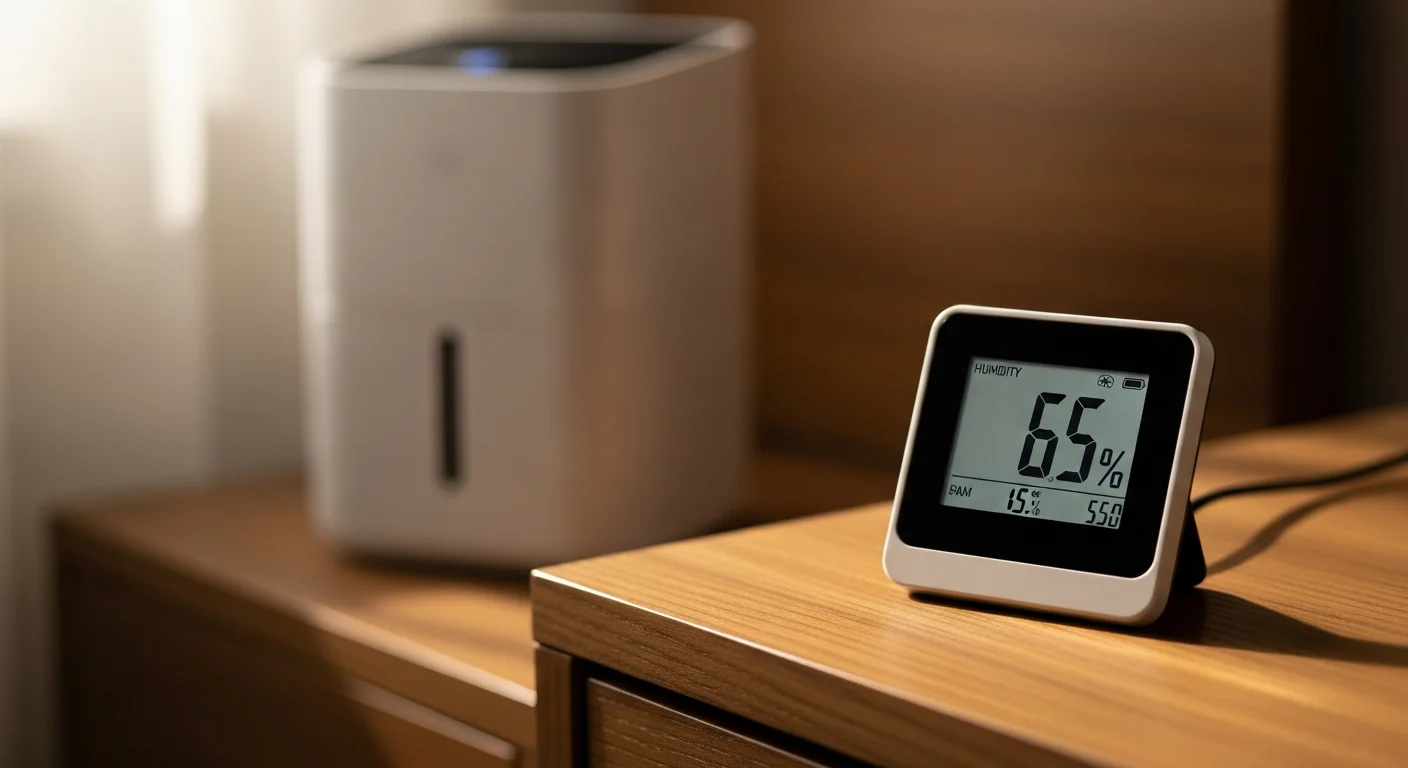
- Maintain indoor humidity below 60% (ideally 30–50%). A $15 hygrometer tells you whether you're there. Dehumidifiers in basements and bathrooms; proper exhaust fan usage in bathrooms during/after showers; air conditioning in humid climates.
- Fix leaks promptly. Slow leaks behind walls create mold conditions long before visible signs appear. Annual plumbing inspections catch developing problems. Roof leaks, window seal failures, and foundation cracks all matter.
- Vent moisture-producing activities to the outside. Bathroom exhaust fans must vent outside, not into the attic (a surprising number do — surprise yourself). Clothes dryers must vent outdoors. Crawl spaces need ventilation, possibly dehumidification.
- Respond fast to water damage. The 24–48 hour mold-establishment window is the cheapest mold-prevention investment available. Professional water extraction and structural drying after significant water events typically pays for itself many times over.
Frequently Asked Questions
How can I tell if mold is dangerous without a test?
You can't. Mold colour, texture, and location can hint at the species, but visual identification is unreliable — black colour does not equal Stachybotrys, and some concerning molds are green, white, or grey. If you have significant mold growth (over 10 square feet, hidden behind walls, or following water damage), get professional testing rather than assuming based on appearance. Lab analysis costs $50–$200 per sample and removes the guesswork.
Is black mold always toxic?
No. Many common mold species appear black and are not Stachybotrys chartarum — Cladosporium, Aspergillus, and Penicillium can all appear dark. Stachybotrys is uncommon relative to its press coverage. Only laboratory testing identifies the species with certainty. The colour itself is not a reliable indicator of toxicity, severity, or health risk.
What should I do if I find black mold in my bathroom?
Small patches under 10 square feet on tile or grout can often be cleaned with appropriate products and protective gear (N95 respirator, gloves, eye protection). If the mold is on drywall, the grout lines are cracked, or the area exceeds 10 square feet, call a professional — bathroom mold often penetrates behind tile where surface cleaning cannot reach. Address the underlying moisture source (ventilation, leaks) regardless.
Can regular mold become black mold?
No. Mold species are genetically distinct — common molds do not transform into Stachybotrys chartarum. What can happen: a mixed colony develops over time as moisture conditions favour different species, so what started as Cladosporium can be joined by Stachybotrys after months of chronic dampness. The control variable is the same regardless: eliminate moisture and all mold species lose their growing conditions.
Does homeowners insurance cover mold remediation?
Sometimes. Mold remediation is covered when it results from a sudden, covered water event (burst pipe, appliance failure) and you address it promptly. It is generally not covered when it results from gradual leaks, poor maintenance, humidity issues, or floodwater (which requires NFIP). Many policies cap mold coverage at $5,000–$10,000 unless you've added a mold endorsement. Read your policy's mold-specific language carefully.
How much does professional mold remediation cost?
Typical 2026 costs: small contained jobs (under 10 sq ft) $500 to $1,500. Moderate jobs (10–50 sq ft, single area) $1,500 to $5,000. Large jobs requiring containment and material removal $5,000 to $15,000+. Whole-house remediation following severe contamination can exceed $30,000. The variables are square footage, material types affected, contamination spread into HVAC, and lab testing requirements.
The headline takeaway: mold is mostly a moisture problem wearing a costume. Skip the sensationalism, address the dampness, and let a properly certified professional handle anything past the bathroom-grout scale. (Marco's mother-in-law's grout is, incidentally, fine. We had it tested. The certificate is now on her fridge.)
This post contains affiliate links. If you use them to find a contractor or product, we may earn a commission at no extra cost to you.