
How do you find a reputable mold remediation company near you? Start by checking your state's licensing requirements, as the industry is unregulated in many areas. Look for firms with IICRC (Institute of Inspection, Cleaning and Restoration Certification) credentials, specifically AMRT (Applied Microbial Remediation Technician). Always get two written estimates, verify their Certificate of Insurance (COI), and ensure they use third-party clearance testing rather than testing their own work.
Finding a trustworthy mold remediation company requires slightly more effort than picking a restaurant on Google Maps. In many states, the mold remediation industry is entirely unregulated. Anyone with a van, a shop vacuum, and a concerning amount of confidence can legally call themselves a "mold specialist."
If you hire the wrong company, you don't just lose money. You pay someone to spread microscopic mold spores from a contained area into the rest of your house. Knowing what credentials actually matter — and which ones are entirely made up — is the only way to make a confident hire.
The Regulatory Wild West: Know Your State Laws
Before you start calling contractors, you need to know what the law requires in your state. State regulations fall into three broad categories:
| Regulation Level | What It Means | What You Must Do |
|---|---|---|
| Strictly Licensed States (e.g., FL, NY, TX) | Contractors must pass state exams and hold specific mold remediation licenses. | Verify their active license number on the state government database. |
| Dual-Role Ban States | It is illegal for the same company to perform both the initial mold inspection and the remediation. | Hire an independent hygienist for testing, then a separate contractor for cleanup. |
| Unregulated States (Most of the US) | No specific mold licensing exists; work falls under general contractor or environmental rules. | Rely heavily on industry certifications (IICRC, NORMI) to verify competence. |
Even if your state requires a license, a state license is the bare minimum legal requirement. It is not a guarantee of quality. (Having a driver's license doesn't make you a Formula 1 driver. Same logic applies here.)
The Certifications That Actually Matter
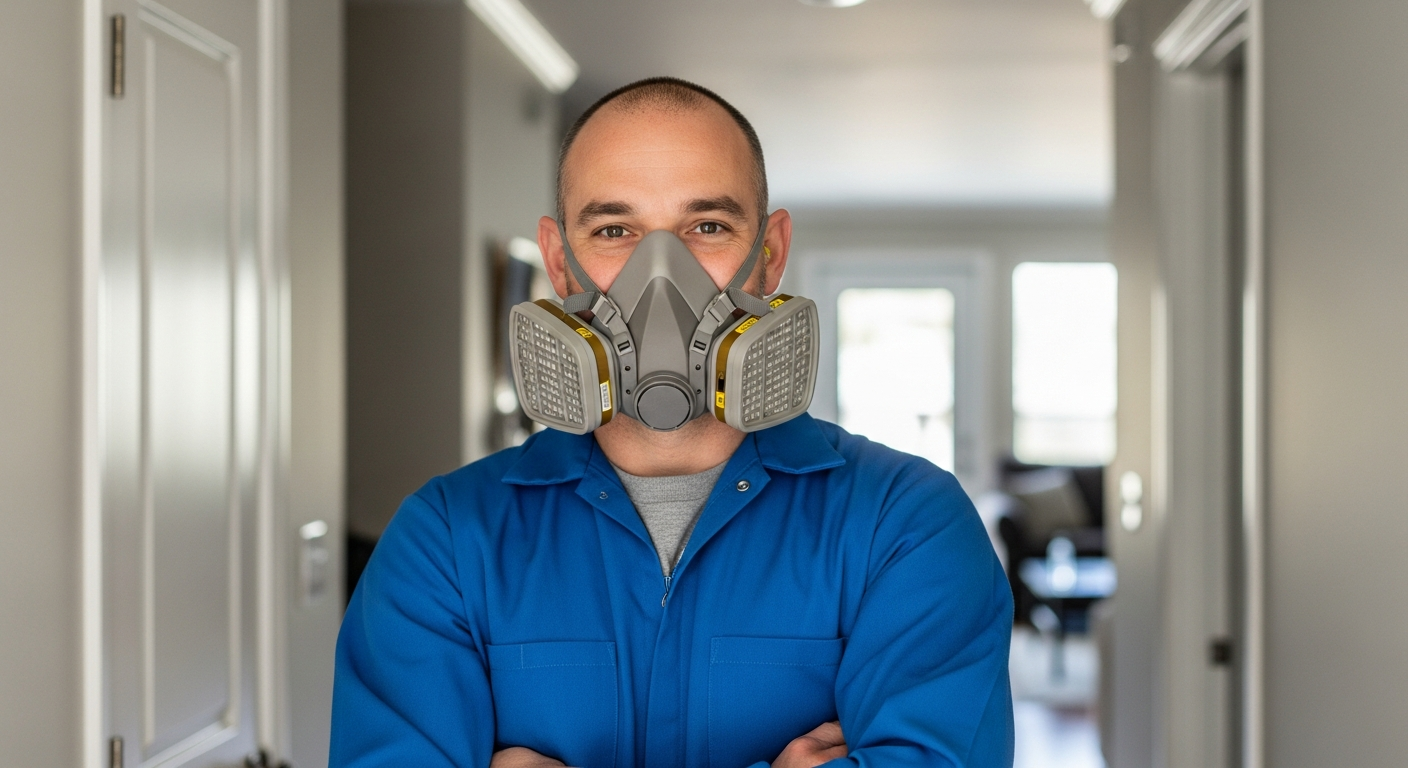
Because government regulation is spotty, the restoration industry relies on voluntary certifications to establish standards. If a contractor doesn't have these, politely end the conversation.
| Certification / Acronym | What It Stands For | Why It Matters |
|---|---|---|
| IICRC | Institute of Inspection, Cleaning and Restoration Certification | The gold standard organization. They literally wrote the manual (the ANSI/IICRC S520) on professional mold remediation. |
| AMRT | Applied Microbial Remediation Technician | The specific IICRC certification for mold workers. Proves they understand containment, HEPA filtration, and proper PPE. |
| NORMI | National Organization of Remediators and Microbial Inspectors | A highly respected alternative or supplement to IICRC certification with rigorous training standards. |
| COI | Certificate of Insurance | Not a certification, but mandatory. Proves they have pollution liability coverage (standard general liability often excludes mold). |
You can verify IICRC certification independently at iicrc.org. Never rely solely on a badge pasted onto a company's website.

Comparing Estimates: How to Read the Fine Print
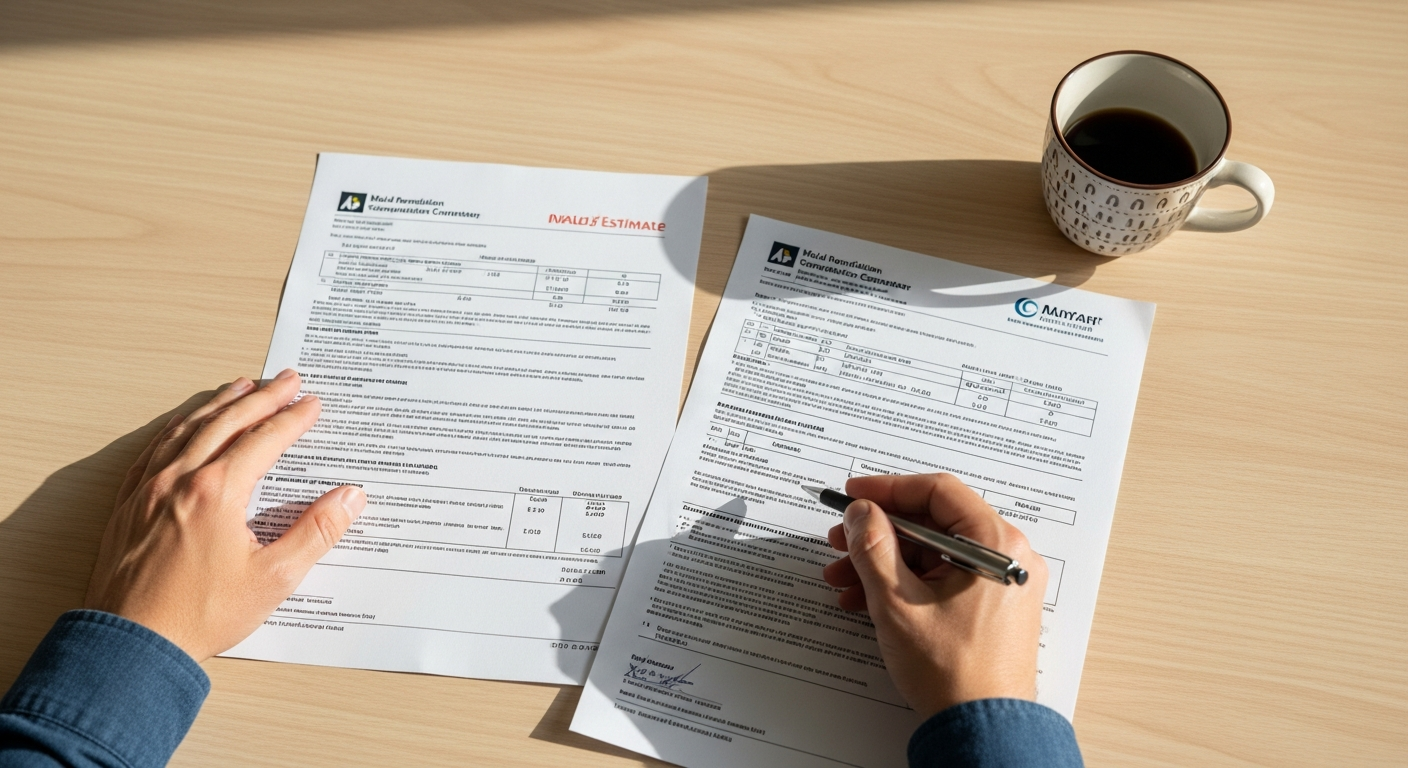
You should always get written estimates from at least two certified companies. When you put them side-by-side on your kitchen table, ignore the final price for a moment and look at the scope of work.
Here is the difference between a professional estimate and a shortcut:
| The Professional Estimate | The "Shortcut" Estimate |
|---|---|
| Specifies heavy plastic containment and negative air pressure to isolate the work area | Mentions "cleaning" but says nothing about containing the airborne spores |
| Lists HEPA air scrubbers running 24/7 during the project | Assumes opening a window is adequate ventilation |
| Requires physical removal of porous materials (drywall, insulation) | Promises to "treat" or "fog" porous materials with chemicals instead of removing them |
| Details proper double-bagging and hazardous waste disposal | Just says "debris removal" |
| Clearly identifies the moisture source that caused the mold | Ignores why the mold grew in the first place |
If Contractor A quotes $3,500 and includes containment, and Contractor B quotes $1,500 but skips containment, Contractor B isn't cheaper. Contractor B is just charging you $1,500 to spread mold spores into your HVAC system.
The Dual-Role Conflict of Interest
This is the most common trap homeowners fall into. Company A offers to do a "free mold test." They test your house, tell you it's full of toxic mold, and hand you a $6,000 estimate to fix it.
This is an inherent conflict of interest. The company writing the estimate has a financial incentive to find a massive problem during the inspection. In several states, this practice is explicitly illegal. Even where it is legal, it is unethical.
The solution: Separate the assessment from the remediation. Pay an independent industrial hygienist or a dedicated testing-only firm to inspect your home and write a remediation protocol. Then, hand that protocol to three remediation contractors and ask them to bid on it. The remediators know they are bidding against each other based on an objective third-party document. This keeps everyone honest.
Six Massive Red Flags
Cancel the appointment if a contractor does any of the following:
- Quotes a price over the phone. It is physically impossible to accurately quote a mold job without seeing the extent of the moisture damage with a moisture meter or thermal camera.
- Wants to use bleach. The EPA and OSHA both explicitly state that bleach should not be used for professional mold remediation on porous surfaces. It strips the color but leaves the roots.
- Discourages clearance testing. A reputable contractor wants an independent party to test the air after they finish to prove they did their job perfectly. A bad contractor will tell you clearance testing is "a waste of your money."
- Cannot produce a COI. If they damage a plumbing line during demolition and don't have proper insurance, your homeowner's policy will end up footing the bill.
- Uses scare tactics. Mold is a serious property and health concern, but it is rarely a "leave the house tonight or you'll die" emergency. High-pressure sales tactics belong on used car lots, not in your living room.
- Ignores the water. If they hand you a remediation quote but don't mention fixing the leaky pipe or the poor basement grading, they are setting you up for a repeat infestation.
Frequently Asked Questions
How do I find a reputable mold remediation company near me?
Start by searching the IICRC Global Locator (iicrc.org) for local firms with Applied Microbial Remediation Technician (AMRT) certification. Verify if your state requires a specific mold remediation license. Get written estimates from at least two certified companies, verify their Certificate of Insurance (COI), and ensure their quoted scope of work includes proper plastic containment and HEPA filtration.
How much does mold remediation cost near me?
Mold remediation costs vary by local labor rates, but national averages run $1,500–$3,800 for moderate residential projects, translating to roughly $10 to $30 per square foot. Costs in high-cost-of-living metro areas can be 20–40% higher. Always get multiple bids. Extremely low quotes often indicate a contractor is skipping critical containment protocols.
Should I test for mold before calling a remediation company?
If you have a large area of clearly visible mold (over 10 square feet), you do not need to pay for testing first — you already know you need remediation. Testing is highly valuable when you smell a musty odor but cannot find the source, or when you need an independent protocol written. Always hire an independent testing firm that does not perform remediation to avoid conflicts of interest.
What is clearance testing in mold remediation?
Clearance testing is a post-remediation air quality test performed by an independent third party (not the contractor who did the cleanup). It verifies that spore counts inside the containment area have returned to normal, safe levels before the plastic sheeting is removed. You should always demand and pay for third-party clearance testing to guarantee the job was done right.
Your home is likely your largest financial asset. When fungi decide to start eating it, you need a professional, not a handyman with a spray bottle. Verify the IICRC certification. Demand the COI. Bring in an independent tester to keep everyone honest. It requires a bit more legwork on the front end, but it guarantees you won't be doing this all over again next year.