
Can water damage disturb asbestos in your home? Yes. Water damage restoration in homes built before 1980 frequently involves demolishing saturated drywall, flooring, ceiling tiles, and pipe insulation — all materials that may contain asbestos. Disturbing these materials without testing first can release microscopic fibres into the air, creating a serious health hazard.
Here is a sentence I wish I didn't have to write: the stuff that's killing your walls might also be the stuff that could kill you. Asbestos was the construction industry's favourite ingredient for about forty years — fire-resistant, durable, cheap. They put it in everything. Floor tiles, ceiling texture, pipe insulation, drywall mud. (If they could have put it in coffee, they probably would have. It's heat-resistant, after all.)
The problem appears when water damage forces demolition. You can't just rip out waterlogged drywall in a 1965 ranch house and assume you're safe. If Jaws taught us anything, it's that you should find out what's in the water before you go swimming — and in this case, the "water" is your walls.
Where Asbestos Hides in Older Homes
Asbestos was used in residential construction from the 1940s through 1980. If your home was built during that era, these are the materials most likely to contain it:
- Floor tiles and adhesive: 9-inch and 12-inch vinyl floor tiles from this period frequently contain asbestos, as does the black mastic adhesive beneath them
- Pipe insulation: Corrugated gray or tan wrapping around heating and hot water pipes — often looks like cardboard or air-filled wrap
- Popcorn ceilings: Spray-applied textured ceilings installed before 1978 commonly contained asbestos. (Yes, the ceiling texture your parents thought was decorative is potentially hazardous. The 1970s were a different time.)
- Ceiling tiles: Acoustic drop-ceiling tiles popular in mid-century construction
- Drywall joint compound: The "mud" used to finish drywall seams contained asbestos until the mid-1970s
- Roofing materials: Asphalt and felt roofing, some shingles
- Exterior siding: Transite siding — thin panels that look like concrete — contains asbestos
- HVAC duct insulation: Duct tape and insulation in older forced-air systems
The critical fact: you cannot identify asbestos by looking at it. It's microscopic. The only way to know is laboratory testing.
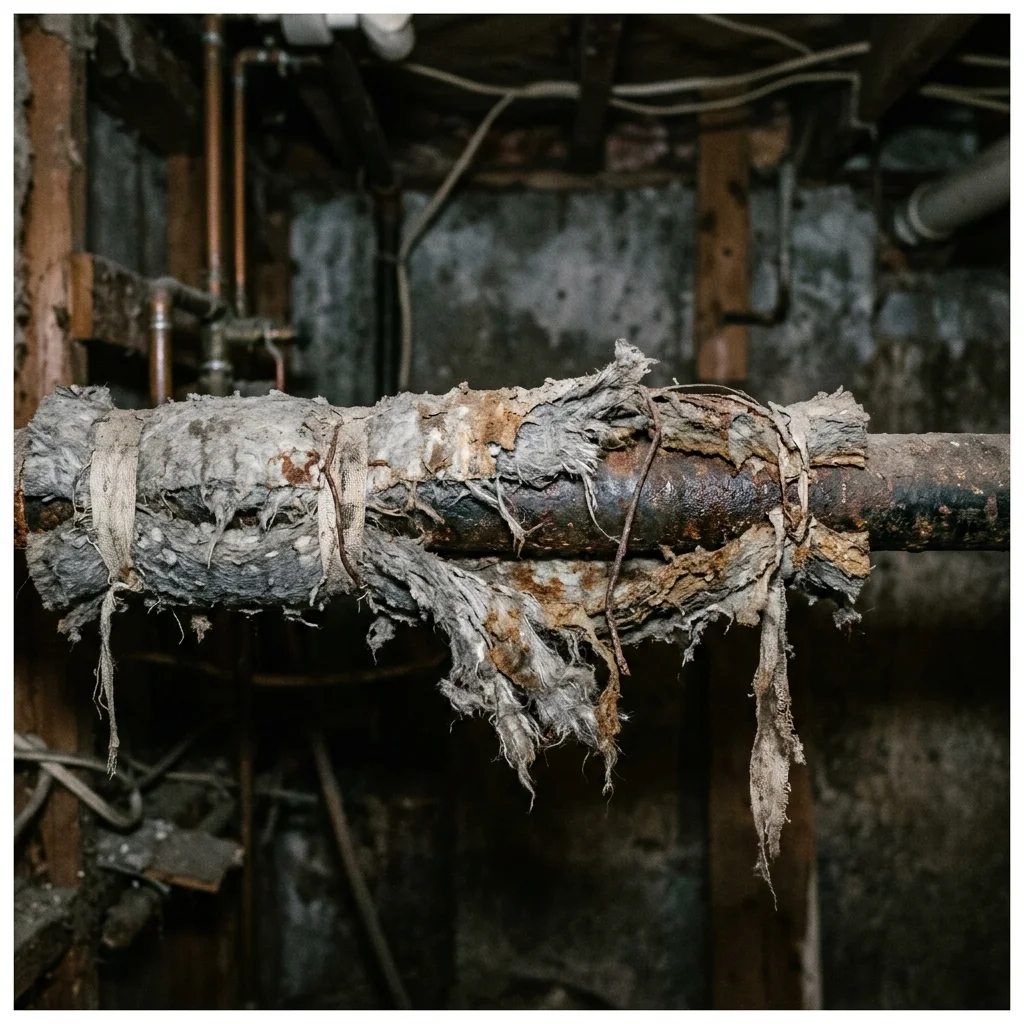
Why Water Damage Makes Asbestos More Dangerous
Undisturbed, intact asbestos-containing materials generally pose minimal risk. The danger is in the disturbance — and water damage creates two separate disturbance paths:
- Water degrades the material itself. Materials that were originally classified as "non-friable" (meaning they don't easily crumble) can become friable after water saturation. Wet ceiling tiles soften. Drywall mud breaks down. Floor tile adhesive dissolves. As these materials dry, they become brittle and can release fibres spontaneously.
- Restoration requires demolition. You can't dry a wall that's saturated to the studs — you have to tear it out. And tearing out asbestos-containing drywall without proper containment fills your home with invisible fibres.
This is why the IICRC S500 water damage restoration standard specifically recommends testing suspect materials before turning on air movers or beginning any demolition. Those industrial fans you love? They're excellent at spreading asbestos fibres through your entire duct system if nobody tested first.
When Testing Is Required (And When It's Just Smart)
Federal law under EPA's NESHAP regulations requires a certified asbestos inspection before any demolition or renovation in commercial buildings. For residential properties, requirements vary by state — but even where testing isn't legally mandated, it is strongly recommended whenever:
- Your home was built before 1980
- Restoration scope includes removing vinyl floor tiles or their adhesive
- Drywall removal is required in original (un-renovated) sections
- Pipe insulation has been damaged or must be disturbed
- Popcorn ceiling texture will be scraped, sanded, or demolished
- Ceiling tiles need removal or replacement
- Any material in the restoration scope looks unusual — wrapped pipes, unfamiliar ceiling material, original floors hidden under newer layers
A certified asbestos inspector charges $250–$700 for a typical residential inspection with laboratory analysis. Rush results are available for an additional fee. Given that improper disturbance can result in $10,000–$30,000 in emergency abatement, the inspection is the cheapest insurance you'll buy this year. (And unlike your actual insurance, it doesn't come with a 40-page terms and conditions document.)
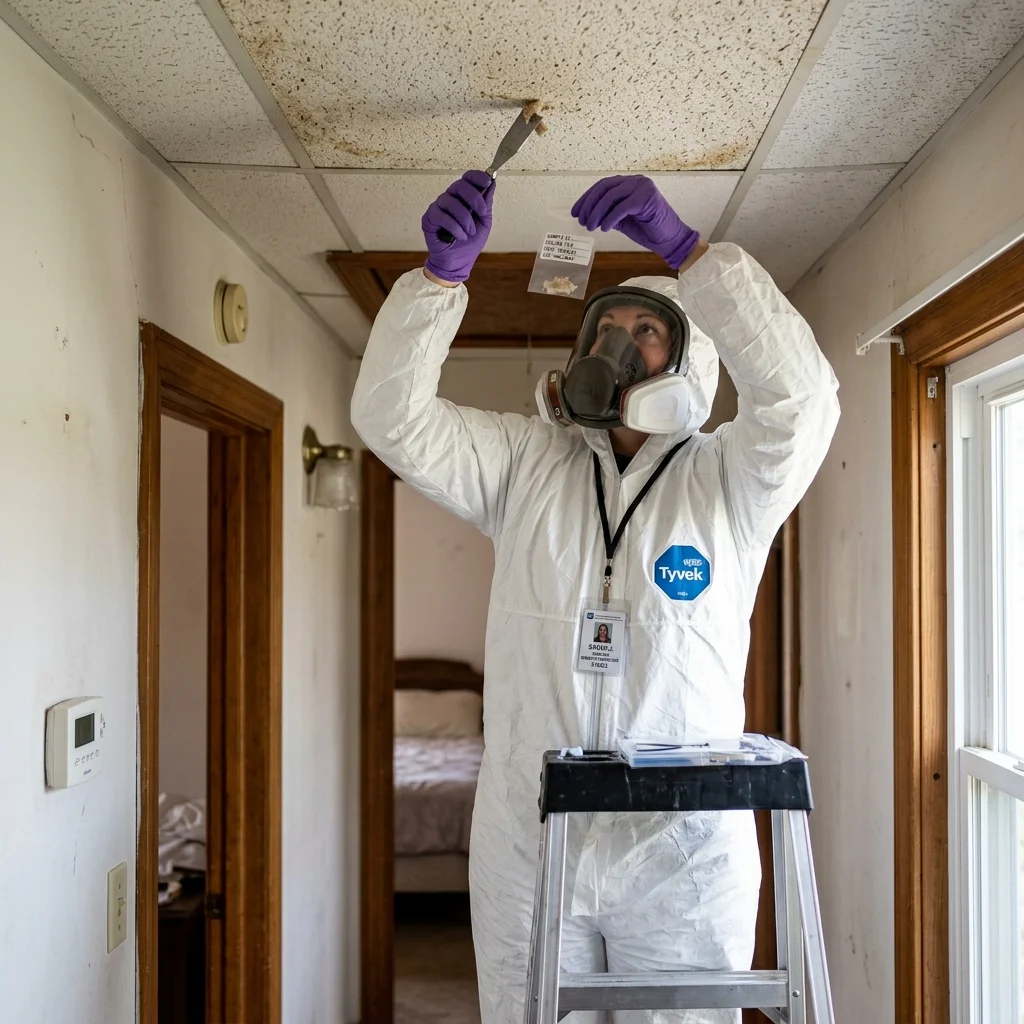
The Testing Process (It's Not DIY)
Asbestos testing requires a certified inspector — not a general home inspector, not your contractor, and absolutely not you with a YouTube tutorial. Improper sampling can itself release fibres, and EPA protocols specify exactly how samples must be collected.
Here is how it works:
- Visual inspection: The inspector identifies all suspect materials in the restoration scope.
- Sample collection: Small samples (a few square inches each) are carefully cut from each material type using wet methods to suppress fibre release.
- Laboratory analysis: Samples are sent to an accredited lab, which examines them under polarised light microscopy for asbestos fibre content.
- Results: Typically returned within 3–5 business days. Rush service (24–48 hours) is available.
- Classification: Materials containing more than 1% asbestos by weight are classified as asbestos-containing materials (ACMs) and are subject to specific handling and disposal regulations.
If Asbestos Is Found: Your Options
Finding asbestos does not automatically mean ripping everything out. You have two paths, and which one you take depends on your restoration scope:
| Option | When It Works | Typical Cost |
|---|---|---|
| Encapsulation / Leave in Place | Intact, undisturbed ACMs that won't be affected by restoration work | $2–$6 per sq ft |
| Professional Abatement (Removal) | ACMs that must be demolished as part of the restoration scope | $5–$20 per sq ft ($1,200–$6,000+ total) |
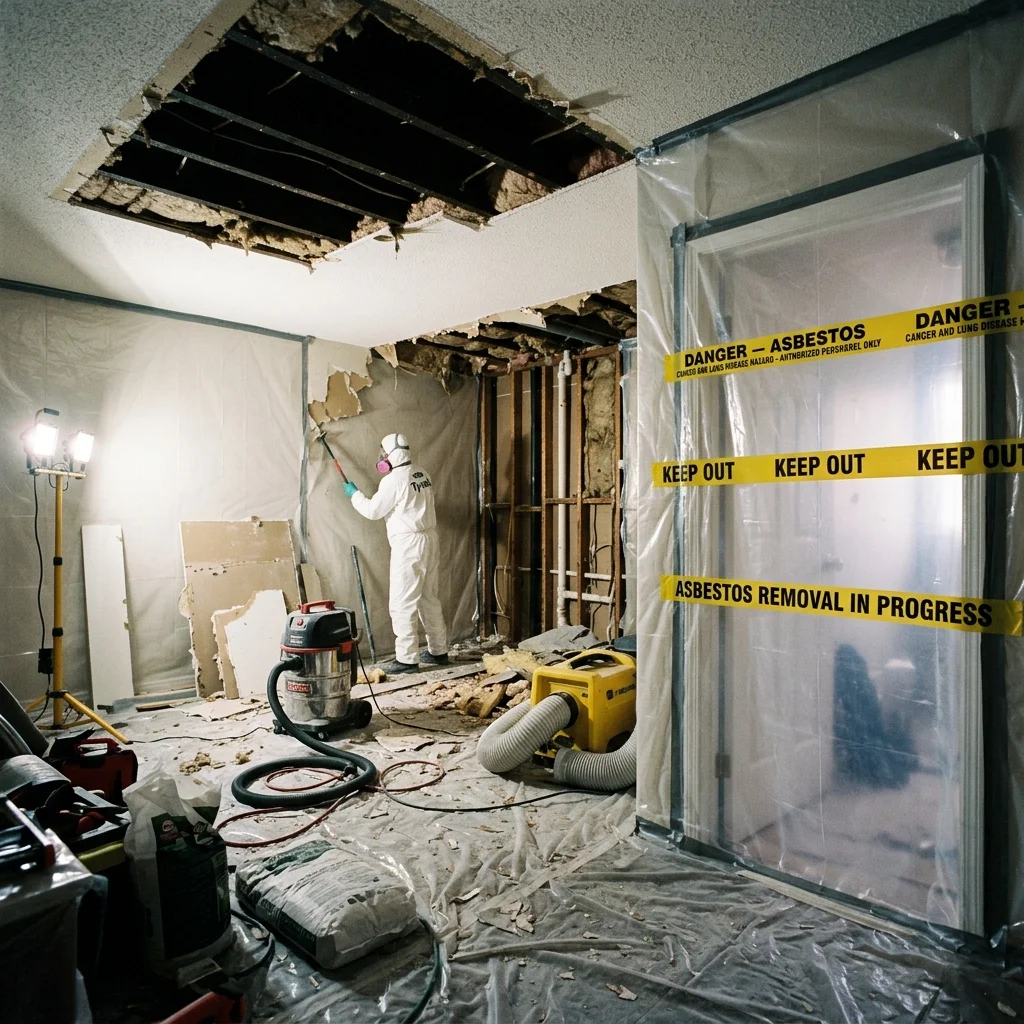
When removal is required, it must be performed by a licensed asbestos abatement contractor. Requirements vary by state but typically include:
- Worker training and personal protective equipment (respirators, Tyvek suits)
- Full containment of the work area with plastic sheeting and negative air pressure
- Wetting materials during removal to suppress fibre release
- Disposal in labelled, sealed bags at approved disposal facilities
- Air monitoring during and after removal
- Clearance testing before containment is removed and normal work resumes
This is not the place to cut corners. I've watched homeowners try to save $3,000 on abatement and end up spending $25,000 when fibres spread through the duct system. (That's the restoration industry equivalent of penny wise, pound — and lung — foolish.)
Insurance and Asbestos Abatement
If your water damage event is covered by homeowners insurance and asbestos abatement is required as part of the restoration scope, the abatement cost may be covered as part of your claim. This varies significantly by insurer and policy language.
Key points:
- Discuss asbestos with your adjuster early in the claim process — before abatement begins, not after
- Get the abatement contractor's scope and estimate in writing and submit it to your insurer
- Some policies cover abatement only when it's necessary to complete a covered repair — not as a standalone service
- If your insurer denies coverage for abatement, ask for the denial in writing and consult with a public adjuster
Don't assume it is or isn't covered without asking directly. The worst outcome is paying out of pocket for something your policy would have covered if you'd made the call.
How to Protect Yourself Right Now
If you're dealing with water damage in a pre-1980 home and haven't started demolition yet, here are your immediate steps:
- Stop all demolition. If removal has already started and you suspect asbestos, stop immediately. Seal the area and leave.
- Don't use fans or air movers in areas with suspect materials — you'll spread fibres through the house.
- Call a certified asbestos inspector — not your general contractor. Your state environmental agency maintains a list of accredited inspectors.
- Inform your restoration company. Any reputable water damage contractor will pause work until asbestos testing is complete. If they don't, that's a red flag the size of a building permit.
- Notify your insurance adjuster that asbestos testing is in progress and may affect the restoration scope and timeline.
Frequently Asked Questions
What age home might have asbestos?
Asbestos was widely used in building materials from the 1940s through 1980. Homes built before 1980 may contain asbestos in floor tiles, ceiling tiles, pipe insulation, drywall joint compound, roofing materials, siding, and HVAC insulation. Homes built after 1986 are very unlikely to contain asbestos. The older the home, the higher the probability.
Does water damage make asbestos more dangerous?
Yes. Water saturation can cause originally non-friable asbestos materials to become friable — meaning they crumble easily and release microscopic fibres. Wet ceiling tiles, degraded floor adhesive, and waterlogged drywall compound can all release asbestos fibres during the drying process or during demolition. This is why testing before restoration is critical.
How much does asbestos testing cost?
A certified residential asbestos inspection with laboratory analysis typically costs $250–$700, depending on the number of suspect materials and samples collected. Rush results (24–48 hours) cost an additional $50–$150. Given that improper disturbance can lead to $10,000–$30,000 in emergency abatement, the inspection cost is minimal by comparison.
Can I test for asbestos myself?
While DIY testing kits exist, they are not recommended. Improper sampling technique can itself release asbestos fibres, and home-collected samples may not meet the chain-of-custody requirements that some labs and regulators require. A certified asbestos inspector follows EPA protocols for safe sampling and produces results that are legally defensible.
Does homeowners insurance cover asbestos abatement?
It depends on your policy and insurer. If asbestos abatement is required to complete a covered water damage repair, many policies will cover the abatement cost as part of the claim. However, coverage is not universal. Discuss asbestos with your adjuster early in the claim process and get any denial in writing so you can escalate if needed.
If your house was built when disco was still culturally acceptable and water just invaded your living room, test before you tear. The inspection costs less than a decent dinner out. The consequences of skipping it cost considerably more — and come with significantly worse health outcomes than dessert.